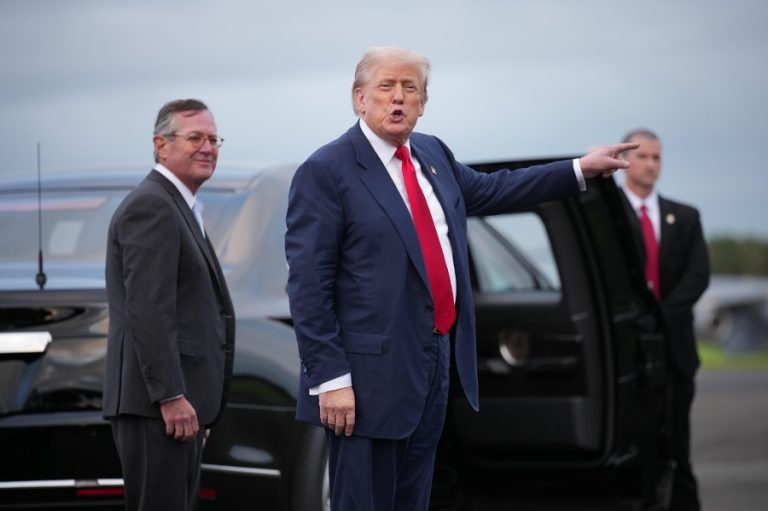
On Memorial Day, May 25, President Donald Trump posted a statement on Truth Social demanding that eight Muslim-majority countries sign onto the Abraham Accords as part of a settlement to the war with Iran.
The Abraham Accords are a set of U.S.-brokered agreements signed in 2020 during Trump’s first term that established formal relations between Israel and several Arab and Muslim-majority countries. The UAE, Bahrain, Sudan, and Morocco signed in 2020, and Kazakhstan joined in 2025.
In the Monday post, Trump said negotiations with Tehran were “proceeding nicely” and warned that without a deal the United States would return to “the Battlefront and shooting, but bigger and stronger than ever before.” Trump wrote that he had spoken over the weekend with the leaders of Saudi Arabia, the United Arab Emirates, Qatar, Pakistan, Turkey, Egypt, Jordan, and Bahrain.
“It should be mandatory that all of these Countries, at a minimum, simultaneously, sign onto the Abraham Accords,” Trump wrote, adding that the process “should start with the immediate signing by Saudi Arabia and Qatar.” Israeli Prime Minister Benjamin Netanyahu was not part of the weekend calls, and the post did not mention Israel by name.
The proposal is a maximalist version of an idea Trump has raised several times since returning to office. He called for adding “more countries to the Abraham Accords” at the Gulf Cooperation Council summit in Riyadh in May 2025. He raised it again with Saudi Crown Prince Mohammed bin Salman in the Oval Office in November 2025, where Bin Salman responded that the kingdom wanted to join but needed “a clear path” to a Palestinian state. Monday’s post differs from those earlier statements in framing accession as “mandatory” and in linking it directly to a settlement of the Iran war.
Success
You are now signed up for our newsletter
Success
Check your email to complete sign up
Pakistan and Saudi Arabia declined to sign the Abraham Accords
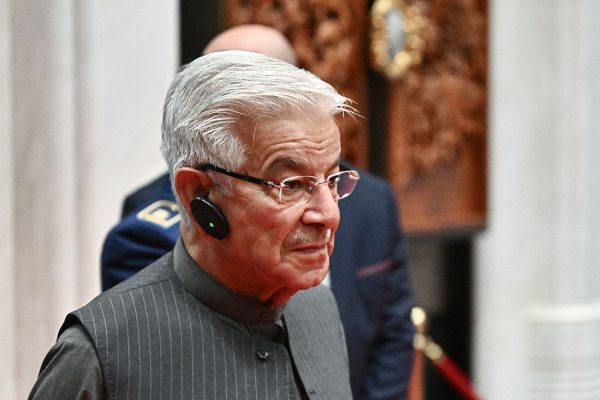
Soon after the post, Pakistan’s Defence Minister Khawaja Muhammad Asif told the Pakistani broadcaster Samaa TV that the Abraham Accords “clashes with our fundamental ideologies.” Pakistan does not recognize Israel and has not done so since the country’s founding in 1948. Its constitution requires that the head of state be Muslim, and its foreign policy has long included support for Palestinian statehood as a baseline position. Asif’s statement was the only outright public rejection from any of the six target countries delivered through a named official.
A senior Saudi source told CNN on Monday that the kingdom’s position had not changed: there would be no normalization with Israel without “irreversible progress” toward the establishment of a Palestinian state. The Saudi response is consistent with public statements Bin Salman has made repeatedly, including in the Oval Office six months ago.
It also tracks the 2002 Arab Peace Initiative, the Saudi-authored framework that has served as the Arab League’s formal position on normalization for more than two decades. The 2025 Arab Opinion Index recorded 87 percent opposition to normalization without a Palestinian state among Saudi citizens polled.
Qatar and Turkey are further from the proposal than Saudi Arabia
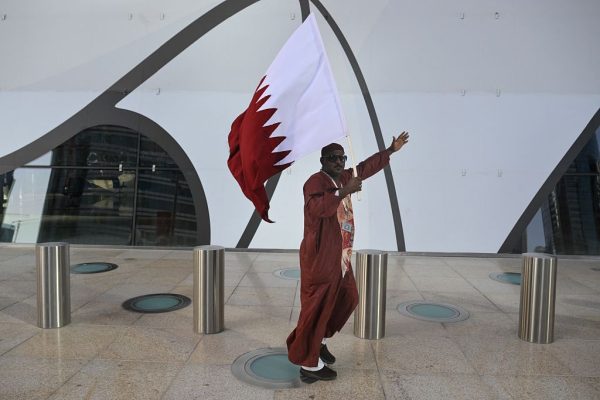
Qatar does not maintain formal diplomatic relations with Israel and has historically served as the primary mediator between Israel and Hamas, hosting senior Hamas political leadership in Doha at U.S. request through the Gaza war. The Qatari foreign ministry has consistently linked any Israel normalization to a Palestinian state and to the end of the Gaza war. Doha has not publicly responded to Monday’s post.
Turkey’s position is the furthest from the proposal of any country named. The Turkish government stated in December 2024 that relations with Israel were “completely severed” and that no steps were being taken to mend them. Turkey halted all bilateral trade with Israel in May 2024 over the Gaza war and has not restored it. President Recep Tayyip Erdoğan’s public rhetoric on Israel has been among the harshest from any major Muslim-world leader since the war began. Ankara has not publicly responded to Trump’s post.
Egypt and Jordan, the two remaining countries named, already maintain formal diplomatic relations with Israel through peace treaties signed in 1979 and 1994. Neither is a member of the Abraham Accords. Both have publicly opposed Israeli operations in Gaza and both have faced significant domestic pressure since the start of the war in October 2023. Neither has responded to the post.
A competing regional framework is in the works
In January 2026, Saudi Arabia, Pakistan, and Turkey drafted a trilateral defense agreement after nearly a year of talks. The agreement, which has not been formally signed, would establish a regional security framework that excludes Israel and operates parallel to the U.S.-Israel-Gulf alignment the Abraham Accords represent. An analyst at the Jerusalem Institute for Strategic Security has described the trilateral pact as “a partial regional alternative to normalization with Israel.”
The three signatories include two of the six countries Trump named on Monday and that publicly rejected the proposal, Saudi Arabia and Pakistan, along with the country whose stated position is the furthest from Accords accession, Turkey. The trilateral pact is therefore a structure already being assembled by the same governments now being asked to sign a framework that requires Israel.
The Iran negotiations Trump linked the Accords proposal to remain in early stages. The Pakistan-mediated April 8 ceasefire that ended active hostilities has been extended in fragmentary form, but the Hormuz toll regime Iran formalized last week is being administered through a new Iranian state authority that has not been recognized by any of the six named countries.
The next signals will be whether Qatar, Egypt, or Jordan break their silence on the post, whether Saudi Arabia and Pakistan harden the positions they stated Monday, and whether the trilateral pact advances toward formal signature in the weeks ahead.