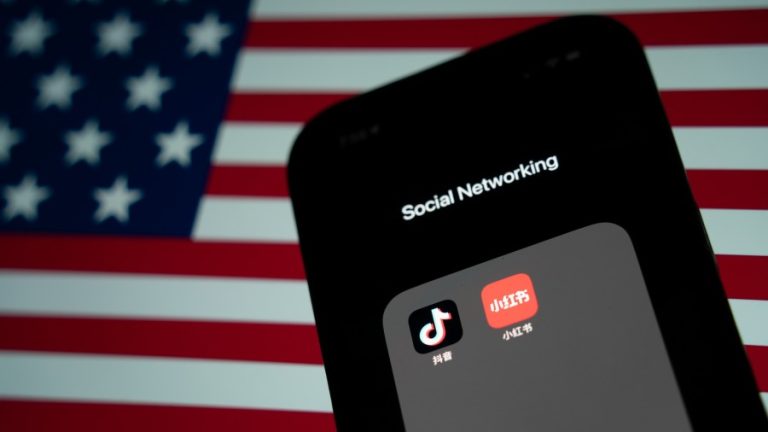
Concerns have emerged in Taiwan over the Chinese Communist Party’s alleged use of TikTok and Xiaohongshu to conduct cognitive warfare, cultural influence operations, and cybersecurity-related activities targeting Taiwan. These concerns have been voiced by the Taiwanese government as well as high-school students.
Taiwanese President Lai Ching-te recently stated at a “President and Youth Forum” that if Taiwan fails to properly address the challenges posed by TikTok and Xiaohongshu (RedNote), the country could lose its determination to safeguard its nation and democratic system, and people might even come to regard China—or the Chinese Communist Party—as benevolent.
Legislative changes proposed to counter United Front influence and infiltration
According to a report by Liberty Times, Lai attended the forum hosted by Business Today Taiwan on May 30, where he listened to the views of vocational and high-school students from across Taiwan and interacted with them directly.
Lai said that because the Chinese Communist Party continues to apply both military pressure and political influence efforts against Taiwan, the government must strengthen national defense capabilities. This includes advancing foreign arms procurement and domestic defense development through both annual and special budgets.
He also emphasized the need to enhance Taiwan’s economic resilience by reducing dependence on a single market—namely China—and by working with democratic partners. According to Lai, maintaining peace and stability and preventing war requires sufficient national strength.
Success
You are now signed up for our newsletter
Success
Check your email to complete sign up
Addressing concerns about the Chinese Communist Party’s influence and infiltration efforts—including perceived threats to Taiwan’s sovereignty and national identity, the use of cross-strait exchanges as channels for influence operations by appealing to the goodwill of Taiwanese people, and initiatives in China’s coastal regions aimed at integrating Taiwanese businesspeople and young people into broader cross-strait development programs—President Lai Ching-te said that the government has reviewed these issues and proposed corresponding legislative amendments and policy measures. Relevant bills have already been submitted to Taiwan’s legislature for consideration.
Lai also stated that Taiwan is working within the international community to counter Beijing’s narrative regarding United Nations General Assembly Resolution 2758. He argued that Resolution 2758 did not address Taiwan’s sovereignty status and reiterated that the People’s Republic of China has never governed Taiwan, that the Republic of China and the People’s Republic of China are not subordinate to one another, and that Taiwan is not part of the People’s Republic of China.
High school students express concerns about TikTok and Xiaohongshu
At the “President and Youth Forum,” students from Kang Chiao International School proposed that Chinese platforms such as TikTok and Xiaohongshu could weaken Taiwanese people’s identification with democratic values. They suggested strengthening media literacy education to reinforce democratic resilience, CNA, reported.
Lai said he greatly appreciated and agreed with the students’ proposal, describing it as “a very serious issue.” He explained that previous discussions had focused mainly on technical measures to reduce or block the influence of such platforms. In contrast, the students’ proposal emphasized classroom education, critical reasoning, and the use of historical examples to help young people better understand Taiwan and avoid being influenced by what he described as misleading ideas disseminated continuously through TikTok and Xiaohongshu.
Warning that Taiwan could lose the will to defend democracy
Lai stressed that, as president, he has long viewed the issue as highly serious. He argued that if content on Xiaohongshu and TikTok continuously promotes what he considers misleading narratives throughout the year and the issue is not properly addressed, Taiwan could gradually lose its determination to defend its democratic system.
He warned: “If we don’t handle this properly, over time Taiwan may lose the will to safeguard its democracy. We could come to regard China as a good person — he wants to annex us, he wants to invade us, yet we would think he is a good person who poses no danger to Taiwan. We could lose the willingness we should have to protect our own country.”
Lai also instructed officials on the spot, expressing hope that Taiwan’s Ministry of Culture and Ministry of Education would make effective use of this type of critical-thinking-based educational approach.

How is the CCP allegedly using these platforms to influence Taiwan?
According to the article, the Chinese Communist Party employs the “precision algorithms” and “soft content moderation” mechanisms of TikTok and Xiaohongshu to conduct what critics describe as a long-term, gradual campaign of cognitive influence and cultural penetration in Taiwan. The alleged objective is to subtly shape the identity and political attitudes of younger generations.
According to the Taiwan Network Information Center report Taiwan Internet Report 2025, 78.46 percent of Taiwanese respondents had watched short-form videos—including TikTok, Instagram Reels, Facebook Reels, and YouTube Shorts—within the previous three months. TikTok’s overall usage rate in Taiwan reportedly reached 25.16 percent, with approximately 11.45 percent of users accessing the platform daily.
A report by BBC News cited a Taiwanese survey indicating that among middle- and high-school students, 85 percent used Instagram, 82 percent used Facebook, and 29 percent used Xiaohongshu.
Taiwanese authorities imposed a one-year internet access restriction on Xiaohongshu at the end of 2025. As a result, the application is reportedly inaccessible through standard internet connections within Taiwan, although some users continue to access it through alternative methods such as changing DNS settings or using VPN services.
Drawing on analyses from Taiwan’s national security agencies, experts at the Institute for National Defense and Security Research, and various international think tanks, the article summarizes four alleged methods by which these platforms are used to influence Taiwan:
1. Algorithmic bias and promotion of official narratives
The article claims that, under Chinese legal requirements for content moderation, the platforms restrict or remove content related to topics such as the 1989 Tiananmen Square Protests, Xinjiang, the Hong Kong democracy movement, and criticism of the Chinese Communist Party.
At the same time, algorithms are said to heavily promote content showcasing China’s major cities, technological advances, and positive national imagery. Critics argue that this can foster a depoliticized and overly favorable perception of China among Taiwanese youth and reduce awareness of political or human-rights concerns.
2. Cultural influence through everyday lifestyle content
The article argues that Xiaohongshu focuses largely on beauty, travel, fashion, and practical lifestyle information, while TikTok attracts young users through comedy, entertainment, and short-form dance videos.
According to this view, precisely because these platforms generally avoid overt political discussion, Taiwanese users may lower their guard and engage with the content primarily as entertainment or lifestyle media. Critics contend that this can create a gradual cultural influence effect by normalizing particular social values, trends, or perceptions associated with mainland China.
In addition, mainland Chinese internet expressions such as “shipin” (video), “chihuo” (foodie), and “guimi” (bestie/close girlfriend) have reportedly spread rapidly in Taiwan. Critics argue that through the export of cultural soft power, such linguistic and cultural trends can blur the cultural and psychological boundaries between the two sides of the Taiwan Strait.
3. Cognitive warfare in the gray zone
The article claims that platform algorithms selectively amplify content highlighting political divisions within Taiwan, dissatisfaction with Taiwan’s democratic system, or conflicts between political parties.
According to this analysis, the goal is to exploit Taiwan’s open environment and freedom of expression to deepen social divisions and weaken trust within Taiwanese society.
4. Cybersecurity risks and extraterritorial data control
According to privacy and security reports by NordVPN and assessments by Taiwan’s National Security Bureau, apps such as Xiaohongshu are capable of accessing certain device activities, screenshots, and clipboard data.
All user activity records left on such platforms could potentially be subject to Chinese government jurisdiction, reported CNA. The article further argues that when Taiwanese users travel to mainland China, Hong Kong, or Macau, authorities could use previously collected data in national security investigations or other forms of legal enforcement.
In June 2023, Forbes published an investigative report alleging that TikTok stored financial information belonging to prominent American content creators on servers located in China. The data reportedly included tax identification numbers, Social Security numbers, and other personal information belonging to creators and outside contractors.
The report further stated that payments were managed through tools provided by TikTok’s parent company, ByteDance. According to the article, this indicated that TikTok user activity records, as well as certain personal, financial, and identity-related information, were accessible within ByteDance’s corporate systems.