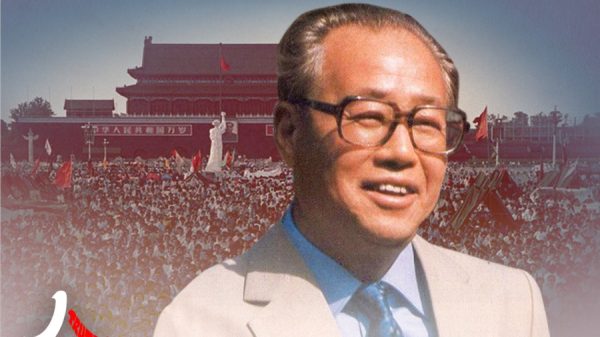
“They all refused to take the lead,” Zhao Ziyang told Du Daozheng, the former director of China’s state General Administration of Press and Publication, in one of the conversations recorded in Du’s diary. “Of course they wanted me, the general secretary and vice chairman of the Central Military Commission, to give the order to open fire. So that I would bear the historical guilt on their behalf, so that I would be the one with blood on my hands. How could I be so foolish?”
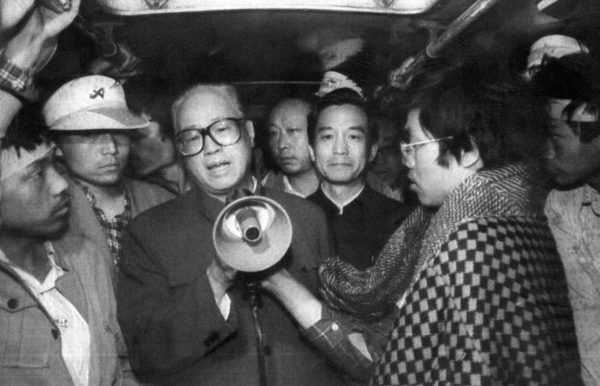
Zhao was the CCP general secretary who spent the final 15 years of his life under house arrest after refusing to authorize the military crackdown on pro-democracy protesters in June 1989. The book in which Du recorded these words, What Else Did Zhao Ziyang Say? — The Du Daozheng Diary, was published simultaneously in Hong Kong (by Cosmos Books) and Taiwan (by INK Literary Monthly Publishing) in January 2010, on the fifth anniversary of Zhao’s death, after nearly a decade of safekeeping.
Who gave the order: Zhao Ziyang names Li Peng and Wang Zhen as the crackdown’s true instigators
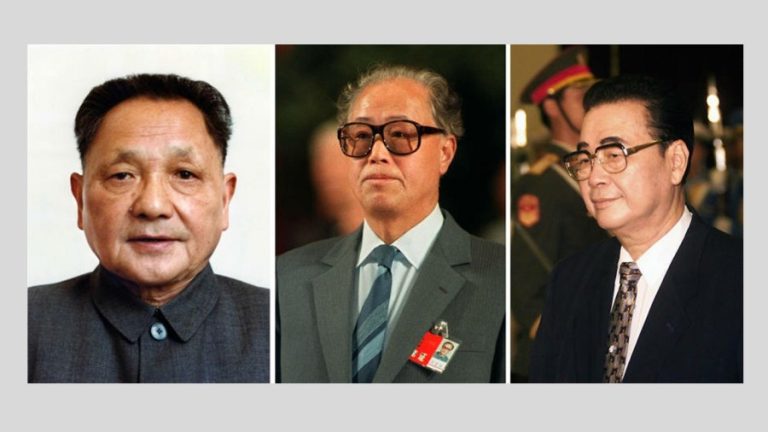
Zhao was unambiguous about the chain of responsibility. Among the active leadership, he said, it was Li Peng, who served as prime minister from 1987 to 1998, and Chen Xitong, then the mayor of Beijing, who most forcefully demanded the use of troops. Among the retired party elders who still wielded informal veto power over major decisions, Wang Zhen, a revolutionary veteran and former vice president known for his hardline positions, was the most insistent voice for violence. Deng Xiaoping, Zhao said, only made his final decision in the last stage.
But once the decision was made, each of them shrank from issuing the order personally. They turned to Zhao, who held the formal titles that could give the crackdown a veneer of institutional legitimacy. He refused.
“I absolutely will not regret it, and I will never submit a self-criticism,” Zhao said. “If opening fire was something done with a clear conscience, why are you unwilling to let younger generations know about it? If you did a good thing, go ahead and publicize it for ten or twenty years.”
Success
You are now signed up for our newsletter
Success
Check your email to complete sign up
He did not expect to be rehabilitated in his lifetime. “I have no hope now of a reassessment of June 4 or the restoration of my reputation,” he said, “but I believe it is only a matter of time. No one in the current leadership has the awareness, the ability, the courage, or the sense of historical responsibility to the nation.”

Deng Xiaoping’s reforms had a hard floor, and it protected corruption
Zhao’s private assessment of Deng Xiaoping was neither simple condemnation nor the grudging admiration that characterized many internal Party discussions. He credited Deng with the force of will and personal authority that made economic reform possible at all.
“Hu Yaobang and I were both using the old man’s flag as a tiger skin,” Zhao said, referring to himself and the reformist general secretary Hu Yaobang, who died in April 1989 and whose death triggered the Tiananmen protests. “Without the old man’s authorization, reform at that time would have been impossible to advance even one step. The conservative forces among the top leadership and the party elders were very powerful.”
But Deng’s reforms, Zhao said, operated within two inviolable constraints. The first: the interests of the old revolutionary generation and their children could not be touched. The second: the ideological banners of Marx and Mao could not be discarded. Political reform was therefore off the table entirely. The old political structure was kept intact to protect the privileges of those at the top, while the Marxist-Maoist banner provided the regime’s claim to legitimacy.
“This was Deng’s limitation,” Zhao said, “and it created a breeding ground for corruption.”
The consequences Zhao described were structural, not incidental. Because Deng had established a rule that senior officials were above the reach of law, and because he personally handpicked two generations of successors through patriarchal decree rather than institutional process, those successors entered office without organic power bases in the upper ranks. To consolidate control, they had to buy loyalty with patronage and tolerate the corrupt extraction that followed.
“How could you expect them to genuinely fight corruption?” Zhao asked. “Deng planted the poisonous roots. Those who came after watered and fertilized the tree. By now it has grown so large and its roots so tangled that even those who want to change it find it nearly impossible.”
The CCP is not a workers’ party; it never was
One of the bluntest passages in Du’s diary records Zhao’s verdict on the Party’s claim to represent the working class. He dismissed it as a fiction maintained by force.
“When the CCP was founded, how many workers were in leadership roles? They were all intellectuals,” Zhao said. “Workers of that era were illiterate. How could they understand Marxism? It was the intellectuals who wanted to transform China, who found Marxism persuasive, who used its doctrines to mobilize workers for revolution.”
During the war against Japan, workers in occupied areas continued working and eating under Japanese rule; there was no worker-led resistance. During the civil war, no worker organization rose against the Nationalist government. After 1949, it was educated Party officials and peasant soldiers from the military who actually held power at every level, while workers were given the honorific title of “leading class” without any decision-making authority.
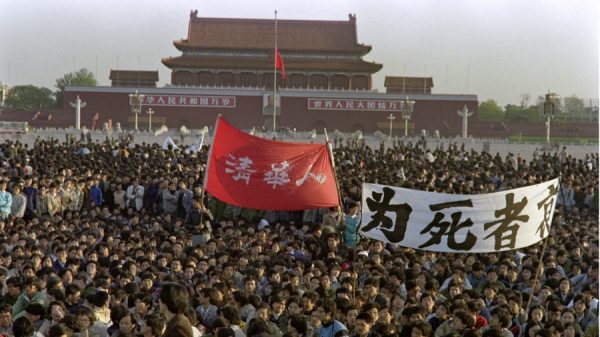
In practice, Zhao said, workers had served as instruments of Party policy rather than its beneficiaries. He cited the Cultural Revolution, when workers were organized into political teams to manage universities and persecute intellectuals, and the 1975 suppression of popular mourning for Zhou Enlai at Tiananmen Square, in which workers from the Capital Iron and Steel Company served as shock troops for the regime.
Today, he said, workers and migrant laborers were among the most powerless groups in Chinese society, unable to challenge wage theft, unemployment, or the plunder of state assets by connected insiders. “Our party is not a workers’ party, and it is not a peasants’ party, and it is not an intellectuals’ party,” he said flatly. “Like parties in the West, it claims to represent the broadest interests of the people. But it does not allow any other party to represent the people’s interests. If you want to represent the people, you must join this party. That argument cannot be sustained by reason. It can only be sustained by the barrel of a gun.”
What the party actually represents: a hierarchy of privilege, with workers and farmers at the bottom
Zhao sketched a precise map of whose interests the Party actually served. At the top sat what he called the “core group,” the innermost circle of senior leaders and their families. Below them came the various layers of Party and government officials, the managers of state and private enterprises, civil servants, and senior professionals. Workers ranked near the bottom. Farmers ranked last.
“When there are not enough benefits to go around,” Zhao said, “the lower layers simply go without. Sometimes what they already have is taken away.”
This new ruling stratum, Zhao argued, had given rise to something that should be called by its proper name: a bureaucratic capitalist class. Produced by the combination of economic liberalization and the absence of political accountability, this class had enriched itself by exploiting the gap between administrative power and market prices, funneling public and state assets to themselves through connections and corruption. Their wealth had come easily; easy wealth, Zhao observed, tends to produce boundless consumption.
“The broad masses of the people regard this class as the target of revolution,” he said. “One day, a violent struggle may erupt.”
He acknowledged the alternative outcome: that the bureaucratic capitalists might continue to enrich themselves while ordinary living standards improved just enough to keep popular anger below the threshold of explosion. In that case, the contradiction might gradually fade.
June 4 settled nothing; it deepened every problem the regime claimed to solve
Zhao directly contested the Party’s central justification for the Tiananmen massacre: that the crackdown made China’s subsequent economic development possible.
“They say: without June 4 opening fire, there would be no great economic development today,” he said. “I say: without the armed suppression, today’s development would be faster, more complete, more healthy, more durable, and the people’s civic consciousness would be higher.”
The suppression, in his account, forced the Party into a bargain it could never escape. To pacify public anger after murdering its own citizens, the regime had to deliver rising living standards. Economic growth became the substitute for political legitimacy, and the price extracted for that growth compounded with every passing year.
Zhao listed what that price had bought: corruption spreading in every direction and deepening vertically through the system; severe pollution of water, land, and air; resource extraction on a scale that stripped the country for short-term gain; excessive dependence on cheap, labor-intensive export manufacturing; and a widening gap between rich and poor. He asked how long the Chinese people, with their capacity for endurance and sustained hardship, could continue absorbing these costs. He did not think the leaders asking the same question lost any sleep over the answer.
“The preaching of the Communist Party has already been discarded in the hearts of the people, and in the hearts of officials across the country,” he said. “Only the surface is maintained. This is not a problem of ideological education. It is a problem of what the facts themselves teach. From top to bottom, everyone says one thing and does another. Everyone mouths agreement while believing the opposite. Whoever refuses to play this game suffers for it. What people truly believe in is power and money.”
The Party’s founding ideology is finished; its members know it
He had been asked whether he still believed in communism. He had said privately, in small gatherings at the senior leadership level, that he himself could not explain what socialism was. Every version of socialism that had been tried globally had failed. The Soviet Union and Eastern Europe had abandoned it; their populations had forced the change. North Korea and Cuba still clung to it, and their people lived in extreme hardship. China and Vietnam had pivoted to capitalism in substance while refusing to use the word.
“Now, who in the Politburo actually believes in communism?” Zhao asked. “Most of them believe in a rule for themselves that they have figured out through experience: comply with the one above you and prosper; resist and be destroyed. What they believe in is their own formula for surviving in office and rising through the ranks.”
He rejected the three defining claims of communist ideology with equal brevity. The claim of material abundance: modern capitalist societies had already produced more wealth than anyone could have imagined in the 1950s, and China’s socialist economy had spent decades falling further behind. The claim of eliminating the three great differences between mental and physical labor, between city and countryside, and between worker and peasant: human capacity and intelligence could never be equalized, and the West had managed these differences without treating them as sources of social crisis. The claim of distribution according to need: human needs were boundless while social resources were finite, and the gap between the two had no solution anyone had ever successfully described.
He was particularly sharp on the Party’s founding mythology around working-class leadership. The original Chinese communists had been university-educated radicals, not workers; they had borrowed a European theory developed to describe European industrial conditions and used it to mobilize a peasant army. The intellectual scaffolding had served its revolutionary purpose and then become a prison for honest thought.
READ MORE:
- Tiananmen Survivor Speaks in Toronto on 37th Anniversary, Calls on World to Stand With the Imprisoned
- Two Survivor Acts Prove Tiananmen Was Peaceful — CCP Lied About ‘Armed Riot’
Zhao Ziyang stayed in the Party; and that, he argued, was the point
Du’s diary records that some within the Party had wanted to expel Zhao after 1989, or pressure him to resign his membership. He rejected both.
“The party’s name no longer matters,” he said. “Staying inside the Party is more useful to the reform forces within it, and more useful to China’s reform overall.” By remaining a formal party member, he kept a thread of legitimacy that preserved whatever limited space he had. If he left, he said, he would lose even the minimal freedom of movement that allowed the occasional supervised outing. “Would you still dare to come and see me?” he asked Du.
The Party that kept him under guard was simultaneously forced to maintain the fiction that he remained one of its “advanced elements,” subject to the same ideological standards as every other member. It could not credibly explain why an advanced element required armed surveillance.
China’s political reform: the conditions don’t exist yet, but the path has no alternative
On political reform, Zhao’s private position was clear-eyed about the timeline without abandoning the direction.
“The goal of abolishing feudalism, reforming the political system, and building a democratic state is one most people agree on,” he said. “The question is how to get there, how to cross from this shore to that one.” He pointed to Taiwan, South Korea, Thailand, Malaysia, and Indonesia as cases where the crossing had already been made, with varying degrees of success and turbulence. The global trend toward democratic governance, he argued, was unmistakable. China’s current leaders were resisting it at home while having to accommodate it abroad, maintaining tight internal control while making rhetorical concessions to international norms. The strategy was unsustainable.
His assessment of why the timing was not yet right was equally unsentimental. There was no figure in the top leadership with both the vision and the institutional position to lead political change; the system had been designed specifically to prevent such figures from rising. Public living standards were still improving, if slowly, and as long as real incomes grew by even one percent a year, popular discontent remained below the level that forces a reckoning. This gave the existing leadership time to delay, and gave the inner circle time to move assets abroad and prepare exit options for their families.
He saved particular contempt for what he called the “rule by speech crime,” the practice of imprisoning people for political statements. The regime, he noted, had been afraid of public criticism since 1957, more than four decades into its rule. Fifty years after founding, it was still afraid. The Party claimed it would not copy Western-style democracy, but could not describe what Chinese-style democracy actually looked like. Anyone who pressed the question went to prison. “Ruthless suppression is always effective in the short run,” Zhao observed. “It makes the people feel powerless and sends them looking for a wise magistrate, a righteous official, a savior from above.” The state television dramas glorifying upright imperial officials fed exactly this psychology, and audiences consumed them eagerly because they answered a need the political system had deliberately created.
The Party’s machinery of control, Zhao noted, was vast: tens of millions of party members; millions of soldiers, paramilitary forces, and police; the propaganda, culture, and organization departments running from the national level down to the neighborhood. Political education personnel worked from childhood to instill the necessity of the existing order. And yet the regime remained terrified that genuine democracy would cause it to collapse overnight, after more than seven decades in power.
“From 1957 onward, they have feared people raising objections,” Zhao said. “They have been in power for fifty years and are still afraid. When will it end? It has reached the point where leaders grow tense when they hear the Internationale,” the traditional anthem of the communist movement. “They won’t allow anyone to mention the corruption of the old Nationalist government before 1949, and even discussing the corruption of the late Qing dynasty has become taboo, because ordinary people will say: compared to the Communist Party, those were minor cases.”
He died under house arrest in January 2005, still a formal member of the party that had confined him for fifteen years. No official reassessment of his case has been issued.