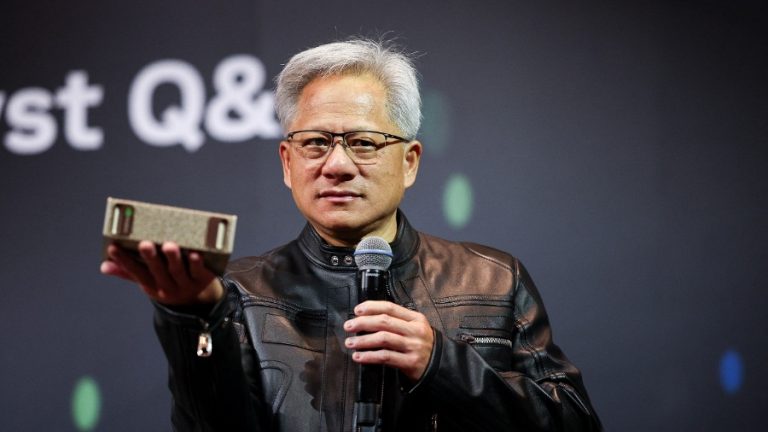
When national security and corporate profits come into conflict, will the White House choose Silicon Valley’s wealth-generating myth or the preservation of America’s global strategic advantage? The answer may already be written in the escalating trajectory of the U.S.-China technological Cold War.
A recently revealed investigative report has once again thrust the U.S.-China technology war into the spotlight.
According to Wirescreen, a U.S. corporate intelligence platform, an analysis of approximately 3,800 Chinese public procurement documents found that between 2019 and 2025, the Chinese People’s Liberation Army (PLA) and affiliated entities sought to procure NVIDIA’s advanced AI chips more than 500 times, including the A100, A800, H100, and H800—products that are subject to key U.S. export controls. The reported procurement requests involved sensitive areas such as cyber warfare, military simulations, and nuclear weapons modeling.
The revelations immediately sent shockwaves through Washington. This is not merely a question of China’s military gaining access to cutting-edge American technology. It also strikes at a core dilemma currently confronting U.S. policymakers:
When national security and multinational corporate interests collide head-on, which takes priority?

Success
You are now signed up for our newsletter
Success
Check your email to complete sign up
A new Cold War in progress
Twenty years ago, the United States believed in globalization. Ten years ago, it believed that economic interdependence could help transform China. Today, however, Washington increasingly subscribes to a different conclusion: technology is national security.
With the arrival of the AI era, advanced chips are no longer just commercial products—they have become strategic resources central to future military competition.
From unmanned combat systems and satellite intelligence analysis to cyber warfare, nuclear weapons simulations, autonomous weapons, and large-scale data processing, all AI capabilities ultimately depend on computing power. Whoever controls the most advanced chips controls a critical military advantage for the future.
This is why the Biden administration imposed the most stringent semiconductor export controls in U.S. history beginning in 2022. Since President Trump’s return to office, those restrictions have not fundamentally reversed but have instead continued to strengthen.
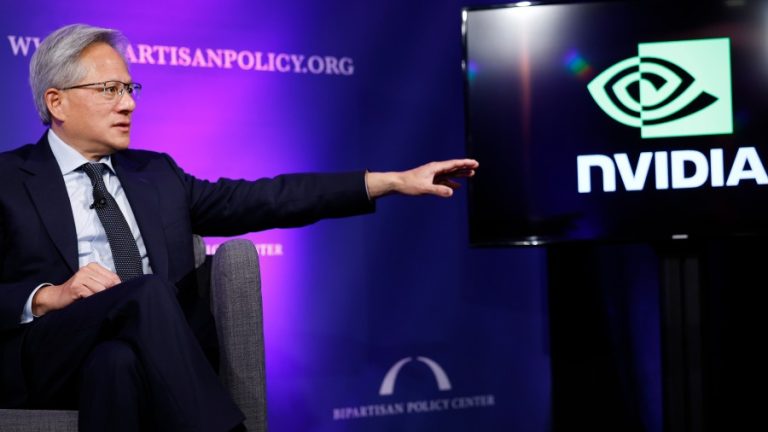
Jensen Huang’s dilemma: The clash between business logic and national logic
From a corporate perspective, Jensen Huang’s concerns are not without merit. China has long been one of the world’s largest semiconductor markets. Despite export restrictions in recent years, it remains an important source of revenue for NVIDIA.
Huang has repeatedly argued that completely cutting off the Chinese market will not prevent China from developing AI. Instead, it may accelerate China’s efforts to build its own domestic chip ecosystem. From a business standpoint, this reflects a typical market-oriented perspective.
Companies focus on market share, research funding, shareholder returns, and global competitiveness.
Washington, however, is not focused on earnings reports. Its concern is national security.
For the U.S. national security establishment, even partial use of American technology to enhance PLA capabilities could pose a strategic risk.
As a result, national security officials do not ask, “How much?” They ask, “Does it exist at all?” That is why even procurement volumes that may seem relatively small compared to major AI training clusters continue to attract significant attention from U.S. policymakers.
American history has already provided the answer
Many assume that because the United States is a capitalist country, corporate interests always come first.
In reality, the opposite has often been true. Whenever national security and corporate interests have come into conflict, the U.S. government has generally prioritized national security.
This was true during the Cold War. It was true after 9/11. And it remains true in today’s technology competition.
Recent examples include Huawei’s global restrictions, TikTok’s “sell or be banned” pressure, U.S. efforts to persuade the Netherlands to restrict exports of advanced ASML lithography equipment to China, and parallel semiconductor equipment restrictions by Japan and South Korea.
Together, these cases illustrate a basic reality: companies create wealth, but governments set the rules.
When Washington concludes that a technology could affect the future military balance, even the largest corporations cannot place themselves above national strategy.
The next step: Closing loopholes, not relaxing restrictions
Perhaps more significant is the political impact of the Wirescreen report.
Rather than encouraging Washington to loosen restrictions, the report is more likely to prompt tighter controls.
If the PLA has indeed obtained advanced computing power through third-party companies, overseas intermediaries, cloud-computing rental platforms, or other indirect channels, Washington’s most likely next steps would include:
- Strengthening end-user verification requirements;
- Expanding oversight of overseas transshipment networks;
- Requiring cloud service providers to implement stricter identity verification measures; and
- Improving tracking of chip distribution and end-user deployment.
In other words, the political consequences of this report may not be the reopening of the Chinese market to NVIDIA but rather the further narrowing of existing gray areas.
The true nature of the chip war
Many people view this conflict as a commercial dispute.
In reality, it has long since moved beyond business.
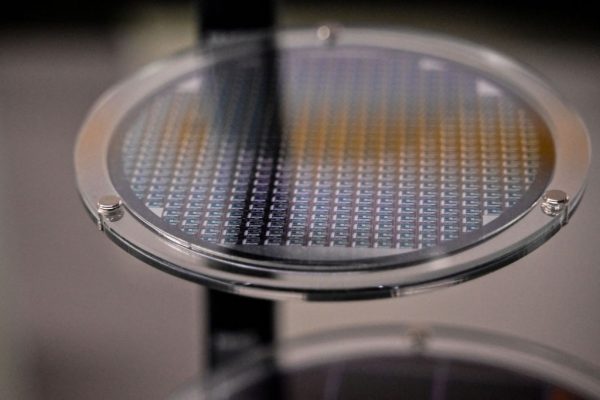
From a broader perspective, it is a competition over the future global order. Chips are merely the visible surface.
AI is only a tool.
The deeper questions are:
Who will lead the next technological revolution?
Who will set the rules for the digital age?
Who will command the strategic high ground of the future global military and economic order?
The U.S.-China chip war, therefore, is not fundamentally a conflict between Jensen Huang and Washington. It is a collision between the era of globalization and the era of national security.
The White House’s answer has already been written
From Huawei to ASML; from export controls to investment restrictions; from supply-chain restructuring to friend-shoring, developments over the past several years have already provided an answer.
The United States may be willing to sacrifice some corporate interests.
But it is unlikely to trade away national security.
In the eyes of Washington’s strategic planners, chips are no longer merely products; they are geopolitical instruments. Computing power is no longer just a commercial resource; it is foundational infrastructure for future military power.
Therefore, when national security and corporate profits sit on opposite sides of the scale, the White House is likely to choose national security.
That may not be the answer Silicon Valley most wants to hear.
But in the context of the current U.S.-China technological Cold War, it is arguably the answer most consistent with today’s strategic reality.
(The views expressed in this article are solely those of the author and do not necessarily reflect the views or position of Vision Times.)