Shocking exposé: has the ‘gatekeeper’ let in the wolf?
Recently, a major revelation published by The Stanford Review, an independent campus media outlet at Stanford University, has sent shockwaves through the U.S. Congress, geopolitical circles, and the national intelligence and security community.
According to internal financial records and research contract lists from the university—allegedly leaked by whistleblowers—Stanford University in recent years has been simultaneously taking on core national responsibilities in research security and defense, including projects funded by the U.S. Department of Defense, the intelligence community, and the National Science Foundation (NSF). At the same time, however, it has also been receiving substantial and continuous funding from individuals, companies, and state-owned enterprises linked to the Chinese Communist Party, the United Front Work Department, and entities reportedly connected to the People’s Liberation Army and Central Military Commission intelligence structures.
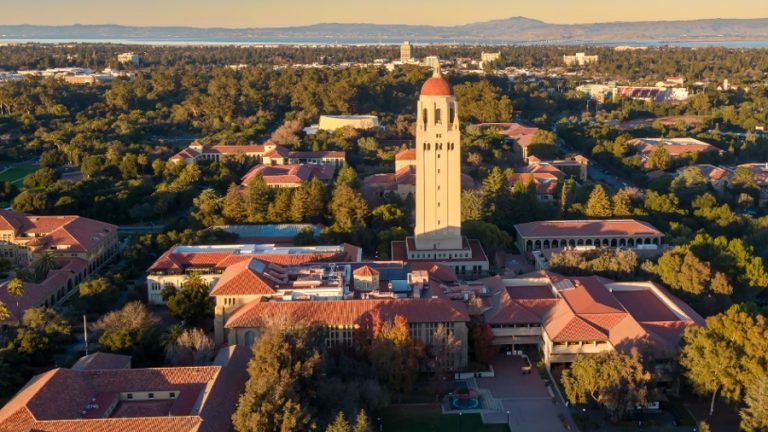
What many observers find most ironic is that the first and most historically significant institutional “victim” of this controversy is the Hoover Institution, located on Stanford’s campus. As a century-old, world-renowned think tank that has long influenced Washington’s geopolitical strategy toward countering authoritarian regimes, the Hoover Institution has in recent years also taken on high-profile work related to safeguarding U.S. advanced research security and countering alleged technology theft by China, particularly under national “security” initiatives focused on protecting cutting-edge scientific innovation.
The hidden ledger: A network of red elites and influence channels
According to the documents disclosed, the most alarming detail points to a mysterious donation made in 2025. The contribution—reported to be no less than $3 million—appears in Stanford’s public filings under a vague designation such as “member directed,” earmarked for a targeted research program at the Hoover Institution.
While the university has not disclosed the true identity of the donor—described only as a wealthy but anonymous benefactor—U.S. government intelligence assessments and expert analyses cited in the report suggest that the source of funding may be linked to senior figures within China’s elite political and financial establishment, including Chen Yuan, former head of the China Development Bank and current chairman of the China Association for International Friendly Contact.
Success
You are now signed up for our newsletter
Success
Check your email to complete sign up
The China Association for International Friendly Contact is described by U.S. congressional hearings and Department of Justice discussions on Chinese political warfare as an organization embedded within broader influence networks associated with the Chinese Communist Party’s propaganda and united front system. Publicly presented as a civil society friendship organization, it is alleged by some U.S. analysts to operate within a broader framework tied to state-directed influence activities.
Chen Yuan himself is presented in the report as part of China’s political elite network, being the son of former senior Communist Party leader Chen Yun. He previously served as chairman of the China Development Bank from 1998 to 2013 and later became a vice chairman of the Chinese People’s Political Consultative Conference.
From this perspective, the report argues that a senior figure associated with China’s financial and political establishment may have been able to channel funds through legal intermediaries, including law firms and trust structures, enabling donations to flow into major U.S. academic institutions while maintaining legal separation and anonymity.
Critics cited in the report argue that such arrangements raise concerns about the effectiveness of existing U.S. compliance mechanisms, including the Foreign Agents Registration Act (FARA), in detecting and regulating complex, layered foreign influence pathways involving academic and research funding.

Long-term strategic positioning: The Chen Yun family’s three-decade ‘California guesthouse’
As the saying goes, “a thick layer of ice does not form overnight.” In reality, the engagement of elite “red aristocracy” families with this so-called “Western Harvard” has reportedly spanned more than three decades, reflecting a long-term, family-level strategic outlook.
Chen Yuan’s sister, Chen Weil, spent two years early in her career at Stanford University as a visiting scholar, marking the family’s first recorded step in building an elite political and academic network on the U.S. West Coast.
Chen Yun’s younger son—and Chen Yuan’s brother—Chen Xiaoping, also studied at Stanford University, which reportedly served as a key entry point into Silicon Valley and the Chinese-American business and political elite in the San Francisco Bay Area.
In 2014, Chen Xiaoping is also reported to have made a $1 million targeted donation to Stanford University. According to the framing presented in the source text, this pattern of engagement—centered on members of China’s “princeling” class across multiple generations—has been interpreted by critics as a form of long-term academic influence strategy.
From this perspective, such activities are described as part of a broader effort by elite political families to establish what they see as intergenerational “buffers” and long-term influence channels within Western institutions.
Stanford University, closely linked to Silicon Valley, Hollywood, and policy institutions in Washington, is portrayed as occupying a uniquely influential position at the intersection of technology, capital, and geopolitics.
Within this narrative, university administrators are said to view the admission of well-educated, English-speaking, and financially capable students from prominent Chinese families as both financially beneficial and consistent with institutional diversity goals. Conversely, critics argue that for Chinese elites, philanthropy and academic exchange may also function as mechanisms for capital placement, reputational legitimacy, and indirect access to elite Western networks.
In the most critical interpretation presented by the text, such arrangements are framed as a form of strategic “embedded influence”—a way of embedding narrative and political signaling within influential Western academic environments under the guise of education and cultural exchange.

Military–civil fusion and technology transfer: Huawei, BOE, and alleged espionage on the Tibetan plateau
Beyond the political maneuvering of elite “red aristocratic” families, the so-called “hidden ledger” reportedly exposed at Stanford is also described as containing a dense network of Chinese state-owned enterprises and defense-linked contractors.
According to the document’s framing, the pattern of funding is highly targeted. Rather than supporting broad academic exchange or humanities-related initiatives, resources are described as being overwhelmingly directed toward sensitive frontier technologies viewed as critical to U.S. national security—particularly artificial intelligence (AI), robotics, and semiconductor lithography.
Among the entities listed are Huawei Technologies Co., Ltd. (Huawei), which has been subject to U.S. Commerce Department restrictions and broader export controls, and BOE Technology Group (BOE), a major Chinese display manufacturer often described in U.S. policy discussions as having close ties to state industrial and defense ecosystems.
In addition, the Chinese Academy of Sciences (CAS) is reported to have provided funding of approximately $1.1 million for a specialized technical collaboration project described as the “Ali CPT (Cosmic Primordial Telescope) Project,” located in the Ngari region of Tibet at an altitude of around 5,000 meters.
The report characterizes this location as strategically sensitive due to its proximity to border regions and its potential value in aerospace observation and surveillance-related research.
It further alleges that key components of the telescope project involved advanced superconducting detector arrays developed in the United States, and raises concerns that such technologies may have been integrated into systems with potential dual-use or defense applications without appropriate authorization under U.S. federal regulations.
U.S. defense and legislative observers are described as viewing such arrangements with concern, particularly given the possibility that ostensibly civilian space and astronomy collaborations could overlap with military sensing and radar applications.
From this perspective, the narrative argues that technology transfer to China is not limited to cyber theft or illicit acquisition at the individual level, but may also occur through formalized research partnerships and legally structured academic or institutional agreements, creating what critics describe as a “legally permissible conduit” through which sensitive know-how can flow across borders under the cover of scientific collaboration.
United front ‘financial sleight of hand’: Ding Lei’s $25.1 million and the Chen group’s $6.2 million
If Huawei and Chen Yuan represent what critics describe as “hard infrastructure penetration,” then China’s internet giant NetEase and its founder Ding Lei, along with Pioneer Group CEO Chen (surname), are framed as employing a more subtle form of influence—often characterized as “soft power incentives.”
Ding Lei, CEO of NetEase and a member of the Chinese People’s Political Consultative Conference (CPPCC), is reported to have made a substantial donation of approximately $25.1 million to Stanford University during the sensitive period between 2020 and 2022, when U.S.–China technological decoupling and strategic competition intensified.
Separately, in 2023, Chen, described in the source narrative as having ties to the Chinese United Front system through overseas exchange organizations, is said to have contributed approximately $6.2 million to Stanford.
According to the report’s framing, these large-scale donations were not directed into general university endowments or pooled funds, but were instead structured as “restricted direct contracts” tied to specific research programs.
Such funding mechanisms are described as allowing money to bypass broader institutional governance layers, instead flowing directly into individual laboratories—specifically to principal investigators (PIs) and their research accounts. In Western university systems, these principal investigators often exercise significant autonomy over substantial grant funding, laboratory direction, and research agendas.
From this perspective, critics argue that concentrated funding directed at key faculty members may grant external donors indirect influence over cutting-edge research environments, particularly in fields such as advanced algorithms, robotics, and artificial intelligence.
The concern raised in the text is that such financial flows could create asymmetrical dependencies within elite research institutions—where well-funded laboratories may become structurally reliant on targeted external capital.
In its most critical interpretation, the narrative suggests that sensitive research outputs developed in U.S.-funded laboratories could potentially be accessed or influenced before publication through informal networks or collaborative channels, thereby raising national security concerns.
However, it should be noted that these claims reflect the framing of the original report and remain subject to verification and institutional confirmation.
Heaven’s net is wide: U.S. Congress strikes hard, ringing the bell for ‘red academia’
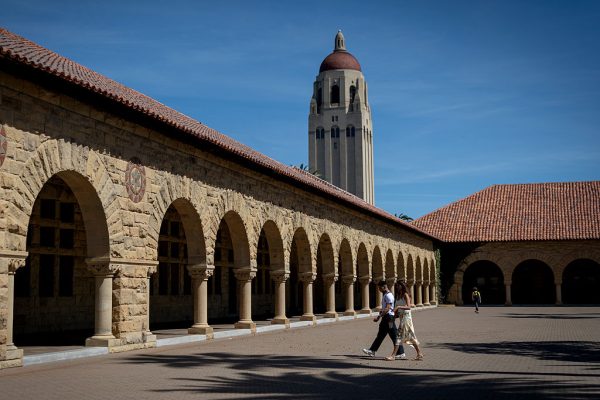
Today, Stanford University finds itself facing not only a reputational crisis, but what this narrative describes as a collective backlash against the “self-inflicted consequences” of globalization within Western democratic societies. The contradiction, it argues, lies in simultaneously benefiting from the open environment of academic freedom and receiving billions in U.S. taxpayer-funded defense and research subsidies, while allegedly opening indirect channels for confidential donations linked to authoritarian regimes, military intelligence networks, and entrenched political elites. In this view, such behavior represents a departure from the foundational principles of academic independence.
The text further suggests that this situation demonstrates how the Chinese Communist Party has identified and exploited perceived vulnerabilities within Western academia—namely, what it characterizes as an insatiable pursuit of funding and an overly idealized belief in “borderless science.” It also asserts that democratic societies are now rapidly becoming more aware of these risks.
At the same time, it reports that the U.S. House Select Committee on Strategic Competition between the United States and the Chinese Communist Party is coordinating with multiple federal law enforcement and national security agencies. According to this account, the committee is applying significant public and legal pressure on Stanford University and the U.S. Department of Education, calling for enhanced anti–money laundering investigations into large anonymous donations allegedly routed through legal intermediaries.
The report further states that laboratories and research programs deemed to have ties to Chinese state-linked funding could face suspension of federal support, alongside broader reviews of research security governance structures within affiliated institutions, including the Hoover Institution.
From this perspective, the situation is presented as a turning point in which Western academic institutions face increased scrutiny over foreign funding channels and compliance frameworks. The underlying argument is that the era in which opaque cross-border funding and influence operations could circulate freely within elite research environments is coming to an end.
The passage concludes with a broader warning: that those who “sell their souls to the devil,” in the author’s framing, will ultimately face consequences. The alleged exposure of Stanford’s so-called “hidden ledger” is interpreted as a signal of the end of an era—one in which Chinese state-linked financial influence was able to operate extensively within Western university ecosystems.
(This article reflects the author’s personal views and opinions only and does not necessarily reflect the views of Vision Times.)