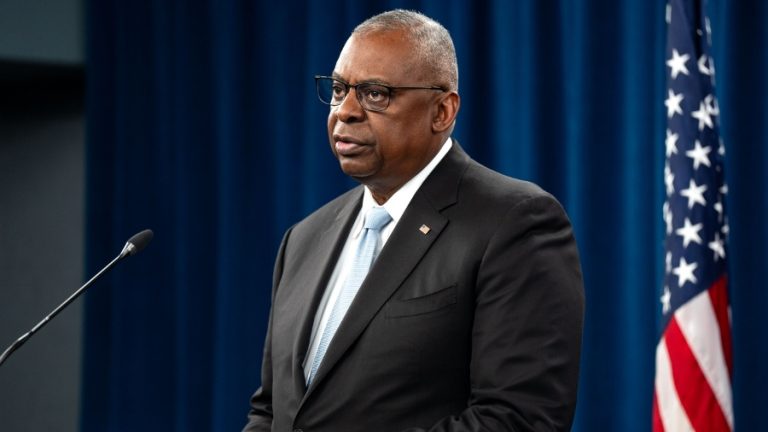
Former U.S. Secretary of Defense Lloyd Austin recently said in an interview with Bloomberg Television that a conflict in the Taiwan Strait would have a much greater impact on the global economy than disruptions in the Strait of Hormuz. However, he assessed that Xi Jinping does not intend to use military force to seize Taiwan.
The United States is currently heavily involved in Middle East conflicts, with significant military resources, long-range munitions, and diplomatic attention diverted to the region. This has raised concerns that Beijing may interpret this as U.S. distraction, potentially increasing the risk of Chinese military action against Taiwan. In response, Austin said, based on the outcomes of the high-level Trump-Xi summit held in May, that “there’s probably less risk of escalation going forward here in the near term.” However, he emphasized that the United States and China still have many issues requiring continued attention.
Austin stated his personal view that he does not believe Chinese President Xi Jinping wants to use force to take Taiwan. However, he issued a serious warning: “If there’s a fight in the Taiwan Strait, or in the vicinity of the Taiwan Strait, it will have a much greater impact on the global economy than what we’ve seen with the Strait of Hormuz.”
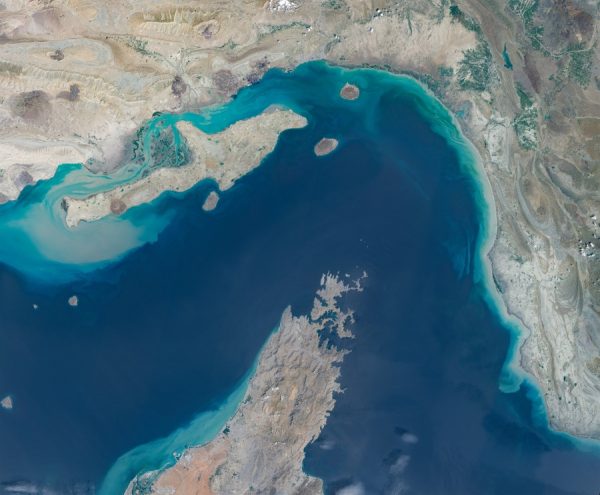
Austin also commented on U.S. President Trump’s call for a ceasefire between Iran and Israel. He said all parties hope a ceasefire agreement can be fully implemented, which would support further negotiations and the potential reopening of the Strait of Hormuz—critical for both the U.S. and the global economy.
US Navy could reopen Hormuz, but needs allied support
Austin further noted that while the U.S. Navy is certainly capable of reopening the Strait of Hormuz, maintaining its long-term security and openness alone would come at a very high cost. Therefore, he advocated for international cooperation, involving allies and partners, emphasizing that ensuring freedom of navigation in international waters and airspace under international law serves the interests of all countries.
Success
You are now signed up for our newsletter
Success
Check your email to complete sign up
Regarding European defense and NATO, Austin expressed optimism about increased defense spending trends in Europe. He noted that many European countries have significantly raised military budgets, with some even exceeding the 2 percent of GDP target. He also stressed that NATO’s transatlantic alliance is one of the most successful military alliances in human history and serves the mutual interests of both the United States and Europe.
Austin previously served as Pentagon chief during the Biden administration. After the Oct. 7, 2023 attack on Israel by Hamas militants supported by Iran, he led U.S. defense support for Israel. In 2022, when Russia launched its war against Ukraine, he played a key role in coordinating NATO support for Ukraine. He is now co-founder and CEO of the consulting firm Clarion Strategies.
Beijing claims enforcement in Taiwan’s eastern waters
Because Taiwan is a critical hub in the global semiconductor supply chain and the Taiwan Strait is one of the busiest international shipping routes in the world, the situation in the Taiwan Strait has long attracted international attention.
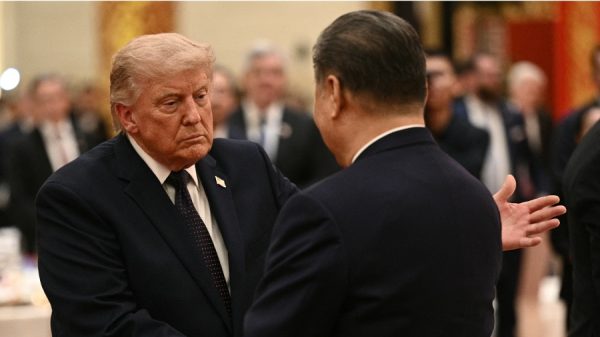
During a state visit to China from May 12 to 15, U.S. President Donald Trump met with Chinese leader Xi Jinping. Xi reiterated that Taiwan is a “top priority” in China–U.S. relations. He warned that mishandling the Taiwan issue could lead to conflict between China and the United States, urging caution in U.S. arms sales to Taiwan and warning against sending the wrong signals.
When Xi reportedly asked whether the U.S. would intervene militarily in a Taiwan Strait conflict, Trump did not directly answer, saying only, “There’s only one person that knows that. You know who it is? Me. I’m the only person.” and “I don’t talk about that.”
Chinese military pressure on Taiwan has not eased. According to Liberty Times reporting, China’s Ministry of Transport announced on June 6 the launch of a “special maritime law enforcement operation in the eastern waters of Taiwan,” deploying coast guard vessels to waters east of Taiwan.
In response, Taiwan’s Foreign Ministry spokesperson Hsiao Kuang-wei said on June 9 that China has no authority to claim enforcement jurisdiction over Taiwan’s eastern waters, strongly condemning Beijing for undermining regional peace and stability and challenging the international order, Liberty Times reported.