Taiwan’s Kuomintang party, or KMT, which holds an opposition-majority in the government’s parliament, has introduced a draft amendment to the Nationality Act, spurring fresh controversy and concern about the island’s security in the face of infiltration and coercion by Communist China.
Sixteen KMT lawmakers, including legislator Fu Kun-chi, recently introduced an amendment to Article 20 of the Nationality Act in the Legislative Yuan. The proposal would allow citizens of the People’s Republic of China (PRC) in Taiwan to participate in Taiwanese elections without first renouncing their Chinese nationality, potentially enabling them to run for positions such as legislator or even president, as reported by the Taipei Times.
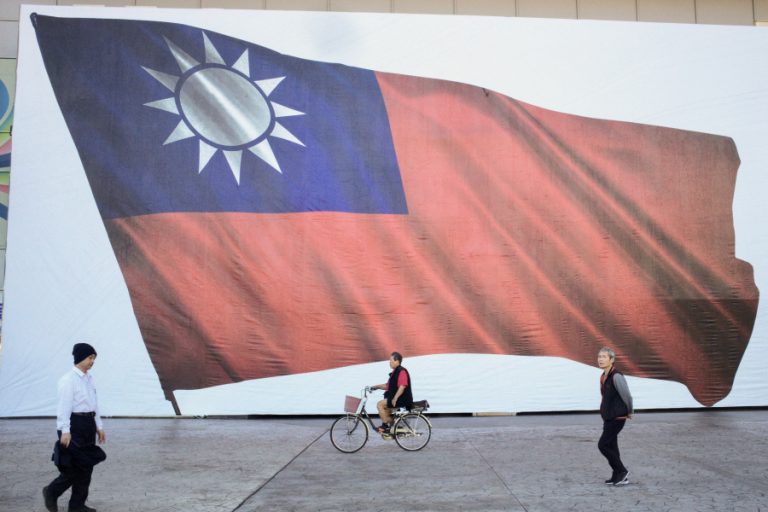
The proposal is particularly controversial because the Chinese Communist Party claims Taiwan, a de facto country with its own democratically elected government and international relations, as a rightful part of the PRC.
Taiwan is officially known as the Republic of China (ROC), the state that governed the Chinese mainland prior to its defeat by communist armies in 1949. The CCP vows to “reunify” Taiwan with the PRC despite having never governed the island.
Amending Taiwan’s Nationality Act
The proposed amendment to Article 20 of the Nationality Act was put forward by Fu Kun-chi and co-sponsored by other KMT legislators, including Su Ching-chuan, Huang Jen, Lo Chih-chiang, Chen Yu-jen, Weng Hsiao-ling, Hsu Yu-chen, Lin Pei-hsiang, Ko Ju-chun, and Chen Yeong-kang.
Success
You are now signed up for our newsletter
Success
Check your email to complete sign up
The key provision would permit mainland Chinese nationals who have obtained household registration in Taiwan to participate in public elections even if they have not completed the process of renouncing their PRC citizenship. In theory, this could allow them to seek major elected offices, including seats in the legislature and the presidency.
In fact, this is not the first time the KMT has sought to amend the Nationality Act. On November 26 last year, Fu Kun-chi and 15 other KMT lawmakers proposed an amendment to Article 1 of the Act, adding the following provision:
“The application of this Act to people from the Mainland Area shall be governed by Article 11 of the Additional Articles of the Constitution and the special provisions of the Act Governing Relations Between the People of the Taiwan Area and the Mainland Area. For Mainland Area residents who legally obtain household registration in the Taiwan Area, eligibility to run for or hold public office shall be governed by the aforementioned special laws, and the requirement under Article 20 of this Act to renounce foreign nationality shall not apply.”
The Taipei Times notes that if the amendment is passed, mainland Chinese nationals would be able to hold any public office in Taiwan without renouncing their citizenship, while other foreign nationals who naturalize as ROC citizens would still be required to relinquish their original nationality. This would effectively create a special privilege for PRC citizens, and open the door to those with divided loyalties holding public office in Taiwan.
KMT proposal would undermine allegiance to Taiwan, official says
According to a June 7 report by Liberty Times, a Taiwan government official familiar with immigration issues said that the ROC Nationality Act applies equally to all citizens and is intended to demonstrate loyalty to the state. The requirement is not aimed specifically at people from mainland China; rather, anyone seeking public office must renounce any nationality other than that of the Republic of China — that is, Taiwan — as a matter of public-service obligation and allegiance.
The official noted that some mainland Chinese spouses are unable to renounce their Chinese nationality due to policies of the PRC government, a matter beyond the control of Taiwan’s authorities. Altering the Nationality Act on that basis, the official argued, would distort the nature of the issue and create an exception solely for spouses from mainland China, which would be unfair to other ROC citizens.
The official further argued that everyone living in Taiwan should be subject to the same Nationality Act. Those who wish to settle in Taiwan and hold public office should be required to relinquish foreign citizenship, including that of the PRC. The KMT proposal, he said, would exempt mainland Chinese spouses from that obligation and blur the principle of exclusive loyalty to the Republic of China.
“This would harm the Republic of China while benefiting the People’s Republic of China,” the official told the Taiwanese oulet.
He warned that the amendment could pose a significant threat to Taiwan’s survival and development, adding that the strong criticism circulating online reflects concerns that any PRC national who obtains household registration in Taiwan could eventually become eligible to run in various elections.
The official emphasized that the Nationality Act was not designed specifically to target mainland Chinese but applies equally to all citizens. However, the proposed amendment would remove restrictions on mainland spouses, allowing them to retain their original nationality while simultaneously holding public office in Taiwan, a move he said would generate serious controversy. He urged the KMT to carefully reconsider the proposal.
Wang Ting-yu: ‘Paving the way for the CCP to annex Taiwan’
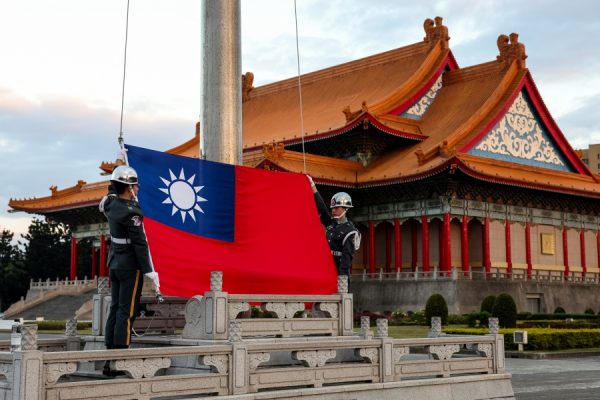
Legislator Wang Ting-yu, of Taiwan’s ruling Democratic Progressived Party (DPP), sharply criticized the KMT proposal in a Facebook post on June 5, arguing that the amendment would allow Chinese nationals to hold any public office in Taiwan, including running for president.
He condemned the proposal, saying: “What kind of political party repeatedly pushes legal amendments that benefit China while harming Taiwan? This is no longer a Trojan Horse-style conspiracy; it is an open strategy to pave the way for the Chinese Communist Party’s annexation of Taiwan.”
Wang further warned that, for now, Taiwan’s executive branch could still refuse to countersign or promulgate such legislation in accordance with constitutional procedures. However, he cautioned: “If Taiwan is to be protected through democratic means, there may be only two opportunities left—2026 and 2028.
Fellow DPP legislator Wang Yi-chuan recently discussed the issue on the political talk show After Work, Mirror Talks, as reported by Liberty Times.
Wang noted that Taiwanese citizens must spend years growing up within Taiwan’s democratic system before gaining political rights. They must be at least 20 years old to vote and 23 years old to run for public office, meaning they have undergone years of democratic education and civic experience before becoming eligible to participate in politics.
Questioning the proposed amendment, Wang asked: “Why should people who previously lived in a society with no democratic tradition [that is, mainland Chinese] be allowed to come here and immediately vote or run for public office?”
He argued that eligibility for political participation should reflect a meaningful period of exposure to and engagement with Taiwan’s democratic institutions and values.
Wang: Applicants should first renounce PRC nationality
Legislator Wang said that he has instructed his staff to draft a bill requiring anyone applying for household registration (and nationality) in the Republic of China (Taiwan) to first provide proof that they have renounced their citizenship of the People’s Republic of China.
However, Wang expressed little optimism about its prospects, saying the proposal would almost certainly be blocked by the KMT and the Taiwan People’s Party (TPP), which currently hold a majority in the legislature.
Attorney Huang Di-ying wrote on Facebook on June 8 that, under the proposed amendment, Chinese nationals could potentially participate in elections for president, legislator, city councilor, and other public offices without giving up their original nationality, raising important questions about national security and the integrity of Taiwan’s democratic system.
Huang argued that KMT lawmakers’ attempt to exempt mainland Chinese nationals from existing legal requirements actually demonstrates that current regulations barring public officials from holding dual nationality already apply to citizens of the PRC. Otherwise, he said, there would be no need to amend the law specifically to exclude them from those restrictions.
He added: “In democratic countries governed by the rule of law, nationality laws are generally applied uniformly. States do not grant political participation privileges based on a particular nationality.”
Huang further noted that Taiwan has long faced military threats and United-Front influence operations from mainland China, making it especially important to exercise caution when designing rules governing eligibility for public office and obligations of national loyalty.
He also argued that even if the KMT-TPP camp were to force the legislation through a third reading in the future, the Executive Yuan would still retain the legal authority to decide whether to countersign the bill, citing the need to safeguard Taiwan’s liberal democratic constitutional order and national security.
Taiwanese netizens responding to the proposal expressed a range of concerns about the KMT proposal. Comments included:
“If you want to be Taiwanese, then give up Chinese citizenship. You can’t have it both ways.”
“How can someone enjoy Taiwan’s public benefits while maintaining political allegiance elsewhere?”
“Giving them residency status is one thing, but voting rights and eligibility for office should be another.”
“Even native-born Taiwanese have to wait until adulthood before they can vote or run for office. Why should people from a country viewed as a political adversary receive special privileges?”
Others suggested allowing long-term residency or naturalization while restricting voting or candidacy rights, arguing that political participation should be tied to demonstrated commitment and loyalty to Taiwan.