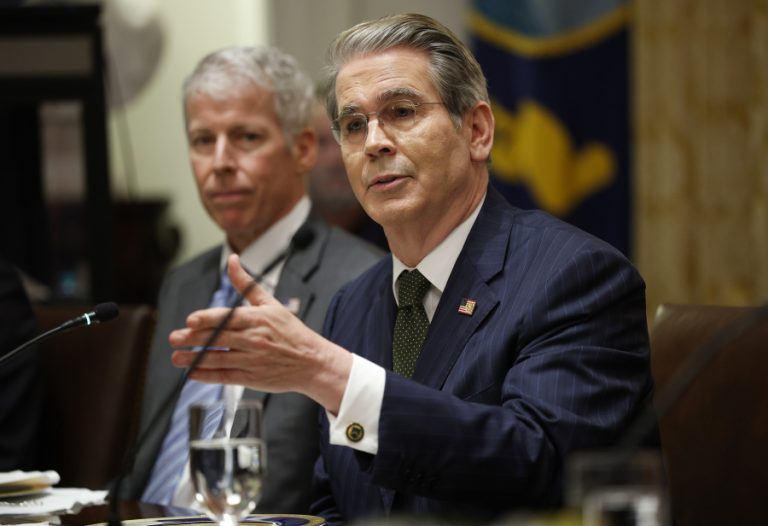
The U.S. Department of the Treasury announced on Wednesday, June 10, in a press release, a new round of sanctions against nine individuals and entities as part of its “Economic Fury” campaign, accusing them of helping the Islamic Revolutionary Guard Corps (IRGC) and Iran’s Ministry of Defense and Armed Forces Logistics procure weapons and support overseas networks that sustain Iran’s military-industrial complex.
U.S. Treasury Secretary Scott Bessent said the goal of Operation Economic Fury is to sever the international procurement channels that Iran’s military relies on to obtain weapons.
“Through Economic Fury, the Treasury Department is disrupting the foreign procurement networks that support the Iranian military’s efforts to acquire weapons,” said Bessent. “Treasury has frozen the Iranian regime’s assets, severely disrupted its economy, and dismantled the Iranian war machine. Treasury will not tolerate any support of the Iranian military.”
According to the Treasury Department, those sanctioned include several individuals and companies based in mainland China and Hong Kong. The entities are accused of assisting the IRGC and Iran’s Ministry of Defense in acquiring weapons. A Hong Kong company involved in operating a covert Iranian banking network was also sanctioned for facilitating financial transactions linked to weapons procurement.
The Treasury said the latest action expands on sanctions imposed on May 8, when the United States targeted multiple overseas procurement networks supplying weapons and technological equipment to the IRGC and Iran’s Center for Innovation and Technology Cooperation (CITC).
Success
You are now signed up for our newsletter
Success
Check your email to complete sign up
According to the U.S. government, CITC coordinates Iran’s efforts to obtain advanced foreign technology and has sought to purchase weapons from China, including man-portable air-defense systems (MANPADS).
The sanctions were issued under Executive Orders 13382 and 13902. Executive Order 13382 targets proliferators of weapons of mass destruction and their supporters, while Executive Order 13902 addresses activities connected to Iran’s financial sector. The U.S. State Department designated both the IRGC and Iran’s Ministry of Defense and Armed Forces Logistics under Executive Order 13382 in 2007 for their involvement in Iran’s ballistic missile program.
Meanwhile, the U.S. State Department also announced sanctions under Executive Order 13949 against two entities and two individuals in Iran and Belarus for involvement in activities related to Iran’s conventional weapons sector.
Treasury: Tens of billions of dollars in Iranian revenue blocked
The Treasury Department emphasized that Operation Economic Fury remains a key component of the U.S. “maximum pressure” policy toward Iran, focusing on disrupting Tehran’s ability to obtain, transfer, and repatriate funds.
According to Treasury officials, the campaign has prevented tens of billions of dollars that might otherwise have flowed to the Iranian regime and its proxy organizations, while also freezing substantial cryptocurrency assets linked to the regime.
The United States said it has also targeted Tehran’s global “underground”clandestine” banking network, sanctioned supply chains providing weapons and military components to Iran, imposed sanctions on Iraqi officials involved in oil sales benefiting Iran-backed armed groups, and continued actions against Iran-supported terrorist organizations and the “shadow fleet” that helps sustain Iran’s illicit oil exports.
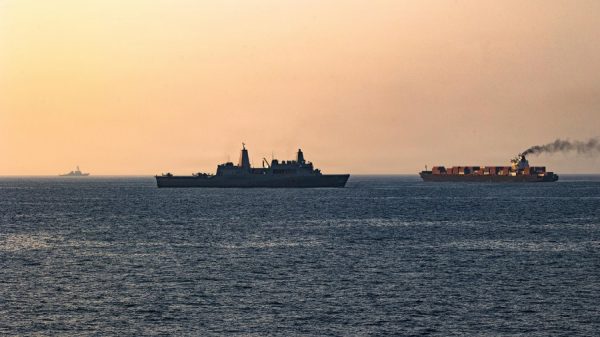
The Treasury noted that the Trump administration is currently using enforcement measures related to the Strait of Hormuz to target Iran’s primary source of revenue—oil exports. The United States warned that any individual, company, or vessel participating in illicit trade involving Iranian oil or other commodities could face U.S. sanctions.
The department added that it will continue targeting efforts to evade sanctions through digital assets and traditional financial channels and stands ready to act against foreign companies and individuals that facilitate Iran’s illicit trade.
The United States specifically identified Mahan Air and Iran Air, warning that foreign financial institutions assisting sanctioned Iranian entities could face secondary sanctions. Washington also highlighted risks for financial institutions connected to China’s independent refineries, commonly known as “teapot” oil refineries.
In addition, the Treasury recently issued a warning to the international shipping industry regarding sanctions risks associated with complying with Iranian transit requirements in the Strait of Hormuz.
According to the Treasury, high-risk activities include seeking Iranian security guarantees for passage, paying so-called transit fees, making payments in fiat currency or digital assets, conducting barter transactions, participating in informal exchange arrangements, making payments disguised as charitable donations, and providing Iran with sensitive vessel information.
Chinese and Hong Kong individuals and firms named
The Treasury’s sanctions list identifies Chinese national Liu Boyu as the sole director and president of the Hong Kong-registered company Mustad Limited.
The United States alleges that Mustad acted as an intermediary in assisting or attempting to assist the IRGC in procuring millions of dollars’ worth of weapons and military equipment. Treasury officials said Liu Boyu, along with Chinese nationals Wang Hongyi and Xu Lichun, participated in weapons procurement activities on behalf of the IRGC.
Mustad Shanghai International Trade Co., Ltd., based in Shanghai, was described as a wholly owned subsidiary of Mustad.
The Treasury noted that Mustad itself was sanctioned on May 8, 2026. In the latest action, Liu Boyu and Xu Lichun were sanctioned for allegedly providing support to the IRGC, while Wang Hongyi and Mustad Shanghai International Trade Co., Ltd. were sanctioned due to their ownership or control relationship with Mustad.
In addition, the Hong Kong company Domus Trading HK Limited was accused of participating in a covert Iranian banking network, facilitating payments for sanctioned Iranian individuals, and attempting to process transactions related to weapons procurement. The company was sanctioned under Executive Order 13902.

Iranian defense ministry procurement network revealed
The Treasury also disclosed another procurement network linked to Iran’s Ministry of Defense.
According to Treasury information, Iranian national Manuchehr Golchin, who has long resided in China, allegedly served as an intermediary for the ministry’s procurement of military equipment from China.
Chinese national Meng Shaopei was identified as Golchin’s associate and the sole shareholder and managing director of Hong Kong-based Solos International Limited, which U.S. authorities say assisted in weapons procurement for Iran’s Defense Ministry.
Treasury officials further stated that Golchin serves as chairman of Shangshun Hong Kong Ltd. and oversees its international business cooperation activities, while Meng Shaopei is also involved in company management.
As a result, Golchin, Meng Shaopei, and Solos International Limited were sanctioned under Executive Order 13382. Shangshun Hong Kong Ltd. was also sanctioned because it is allegedly controlled by Golchin.
Treasury warns of secondary sanctions
Under the sanctions, any assets and interests in assets belonging to the designated individuals and entities that are located in the United States, or under the control of U.S. persons, must be frozen. U.S. persons are generally prohibited from conducting transactions with them. Any company owned, directly or indirectly, 50 percent or more by sanctioned parties is also subject to blocking measures.
The Treasury warned that both U.S. and foreign persons who violate U.S. sanctions laws may face civil or criminal penalties. Foreign financial institutions that engage in significant transactions with sanctioned entities could also be subject to secondary sanctions, including restrictions on opening or maintaining correspondent accounts in the United States.
The department emphasized that U.S. sanctions are intended not merely as punishment but as a means of changing behavior. Individuals and organizations seeking removal from the Specially Designated Nationals and Blocked Persons List (SDN List) may still apply through established legal procedures for sanctions relief.