As activists around the world commemorate the anniversary of the 1989 Tiananmen Square crackdown, a new report from the Congressional-Executive Commission on China (CECC) has renewed attention on what U.S. officials describe as a “growing pattern of transnational repression” linked to the Chinese Communist Party (CCP).
The commission’s 2025 report, released on June 4, 2026, examines how intimidation tactics once primarily directed at overseas Chinese communities have, according to the authors, evolved into a broader effort targeting dissidents, academics, journalists, activists, and other critics around the world. The report also outlines a series of policy recommendations intended to strengthen legal protections and improve coordination among democratic governments.
The report’s release coincided with renewed bipartisan efforts in Congress to address the issue. CECC Chair Senator Dan Sullivan and Co-Chair Representative Chris Smith, together with Democratic commissioners Senator Jeff Merkley and Representative James McGovern, have introduced the Transnational Repression Policy Act in both chambers of Congress.
RELATED: US Lawmakers Spotlight China’s Transnational Repression on Tiananmen Anniversary
According to human rights’ agency Freedom House, China has been identified as the leading source of documented transnational repression incidents worldwide. The organization estimates that, of the cases recorded globally since 2014, approximately 23 percent have involved Chinese state actors or individuals allegedly acting on their behalf.
Success
You are now signed up for our newsletter
Success
Check your email to complete sign up
The CECC warned that such activities could have broader implications beyond individual victims, potentially contributing to self-censorship within universities, nonprofit organizations, businesses, and even government institutions.
A global pattern
The commission noted that concerns over Beijing’s overseas influence activities are not new. Congressional hearings dating back more than a decade examined the role of organizations such as Confucius Institutes and various overseas associations. It also pointed to a growing body of cases suggesting that these activities have evolved beyond traditional influence operations into more direct forms of intimidation, surveillance, and political interference operating on U.S. soil.
U.S. officials have warned that individuals acting on behalf of the Chinese government have sought not only to pressure dissidents and activists abroad, but also to cultivate influence within American institutions and communities. In one recent example, former Arcadia Mayor Eileen Wang agreed to plead guilty to acting as an “unregistered agent” of the CCP after federal prosecutors claimed she disseminated Beijing-directed propaganda through a Chinese-language news website while coordinating with Chinese officials.
However, the report argues that recent developments represent a shift in both scale and sophistication. Rather than focusing solely on diaspora communities, the alleged tactics now extend to anyone publicly challenging official Chinese narratives.
The report cites statements by Chinese officials describing overseas Chinese communities as important participants in united front work. Critics argue these networks can be used to shape narratives abroad, isolate critics, and cultivate influential voices sympathetic to Beijing’s interests. Chinese authorities have consistently rejected accusations that such efforts amount to repression or interference.
Tactics involved
Drawing on open-source intelligence, victim testimony, court records, and independent investigations, the CECC identified eight recurring methods associated with transnational repression:
- Physical violence and intimidation;
- AI-enabled sexual harassment and deepfake campaigns;
- Coercion through pressure on relatives remaining in China;
- Efforts to compel individuals to return to China outside formal extradition channels;
- Pressure campaigns aimed at encouraging censorship by academic and cultural institutions;
- “Lawfare,” including strategic litigation and the use of legal mechanisms to target critics;
- Political interference through covert influence activities; and
- Attempts to shape or undermine international organizations through state-backed entities.
Among the report’s newer concerns is the use of artificial intelligence to generate manipulated images and videos targeting female journalists, scholars, and activists. The commission argued that such campaigns seek to damage reputations and discourage public participation.
Academic freedom under siege
The report highlighted several cases illustrating these dynamics. One involved a researcher at the United Kingdom’s Sheffield Hallam University whose work on forced labor in global supply chains allegedly prompted sustained criticism, cyberattacks, and pressure directed at the institution. The report cited the case as an example of how academic inquiry can become entangled in broader geopolitical disputes.
Another recurring theme involved what the report described as “coercion by proxy.” Students studying abroad told investigators that, after participating in demonstrations or public advocacy, family members in China were contacted by local authorities and warned about the consequences of continued activism.
Human rights groups have long documented similar claims. Chinese officials, however, deny engaging in transnational repression and maintain that overseas law enforcement cooperation is conducted in accordance with international law.
Bipartisan push for legislative action
According to U.S. lawmakers, the introduced legislation would establish a formal legal definition of transnational repression, improve coordination among federal, state, and local authorities, strengthen support for affected communities, and hold perpetrators accountable.
In opening remarks during a recent hearing, Smith connected contemporary concerns to the legacy of Tiananmen. “37 years ago, thousands of Chinese citizens peacefully demanded political reform and democratic openness, only to be met by tanks,” Smith said. “Today, the alarm bells of history are sounding again.”
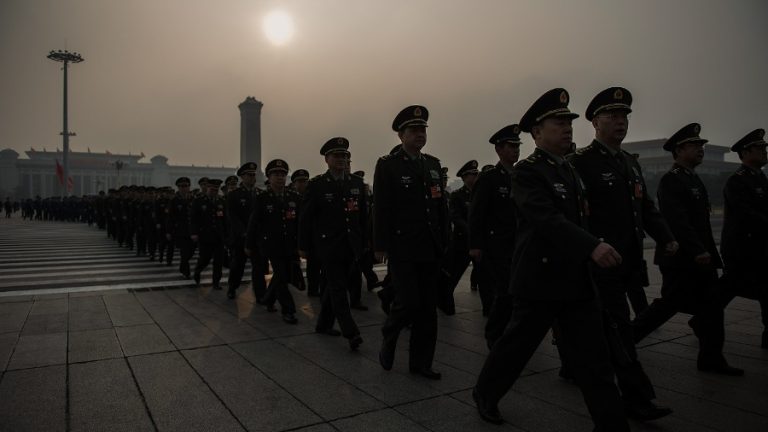
On June 4, 1989, the CCP deployed troops and tanks to crush a nationwide pro-democracy movement led largely by students. Though publicly-available information is scarce, the military assault ended weeks of peaceful demonstrations centered in Beijing’s Tiananmen Square and resulted in the deaths of hundreds, and according to some estimates, thousands of civilians.
Supporters of the legislation argue that democratic societies must develop stronger safeguards against intimidation campaigns that cross national borders. Critics of some proposed measures caution that policymakers must also balance security concerns with civil liberties and avoid stigmatizing broader diaspora communities.