As the world commemorates the 37th anniversary of the Tiananmen Square crackdown, newly-released archival footage from British broadcaster Independent Television News (ITN) is offering a rare glimpse into Beijing in the days following the military suppression of the 1989 pro-democracy movement.
The footage was filmed covertly by ITN journalists and recently made public through the organization’s archive restoration project. Because Chinese authorities tightly controlled access and monitored foreign media at the time, much of the material was never released to the public.
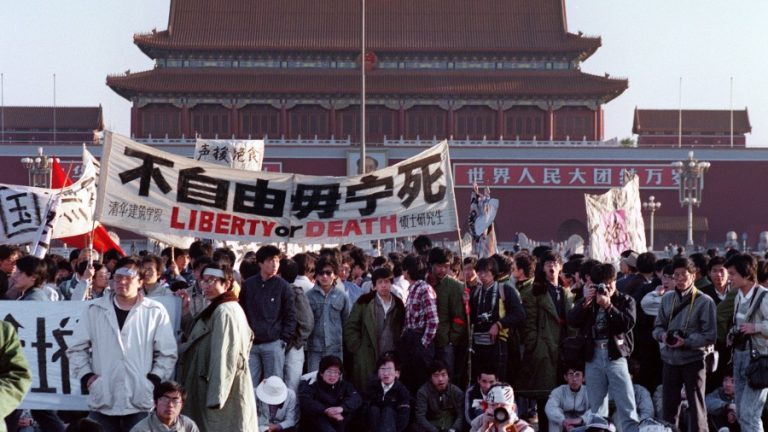
On June 4, 1989, the Chinese Communist Party (CCP) deployed troops and tanks to crush a nationwide pro-democracy movement led largely by students. Though publicly-available information is scarce, the military assault ended weeks of peaceful demonstrations centered in Beijing’s Tiananmen Square and resulted in the deaths of hundreds, and according to some estimates, thousands of civilians.
RELATED: ‘I Had Resolved to Die’: Former Peking University Student Recalls Tiananmen Crackdown
A defining moment
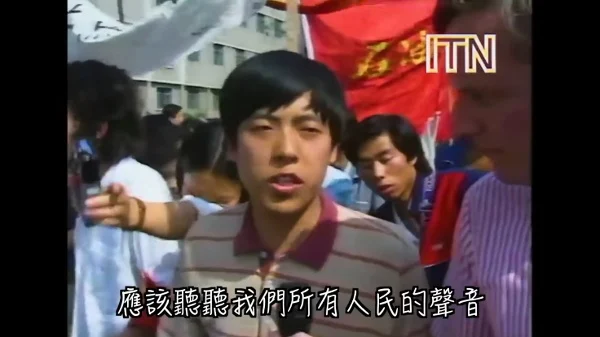
The newly-released footage runs approximately 90 minutes and captures scenes rarely seen in full by the public. Students are shown speaking openly about their hopes for political reform, while others pose atop military vehicles during the demonstrations. The recordings also document the presence of People’s Liberation Army troops in Beijing and the tense atmosphere that followed the military operation.
Success
You are now signed up for our newsletter
Success
Check your email to complete sign up
In one interview, a student speaks in fluent English: “I think the Chinese Communist Party should be wiser and should listen to the voices of all the people.”
Another participant offers a sharper criticism: “The government is very bad. It’s like a donkey in a commune, like the big-character posters at Peking University. If you whip it, it moves a little. If you don’t whip it, it doesn’t move at all.”
The footage also captures broader public support for the movement. Workers, intellectuals, farmers, and residents express sympathy for the students’ demands, while demonstrators carry banners calling for human rights and protesting authoritarian rule.
Smuggled out of China
The footage was filmed by a three-person ITN team consisting of correspondent Jeremy Thompson, cameraman Mick Deane, and sound engineer Andy Rex. According to accounts surrounding the archive release, the journalists risked significant personal danger while documenting events in Beijing. The videotapes were eventually smuggled out of China and returned to ITN headquarters in London.
At the time, television news broadcasts used only brief excerpts from the material. Most of the recordings remained stored in archives for decades. As part of a recent restoration initiative, ITN has begun releasing the original footage online in substantially longer form and with minimal editing, allowing viewers to see events largely as they were captured by journalists on the ground.
ITN previously released approximately two hours of restored footage in June 2025 documenting the military crackdown in Beijing. A second collection contains roughly 90 minutes of covertly-filmed footage showing conditions in the Chinese capital in the days following the clearing of Tiananmen Square.
Remembering June 4
The Tiananmen movement began in April 1989 following the death of former CCP leader Hu Yaobang and evolved into a nationwide call for political reform, government accountability, and greater freedoms. The movement culminated on the night of June 3 and the early hours of June 4, when Chinese authorities deployed troops and armored vehicles to clear demonstrators from the country’s capital.
The death toll remains one of the most disputed aspects of the crackdown. Chinese authorities reported hundreds of casualties, while independent researchers, victims’ families, journalists, and foreign governments have produced estimates ranging from several hundred to several thousand deaths.
More than three decades later, discussion of the crackdown remains heavily restricted inside mainland China. References to June 4 are routinely censored online, and many younger Chinese have little exposure to the events. As a result, newly released archival footage continues to serve an important role in preserving historical memory.