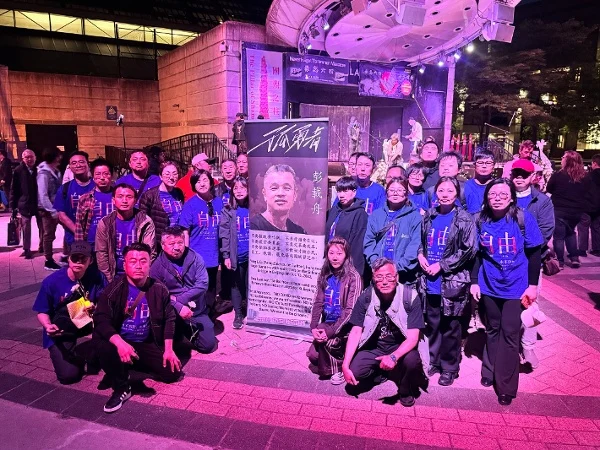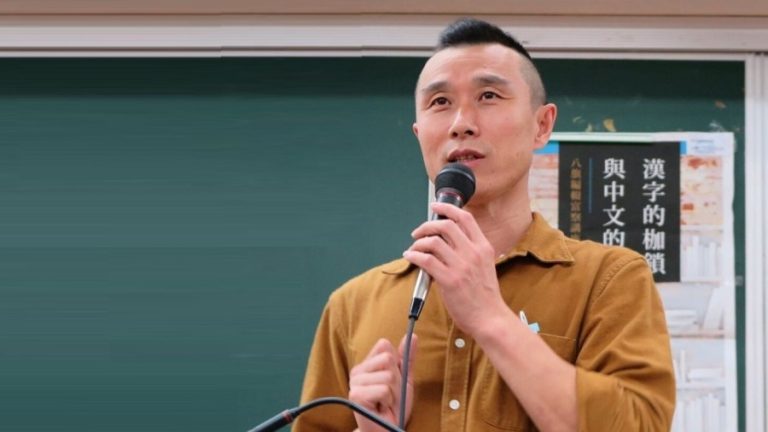
Fucha (Li Yanhe), editor-in-chief of Taiwan-based publisher Gūsa Press, was sentenced by Chinese authorities in 2023 to three years in prison on charges of “inciting separatism.” Although he completed his sentence and was released in May 2026, he remains unable to leave China because he is still required to serve an additional one-year punishment involving the deprivation of political rights, the Taipei Times reported.
On June 9, Democratic Progressive Party (DPP) legislator Chen Pei-yu criticized the opposition parties, arguing that while the Kuomintang (KMT) and Taiwan People’s Party (TPP) support reducing the residency requirement for Chinese spouses to obtain Taiwanese identification cards from six years to four years, they have remained silent about Fucha’s case.
Chen noted that Fucha is also a “Taiwanese son-in-law” and questioned why those parties had little to say when he faced what she described as politically motivated charges and the loss of his personal freedom.
According to a report by Taiwan’s Liberty Times, sources familiar with the matter said that Fucha has indeed been released from prison but is still serving the one-year supplementary penalty of deprivation of political rights and therefore cannot leave China.
The sources added that Fucha was originally a Chinese citizen and that both of his parents remain in China. Since his release, he has been living there and has reunited with family members. His wife, who resides in Taiwan, is able to travel to China to visit him.
Success
You are now signed up for our newsletter
Success
Check your email to complete sign up
‘Free’ but unable to leave the country
According to Focus Taiwan he appears “to be free, but unable to leave the country.”
Fucha, who has lived in Taiwan for many years and is of Manchu heritage, had already naturalized as a citizen of the Republic of China (Taiwan) and obtained a Taiwanese national identification card.
In March 2023, while returning to Shanghai to complete procedures to cancel his Chinese household registration (hukou), he was reportedly detained in secret by Chinese state security authorities.
His detention was linked to books published by Gūsa Press that challenged official Chinese Communist Party interpretations of history and promoted viewpoints differing from CCP ideology.
In February 2025, the Shanghai First Intermediate People’s Court sentenced Fucha (Li Yanhe) in a first-instance ruling to three years in prison for the crime of “inciting separatism.” The court also imposed an additional penalty of one year of deprivation of political rights and ordered the confiscation of 50,000 yuan (approximately US$7,000) in personal assets.
According to sources familiar with the matter, Fucha’s case was cited by Chinese authorities as a specific example in reports issued by China’s “Two Highs”—the Supreme People’s Court and the Supreme People’s Procuratorate—regarding efforts to punish what Beijing labels as “Taiwan independence” activities.
The sources said that Chinese authorities publicized the case extensively during the annual sessions of the National People’s Congress and the Chinese People’s Political Consultative Conference (commonly known as the “Two Sessions”).
They further noted that despite Fucha’s family maintaining a low profile and avoiding public attention, Chinese authorities have still barred him from leaving the country after his release from prison. He must first complete the additional one-year deprivation-of-political-rights sentence.
The sources contrasted his situation with that of Taiwanese human rights activist Lee Ming-che, who was allowed to return directly to Taiwan after completing his prison term in China and was not required to remain in the country to serve an additional penalty.
DPP criticism of opposition parties
According to a post on Facebook, Democratic Progressive Party (DPP) legislator Chen Pei-yu said she was encouraged to hear the news that publisher Fucha (Li Yanhe) had been released from prison.
She stated that the news allowed those who care about him and admire the work of Gūsa Press to breathe a temporary sigh of relief. After being sentenced by China to three years in prison for “inciting separatism,” the veteran publishing professional—who has spent many years enriching Taiwan’s literary and intellectual landscape—has finally left prison and is able to reunite with his family in China. His wife in Taiwan is also now able to visit him there.
However, Chen said that the joy is tempered by the fact that Fucha still faces a one-year additional punishment. He remains subject to travel restrictions and is currently unable to return to his home in Taiwan.
Chen asked: “What crime did he actually commit?”
She argued that, in essence, the issue stems from the fact that Gūsa Press has published numerous high-quality books over the years that challenge official Chinese Communist Party historical narratives and present diverse perspectives.
Chen further criticized the opposition Kuomintang (KMT) and Taiwan People’s Party (TPP), saying they have recently pushed legislation in Taiwan’s legislature that would reduce the residency period for Chinese spouses to obtain Taiwanese ID cards from six years to four years, treat cross-strait relations as an unresolved civil war rather than relations between two separate governments, and allow Chinese citizens to participate in Taiwan’s political system.
Chen believes proposals are justified
According to Chen, these proposals are justified by their supporters as efforts to protect the rights of Chinese spouses in Taiwan.
She continued: “But Fucha is also a Chinese spouse and also a son-in-law of Taiwan. When he faced what many view as fabricated charges and the loss of his personal freedom, why did those who claim to support the rights of Chinese spouses remain silent?”
Chen questioned why the KMT and TPP had, in her view, failed to speak out against what she described as intimidation by the Chinese government against Taiwan’s publishing freedom.
She asked: “Why have they chosen to remain silent, unable to offer even the most basic condemnation or expression of support? Do the rights of Chinese spouses suddenly become less important when the Chinese Communist Party is involved?”
Chen then argued that the case illustrates what she considers the true nature of the CCP regime, stating: “Open your eyes and see clearly—this is the nature of the CCP regime. The reason it still allows you to shout ‘Republic of China’ is simply because you still have value to it.”
She concluded by expressing hope that Fucha would safely complete the remaining year of restrictions and be able to return to Taiwan as soon as possible:
“I pray that this long year of additional punishment passes safely, and that this son-in-law of Taiwan and important partner of Taiwan’s cultural community can soon cast off his shackles, set foot safely on Taiwanese soil, and return to the home that truly belongs to him.”
Taiwan government response
According to a report by Radio Taiwan International (RTI), Taiwan’s Mainland Affairs Council (MAC) responded to questions about Fucha’s situation on June 8 by stating that, out of respect for the wishes of his family, it would not provide further comment on the case.
Meanwhile, the Straits Exchange Foundation (SEF) said it would continue to handle the matter in accordance with government directives and the needs of Fucha’s family.
The foundation added that it would continue to monitor developments closely and expressed hope that Fucha (Li Yanhe)could return to Taiwan as soon as possible.
The SEF further stated that it would respect the wishes and needs of the family and remain ready to provide any necessary assistance at any time.