In the aftermath of the Trump–Xi meeting last week, Taiwan’s president Lai Ching-te addressed the public on May 17 after receiving a briefing from Taiwan’s national security team.
He emphasized five key points: Taiwan is a defender of peace and stability in the Taiwan Strait and the wider region; China is the source of regional instability and attempts to alter the status quo; safeguarding the status quo of the Republic of China means there is no issue of “Taiwan independence;” and peace and stability in the Taiwan Strait must never be sacrificed or traded away.
The Kuomintang questioned Lai’s definition of “Taiwan independence,” asking in response: “Is the People’s Republic of China a foreign country?”
This KMT’s statement reportedly drew criticism and rebuttal from political commentator Wu Jingyi.
Lai Ching-te’s five-point response to the Trump–Xi meeting
Lai stated in a Facebook post on the evening of May 17 that in recent days, Donald Trump had visited China and met with Chinese Communist Party leader Xi Jinping. He noted that many people were closely watching discussions regarding Taiwan during the Trump–Xi meeting.
Success
You are now signed up for our newsletter
Success
Check your email to complete sign up
The government had also observed that officials from the United States government, including President Trump and Secretary of State Marco Rubio, had repeatedly reaffirmed that longstanding U.S. policy toward Taiwan had not changed. Lai expressed gratitude to the U.S. government for its continued attention to peace and stability in the Taiwan Strait and for its support for Taiwan.
Lai added that earlier he had received reports from Taiwan’s national security team, including the National Security Council, the Ministry of Foreign Affairs, Ministry of National Defense, Mainland Affairs Council, and National Security Bureau, in order to gain a comprehensive understanding of and discuss the latest developments.
Lai Ching-te stated that he wanted to explain five key points to the public.
First, Taiwan is a defender of peace and stability in the Taiwan Strait and the broader region. Maintaining peace and stability across the strait and in the region, he said, has long been the consistent and firm position of the Republic of China and represents the broadest consensus among Taiwan’s 23 million people. Lai said he has repeatedly stated publicly that, as a responsible party in the region and in cross-strait relations, Taiwan will not provoke conflict or escalate tensions, but neither will it surrender national sovereignty, dignity, or its democratic and free way of life under pressure. Taiwan, he said, has always been a firm defender of the cross-strait status quo rather than the side seeking to change it.
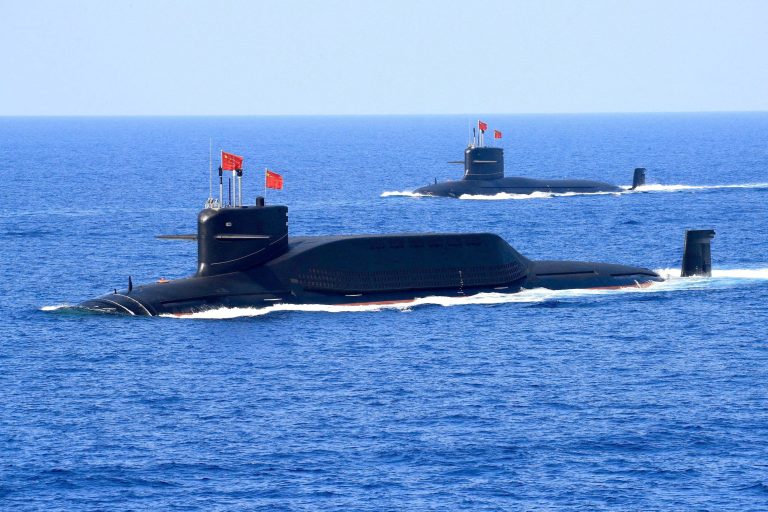
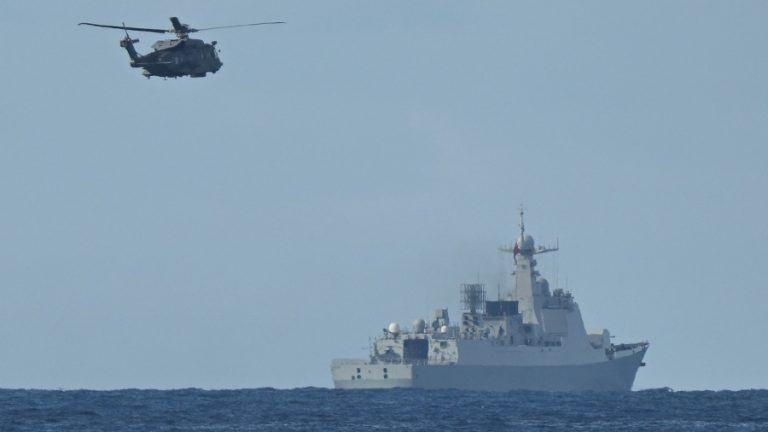
Second, Lai argued that communist China is the source of regional instability and efforts to alter the status quo. He stated that in recent years, China has continuously expanded military activities in and around the Taiwan Strait, including military aircraft and naval incursions near Taiwan, large-scale military exercises, “gray-zone” coercion tactics, and various forms of military, political, and economic pressure on neighboring countries.
Third, Lai said that defending the status quo of the Republic of China means there is no issue of “Taiwan independence.” He stated that the “Republic of China Taiwan” is already a sovereign and independent democratic state. He added that he has repeatedly reaffirmed support for Taiwan’s free and democratic constitutional system, the position that the Republic of China and the People’s Republic of China are not subordinate to one another, and the principle that Taiwan’s sovereignty cannot be violated or annexed. Taiwan’s future, he said, must follow the will of all Taiwanese people. According to Lai, this represents the broadest consensus within Taiwan and defines the status quo Taiwan seeks to preserve; therefore, there is no so-called “Taiwan independence” issue.
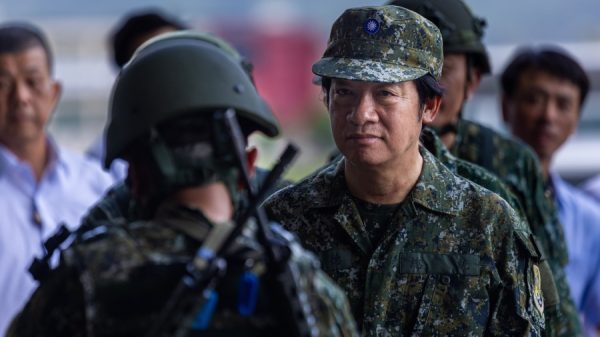
Lai further stated that he is willing to promote healthy and orderly exchanges and dialogue with China on the basis of equality and dignity. However, he rejected what he described as China’s attempts to use “unification” as a pretext for political infiltration, coercive exchanges, and efforts aimed at annexing Taiwan. He said this remains the government’s bottom line in handling cross-strait relations.
Fourth, Lai stated that security cooperation and arms sales between Taiwan and the United States are key elements in maintaining regional peace and stability. He said that long-term Taiwan–U.S. security cooperation and arms sales are based on the Taiwan Relations Act. According to Lai, this framework represents not only the United States’ security commitment to Taiwan, but also one of the most important long-standing deterrents against forces seeking to undermine regional peace and stability.
Lai Ching-te expressed gratitude to Donald Trump for his continued support for peace and stability in the Taiwan Strait since his first presidential term. Lai noted that this support included increases in both the scale and value of U.S. arms sales to Taiwan, helping Taiwan strengthen its self-defense capabilities.
Lai stated that Taiwan is a key strategic hub in the Indo-Pacific security framework and the “first island chain.” Given that the People’s Republic of China has never renounced the use of force to annex Taiwan and continues to expand its military capabilities in an attempt to alter the regional and cross-strait status quo, he argued that continued U.S. arms sales and deeper Taiwan–U.S. security cooperation are both necessary and essential for maintaining regional peace and stability.
‘Taiwan will not be sacrificed or traded’
As his fifth point, Lai said Taiwan represents a core global interest and that peace and stability in the Taiwan Strait would never be sacrificed or traded away. He described Taiwan as an important security node in the Indo-Pacific, a global center for artificial intelligence and semiconductor development, and an indispensable part of the reorganization of global supply chains.
According to Lai, Taiwan is central to global interests, and any action that undermines peace and stability in the Taiwan Strait would not only constitute an open challenge to international rules and order, but would also seriously affect Indo-Pacific security, global supply chains, and the world economy.
He added that ensuring peace and stability in the Taiwan Strait has long been a shared consensus and common interest among Taiwan, the United States, and democratic countries around the world. “Taiwan will never be sacrificed or traded,” he said.
Lai emphasized that “peace depends on strength, on the people’s determination to defend freedom and democracy, and on steadfast cooperation with allied and friendly nations.” He said Taiwan would continue taking responsibility for strengthening its self-defense capabilities, firmly safeguarding democracy and freedom, maintaining the status quo with confidence and restraint, and contributing positively to regional and global peace and prosperity.

Wu Jingyi questions the Kuomintang
Regarding Lai’s definition of the meaning of “Taiwan independence,” the Kuomintang demanded that Lai answer the question: “Is the People’s Republic of China a foreign country?”
In response, political commentator Wu Jingyi posted on Facebook on May 18, asking the Kuomintang in return: “The Chinese Nationalist Party says cross-strait relations are not ‘state-to-state’ relations—so what kind of relationship are they exactly? Kuomintang, answer the question!”
Wu Jingyi emphasized that “the People’s Republic of China has never governed Taiwan for even a single day, so the Republic of China is, of course, a sovereign and independent country.”
She said that President Lai Ching-te was defending the sovereignty and status quo of “Republic of China Taiwan” by clearly stating that “Taiwan does not belong to the People’s Republic of China” and that “the Republic of China and the People’s Republic of China are not subordinate to each other.” According to Wu, these statements are the basic premise for the existence of the Republic of China. She asked rhetorically: “Which word in those two statements is wrong?”
Wu said the Kuomintang quickly tried to refute Lai’s remarks by invoking phrases such as “cross-strait relations are not state-to-state relations,” “the mainland is not a foreign country,” and the “1992 Consensus.” However, she argued that if the two sides of the strait are not in a state-to-state relationship, then what kind of relationship are they?
She further criticized the Kuomintang by saying that the party receives substantial public subsidies funded by Taiwanese taxpayers, participates in the Republic of China’s democratic elections, and benefits from its constitutional system, yet on the crucial issue of sovereignty it does not dare clearly acknowledge that the People’s Republic of China has never ruled Taiwan, nor admit that the Republic of China is not part of the People’s Republic of China. According to Wu, this is the greatest contradiction.
Wu remarked: “No wonder it’s Zheng Li-wen’s ‘Chinese Nationals’ Party!”—a play on the name of the Kuomintang. She added that “the people truly destroying the Republic of China are those who refuse to acknowledge that the two sides of the strait are not subordinate to one another, while rushing to force Taiwan back into Beijing’s ‘One China’ framework.”
In closing, Wu again challenged the Kuomintang: “Kuomintang, answer the question! If cross-strait relations are not ‘state-to-state’ relations, then what exactly are they?”