On April 20, 2026, the sunshine in Cupertino, California was unusually bright. This is the “heart of Silicon Valley,” but at Apple’s headquarters, the atmosphere was reportedly at its lowest point in 15 years. Without any clear warning, Apple released a statement that sent shockwaves through Wall Street.
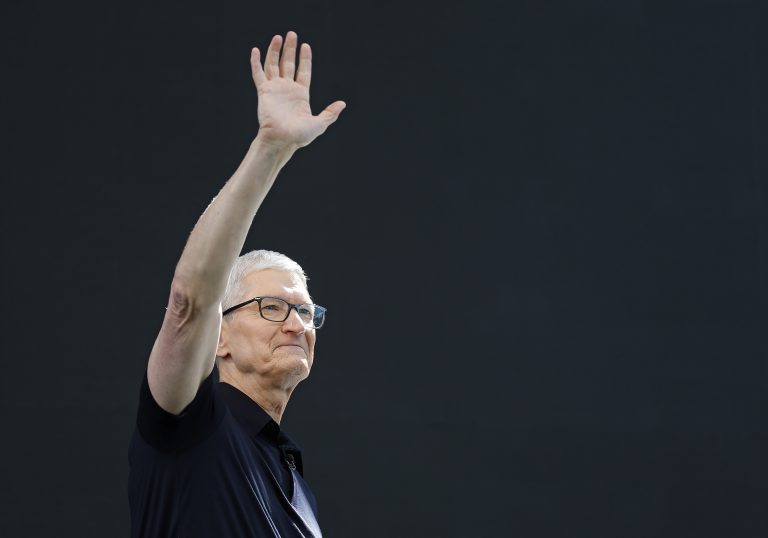
Tim Cook, the “management architect” who took Apple from a $350 billion company to a nearly $4 trillion giant, announced that he would officially step down on Sept. 1, 2026. The announcement came shortly after he surpassed Steve Jobs’ tenure (5,091 days) as Apple’s longest-serving CEO. Cook ended his CEO career in what many described as a very “Apple-like” way—precise, calm, and without drama.
In a statement, Cook said: “It has been the greatest privilege of my life to be the CEO of Apple and to have been trusted to lead such an extraordinary company. I love Apple with all of my being.”
He added that no one loved Apple more than he did, and that what he achieved at Apple was beyond what most people could accomplish in a lifetime. Even U.S. President Donald Trump reportedly praised Cook’s remarkable career, saying he had an extraordinary legacy and wished him success in any future endeavors.
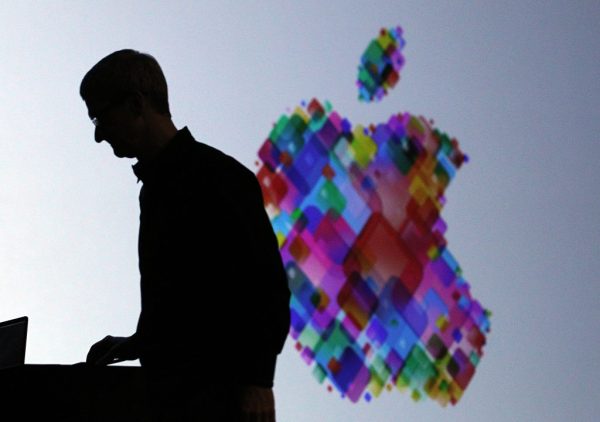
Cook’s departure and Apple’s turning point
On the surface, Cook’s resignation looks like a successful and orderly exit. Over the past 5,000+ days, he proved himself one of the greatest operational leaders in the world. Rather than living in Steve Jobs’ shadow, he transformed Apple through disciplined management, supply chain mastery, and ecosystem expansion into a profit machine. Under his leadership, Apple’s valuation grew more than tenfold, with revenue and profits reaching record highs. The company also expanded massively, with more than 100,000 additional employees and over 2.5 billion active devices worldwide.
Success
You are now signed up for our newsletter
Success
Check your email to complete sign up
As of Aug. 1, 2025, Cook had served 5,091 days as CEO—surpassing Steve Jobs’ 5,090 days and becoming Apple’s longest-serving chief executive.
But despite expectations that his departure was inevitable, the timing still felt abrupt. Some saw signs of unease behind the decision.
One key factor was Apple’s AI strategy. Apple Intelligence, launched with high expectations in 2024 and promoted as Apple’s “next major innovation,” failed to meet expectations. Its rollout was slow, features were reduced, and Apple found itself increasingly squeezed between OpenAI and Google.
While competitors poured hundreds of billions into the AI arms race, Apple remained cautious and deliberately restrained, avoiding the most aggressive wave of industry transformation. In practice, Apple Intelligence became something of an awkward disappointment. Its flagship upgrade—an advanced AI-powered Siri—never fully materialized, and legal disputes delayed parts of its rollout in Europe by months.
According to industry analysts and insiders, Apple’s leadership no longer believed the 65-year-old CEO could drive the company’s AI transformation. As one senior tech journalist put it, “The AI era requires a different kind of leadership.”
Cook excelled at operations, but critics argue he lacked instinct for “linear innovation.” As Silicon Valley shifted from precision hardware to aggressive computing power and AI development, his supply-chain strengths were no longer enough to keep Apple ahead.
From ‘Flying Fish’ to Apple’s future king
Apple’s next CEO was not a surprise media star or marketing figure, but the quietly influential hardware engineering chief, John Ternus.
If Cook was Apple’s “operations commander,” Ternus is seen more as a continuation of the technical legacy associated with Steve Jobs. A 51-year-old Californian, Ternus graduated from the University of Pennsylvania in 1997 with a degree in mechanical engineering. During his time there, he was also a competitive swimmer, winning championships in both the 50-meter freestyle and 200-meter medley events.
That same athlete-like discipline and pursuit of engineering perfection later shaped his work in hardware design. His undergraduate project was considered ahead of its time: a mechanical robotic hand designed to assist paralyzed patients, controlled through head movements.