The Chinese government’s latest efforts to expand what it calls “normalized governance” in waters east of Taiwan are drawing scrutiny and backlash from Taipei, which warns the move represents a new form of gray-zone pressure designed to gradually alter the regional status quo.
The controversy emerged after China’s Ministry of Natural Resources announced plans to conduct extensive marine environmental surveys in waters east of Taiwan. Chinese state media subsequently framed the effort as part of a broader strategy to incorporate the area into a more systematic governance framework.
An article published by the state-run Global Times argued that waters east of Taiwan were increasingly being brought under China’s “near-sea governance” model, extending Beijing’s administrative presence beyond traditional maritime patrols and military activities into areas such as environmental monitoring, resource management, transportation oversight, and ecological protection.
The article emphasized that the concept of “near” referred not to geographic distance but to what it described as issues of sovereignty, jurisdiction, development, and conservation.
RELATED: Beijing Turns to Diplomatic Pressure as Military Activity Around Taiwan Eases
A new ‘gray-zone’ tactic
Success
You are now signed up for our newsletter
Success
Check your email to complete sign up
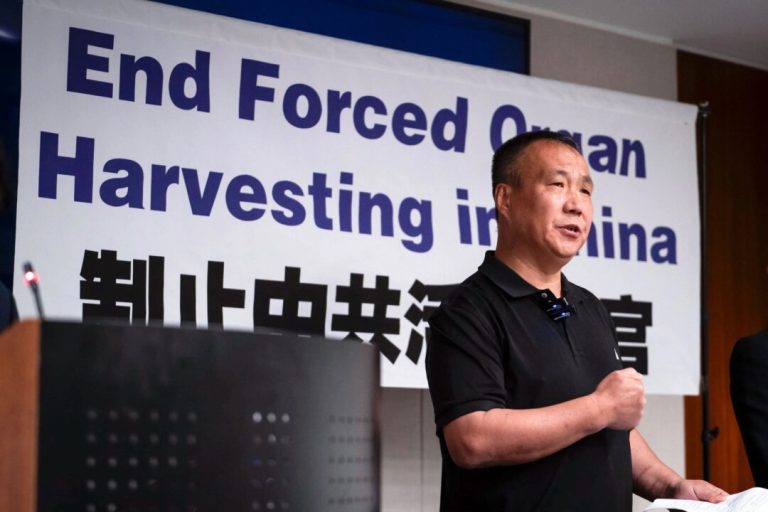
Taiwan’s Mainland Affairs Council (MAC) responded by characterizing the initiative as a new form of gray-zone conflict designed to intimidate. Speaking at a regional security symposium hosted by academic organizations in Taipei on June 22, MAC Deputy Minister Shen You-chung warned that Beijing’s campaign against Taiwan has expanded across multiple fronts, including military activities, diplomatic isolation efforts, economic coercion, influence operations, and information warfare.
“China’s recent claim that it is implementing ‘normalized near-sea governance’ in waters east of Taiwan is a new form of gray-zone conflict and an attempt to change the status quo in the Taiwan Strait,” Shen said. He added that such activities extend beyond Taiwan and affect neighboring countries.
“This type of gray-zone conflict not only threatens Taiwan, but also creates disturbances for neighboring countries such as Japan and the Philippines,” Shen said, arguing that Beijing continues to act as a source of geopolitical instability in the region.
Shen reiterated Taipei’s long-standing position that the Republic of China (Taiwan) and the People’s Republic of China are not subordinate to one another and that peace and stability in the Taiwan Strait remain a shared interest among democratic nations. He called on Beijing to abandon the threat of force and urged democratic countries to deepen cooperation in response to authoritarian expansionism.
Concerns over the first island chain
The latest dispute comes amid broader concerns about China’s long-term strategy in the western Pacific. According to Taiwanese national security officials cited in local media reports, authorities have studied nearly two decades of Chinese activities within the so-called first island chain, a strategic arc stretching from Japan through Taiwan and the Philippines.
Officials argue that Beijing’s objective extends beyond individual territorial disputes and instead seeks to gradually weaken the cohesion of regional states while expanding China’s operational freedom throughout the area.
They contend that China’s use of coast guard patrols, maritime law enforcement operations, military exercises, and administrative measures forms part of a broader gray-zone strategy designed to incrementally reshape regional realities without triggering open conflict. Taiwanese security analysts also warn that such activities risk eroding long-established norms governing freedom of navigation and regional maritime order.
International legal concerns
The debate also touches on broader questions of international maritime law. Beijing has increasingly challenged the concept of certain waters being considered international waters, particularly in areas surrounding Taiwan and within the South China Sea. Many foreign legal scholars and maritime experts argue that such interpretations conflict with established principles under the United Nations Convention on the Law of the Sea (UNCLOS).
Critics contend that attempts to redefine the legal status of regional waterways form part of a broader “lawfare” strategy aimed at expanding China’s jurisdictional claims and restricting the movement of foreign military and civilian vessels.
Since its establishment in 1949, Taiwan has operated as a de facto independent polity, with its own democratically-elected government, military, and foreign relations. Beijing, however, claims the self-ruling island as a breakaway province and rightful part of the People’s Republic of China (PRC). As such, the CCP has repeatedly stated that it seeks eventual “reunification,” as an end goal, reserving the option of using force if necessary.
As tensions continue to rise across the Indo-Pacific, Taiwan’s warning underscores growing concerns that future competition may increasingly take place not through direct military confrontation, but through incremental administrative, legal, and maritime measures designed to reshape the strategic environment over time.