By Li Zexu, Vision Times
Foreign media have reported that the Chinese Communist Party (CCP) may be adjusting its strategy for pressuring Taiwan. After years of military intimidation, Beijing has found that such actions have not only damaged its international image but also helped Taiwan gain greater international support. As a result, the CCP may be shifting its approach by intensifying diplomatic efforts to isolate Taiwan and its leaders.
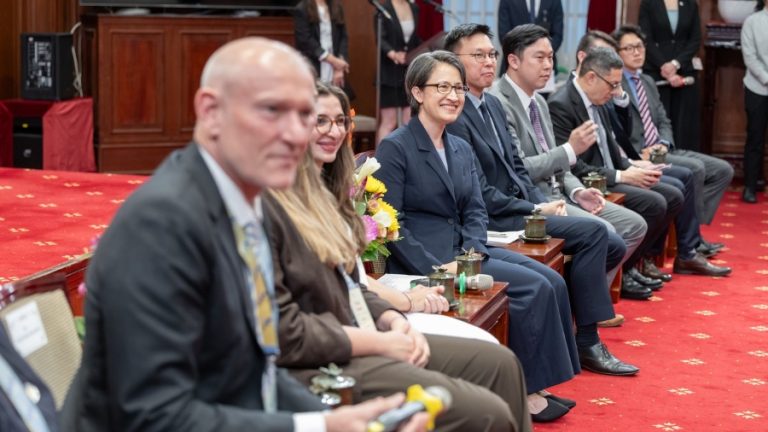
On June 16, Taiwan’s Ministry of Foreign Affairs (MOFA) reiterated that Taiwan and China “are not subordinate to one another” and warned Nepal’s new government that endorsing Beijing’s “One China Principle” at the expense of peace and stability in the Taiwan Strait would not benefit Nepal and could harm its own interests.
Since its establishment in 1949, Taiwan has operated as a de facto independent polity, with its own democratically-elected government, military, and foreign relations. Beijing, however, claims the self-ruling island as a breakaway province and rightful part of the People’s Republic of China (PRC). As such, the CCP has repeatedly stated that it seeks eventual “reunification,” as an end goal, reserving the option of using force if necessary.
A reduction in drills?
According to a Bloomberg report cited by Taiwan’s Central News Agency (CNA), Chinese military activity around Taiwan has declined from the record levels seen in late 2024.
Success
You are now signed up for our newsletter
Success
Check your email to complete sign up
Taiwan’s Ministry of National Defense reported that the People’s Liberation Army averaged about 5.4 aircraft crossings of the Taiwan Strait median line per day in January 2026, the lowest level since before President Lai Ching-te took office, especially compared to 2024 when the CCP sent a record number of aircraft over the Taiwan strait. Analysts also note that the decline may reflect a change in Beijing’s tactics rather than a reduction in pressure on Taiwan.
Jeremy Chan, Senior Analyst for China and Northeast Asia at Eurasia Group, said Beijing may believe that its previous gray-zone pressure tactics damaged China’s international reputation and helped Taiwan rally support abroad. He added that China is seeking to isolate President Lai Ching-te internationally while weakening his domestic political support ahead of Taiwan’s 2028 presidential election.
According to The Wire China, Beijing imposed restrictions on Agence France-Presse (AFP) after the news agency interviewed Taiwanese President Lai Ching-te in February. Citing people familiar with the matter, the report said Chinese authorities refused to issue a visa to AFP’s newly assigned correspondent and limited AFP reporters’ access to major political and diplomatic events.
AFP Asia-Pacific Regional Director Michael Mainville said the organization remains committed to reporting from China and expressed hope that authorities would continue to provide journalists with access to cover major developments.
Warning shots
Meanwhile, Taiwan’s MOFA criticized remarking regarding Beijing’s longstanding “One China” policy and warned Nepal’s new government against supporting positions that undermine peace and stability across the Taiwan Strait. The ministry argued that doing so would not benefit Nepal and could harm its long-term interests.
Separately, MOFA condemned what it described as Chinese pressure on Kenya after Taiwanese scholars were denied participation in the 11th Our Ocean Conference. Taiwanese officials said the scholars were detained for more than 20 hours and had their passports and mobile phones confiscated before being allowed to leave the country.
Taiwan also accused Beijing of using diplomatic pressure to block Taiwan’s international participation and called on China to stop actions that undermine international cooperation on maritime affairs. The ministry said Taiwan would continue working with like-minded partners to promote peace and stability in the Indo-Pacific region.