As residents trapped by catastrophic flooding in southern China’s Guangxi Zhuang Autonomous Region pleaded for rescue after days of rising floodwaters, Beijing announced an additional 100 million yuan (about US$14 million) in aid to Venezuela—a move that sparked criticism on Chinese social media, where many users questioned why disaster victims at home appeared to be receiving far less attention.
Floodwaters leave communities isolated
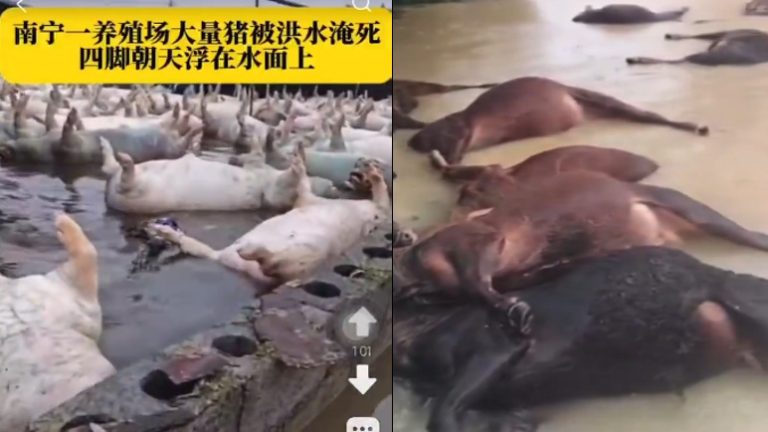
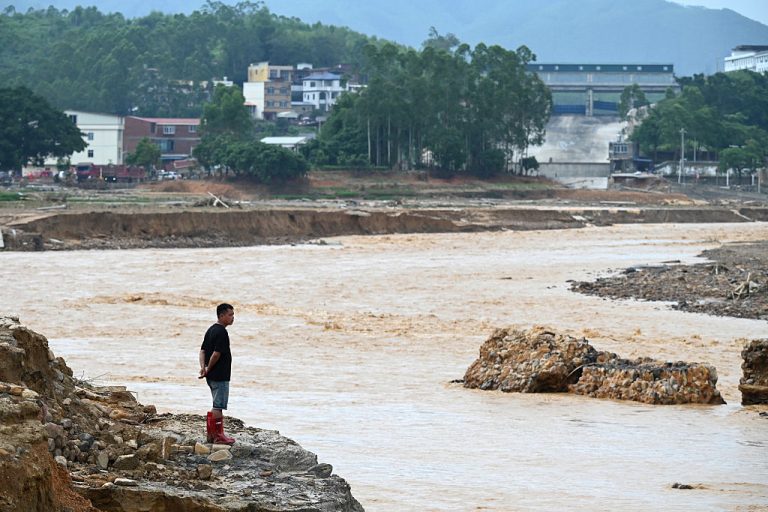
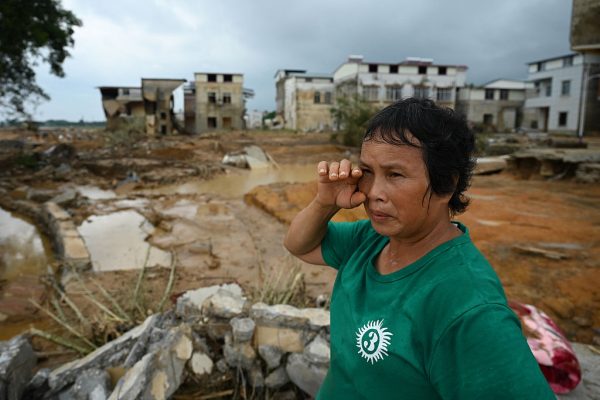
Days of torrential rain overwhelmed several reservoirs in Hengzhou, a county-level city under the jurisdiction of Nanning. On July 6, the Liulan, Yunbiao, Sancha, and Chayuan reservoirs reportedly suffered dam failures, sending floodwaters into nearby villages, destroying homes and leaving several people missing.
A secondary dam at Baihe Reservoir also failed, worsening flooding in several downstream townships in neighboring Binyang County.
Hengzhou has more than 1,700 reservoirs and other water-storage projects. After days of heavy rainfall, emergency water releases from multiple reservoirs inundated downstream communities.
Yunbiao Township remains among the hardest-hit areas, with floodwaters still high days after the disaster.
Success
You are now signed up for our newsletter
Success
Check your email to complete sign up
A resident surnamed Wang described the situation:
“Yunbiao is completely flooded. Many places are still inaccessible. There are only a few inflatable rescue boats, and people who are evacuated are shivering because they’ve been soaking in the water for so long. Supplies are being delivered almost entirely by drones. What we need most are more drones, boats, and rain gear.”
Posts circulating on Chinese social media also claimed floodwaters washed venomous snakes out of nearby snake farms, leaving at least one flood victim bitten and unable to reach medical care.
As upstream reservoirs released large volumes of water, rising levels on the Yu River inundated the downstream city of Guigang.
Residents reported that the Jijing Reservoir breached on July 7, while the Gandao Reservoir also suffered structural failure.
A resident of Guigang, identified only by the surname Huang, said:
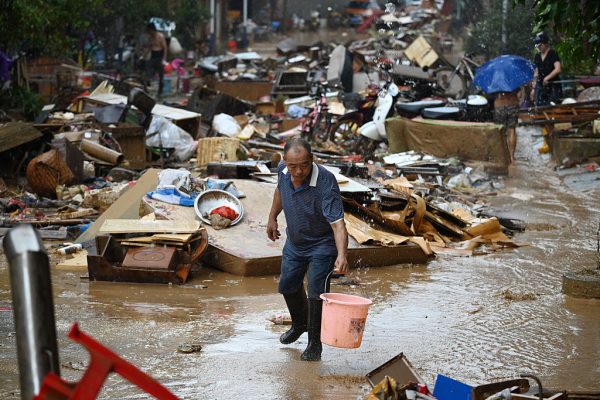
“The river has overflowed into the city. Gangnan District is flooded, and Gangbei is even worse. The water is still rising. Cars are submerged, supermarkets are flooded, and it’s impossible to buy supplies. In some places the water is as high as the first floor of buildings. The main roads are under more than a meter of water, and we’ve lost both electricity and running water.”
On July 8, a resident of Mutang Village in Liujing Town appealed on the social media platform Xiaohongshu for nearby drone operators to deliver food, offering to pay for the service.
According to the post, the village had been surrounded by floodwaters for three days. Some families pooled money to buy food that could only be delivered by drone, while others had gone three days without eating.
The resident also wrote that internet service was intermittent and that repeated calls to official emergency hotlines over two days brought no rescue response. He further alleged that Xiaohongshu repeatedly removed his requests for help, citing alleged violations of the platform’s rules.
Residents question official rescue efforts
Chinese social media has been filled with videos portraying official rescue efforts, but residents say many appear to have been filmed in relatively shallow floodwaters rather than in the worst-hit areas.
With official assistance slow to arrive, many communities organized their own rescue efforts using limited resources.
Local officials urged residents to “understand” traffic restrictions imposed during the disaster. Flood victims alleged that the restrictions also prevented volunteer rescue teams from reaching some of the hardest-hit areas.
Venezuela aid announcement sparks online anger
While flood victims in Guangxi continued waiting for assistance, China’s Foreign Ministry announced additional humanitarian aid for Venezuela.
Foreign Ministry spokesperson Mao Ning said on July 7 that China would provide an additional 100 million yuan in aid, on top of earlier financial assistance. The first shipment of 80 tons of relief supplies has already arrived by chartered aircraft.The announcement immediately drew criticism online, with many users asking when comparable relief supplies would reach Guangxi. On X, users questioned why Beijing appeared more willing to provide aid abroad while people affected by the flooding at home were still waiting for help.
One widely shared post read, “To the Communist Party, Venezuela has value. Guangxi’s people do not.” Others wrote, “You can’t find another country like this—its own people are suffering from disaster, yet it rushes to help others,” and “People at home are still struggling to survive, yet public money is being used to polish the government’s image overseas.” Some users also alleged that critical comments were being removed from Chinese social media platforms.