Cases involving foreign nationals, as well as people from Hong Kong, Macau, and Taiwan, going missing or being detained after traveling to mainland China have been on the rise.
Taiwan’s Mainland Affairs Council (MAC) recently announced that 10 new cases of Taiwanese citizens losing contact after traveling to China were reported in July. Among them was the unusual case of a four-person tour group that reportedly disappeared after entering China, with all members losing contact.
China’s Taiwan Affairs Office (TAO) dismissed the MAC’s claims as “fabricated information” on July 15.
Amidst such growing threats, Taiwanese actor and television personality Chen Jiaxing, better known by his stage name “Caramel Brother” (焦糖哥哥), said that traveling to China does indeed carry risks.
He added that many people form their impressions of China through platforms such as YouTube, TikTok, Xiaohongshu (RedNote), or online influencers, and that algorithm-driven external propaganda content can easily lead to mistaken perceptions.
Success
You are now signed up for our newsletter
Success
Check your email to complete sign up
Ten more Taiwanese reported missing after traveling to China; TAO calls it ‘fake news’
China’s Taiwan Affairs Office held its regular press briefing on July 15, according to Taiwan’s Central News Agency (CNA). Reporters asked whether the TAO or relevant Chinese authorities had information on the whereabouts of the 10 Taiwanese reported missing since July, and whether the cases involved telecommunications fraud, other criminal offenses, or were simply instances of people losing contact.
In response, Zhu Fenglian, spokesperson for the Taiwan Affairs Office, claimed that the Mainland Affairs Council had “fabricated and deliberately spread false information in an attempt to mislead the people of Taiwan,” adding that such allegations were “completely untenable.” She further stated that the media had no reason to engage in “groundless speculation” regarding the cases.
Zhu Fenglian further stated, “As long as Taiwan compatriots do not engage in illegal or criminal activities, they can come to the mainland happily and return home safely.”
Liang Wen-chieh, Deputy Minister of Taiwan’s Mainland Affairs Council (MAC), announced at a regular press briefing on July 9 that 10 new cases of Taiwanese citizens going missing after traveling to China had been reported since late June/early July, reported Taipei Times. The cases include a group of four people who traveled together and all subsequently lost contact. Of the remaining six individuals, one had traveled to visit relatives, one had gone to seek employment, and the reasons for the other four traveling to China remain unknown.
The cases were reported by the missing individuals’ family members and friends. The Taiwanese government is attempting to verify their status through available channels, including whether they have been detained or placed in custody by Chinese local authorities.
Liang also disclosed that a judge from a local Taiwanese district court, who traveled to northern China in April this year as a tourist, was questioned at his hotel by three Chinese public security officers. The officers asked about his profession, the differences between the judicial systems on the two sides of the Taiwan Strait, and his views of mainland China. According to Liang, the officers already knew the judge’s identity before questioning him.
The Mainland Affairs Council is actively working through relevant channels to locate the missing individuals. The Taiwanese government has also raised its travel advisory for China, Hong Kong, and Macau to the “orange” level, urging Taiwanese citizens traveling to China to remain alert to potential safety risks.
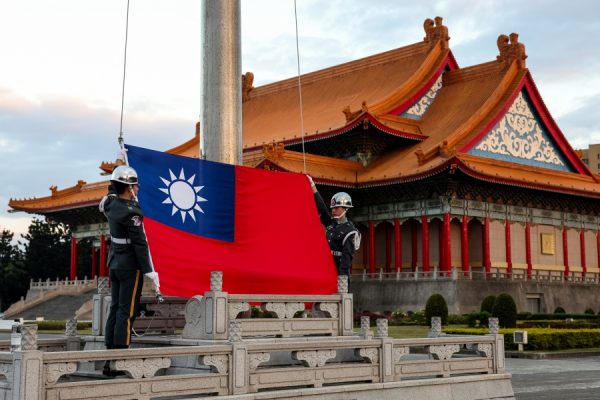
198 Taiwanese suspected of being detained by Chinese authorities
In its latest Weekly Safety Bulletin for Travel to Mainland China, Hong Kong, and Macau, released last week, the Mainland Affairs Council (MAC) reported that since Jan. 1, 2024, a total of 385 cases involving Taiwanese citizens who went missing, were questioned, or otherwise encountered security-related incidents in mainland China have been recorded, reported Taipei Times and CNA.
The breakdown includes 157 people reported missing; 198 people suspected of being detained by Chinese authorities; and 30 people were temporarily detained for questioning or inspection.
Among the 30 individuals who were stopped and questioned, 14 (46.7 percent) were civil servants.
According to the MAC, Chinese state security personnel have primarily questioned Taiwanese civil servants about the purpose of their visit to China, their views of mainland China, the nature of their work in Taiwan, and their relationships with colleagues. Officers have also inspected their mobile phones and invited them to add WeChat contacts to facilitate future communication.
Liang Wen-chieh again urged Taiwanese civil servants not to assume that they face no risk simply because they are rank-and-file employees with no access to state secrets. He warned that Chinese state security personnel have expanded the scope of their questioning beyond military personnel, police officers, and individuals with security clearances to include grassroots public employees who do not handle classified information.
Regarding whether the 10 newly reported missing-person cases are related to China’s recent implementation of the Law on Promoting Ethnic Unity and Progress or other new policies, Shen You-chung, Deputy Minister of Taiwan’s Mainland Affairs Council (MAC), said that there is currently no evidence confirming a direct connection between the two.
However, he added that the uncertainty surrounding China’s legal environment and law enforcement practices remains an important factor that people should carefully consider before traveling to mainland China.
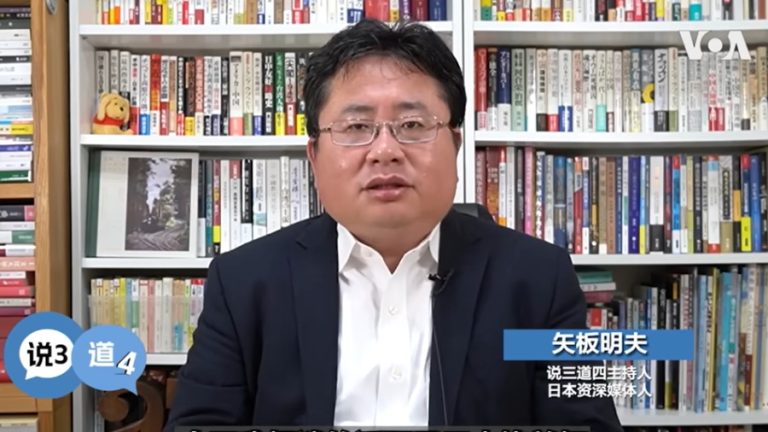
Political commentator Li Dayu said on his self-media program that even Taiwan’s Mainland Affairs Council (MAC) has acknowledged the existence of an “unreported dark figure” (i.e., an unknown number of unreported cases) involving Taiwanese who have gone missing in China, suggesting that the actual number may be significantly higher. He also noted that China’s revised Anti-Espionage Law, which took effect in 2023, allows law enforcement officers to require travelers to unlock their mobile phones at the border without first presenting official documentation or identification.
In addition, Li Youtan, a professor at Taiwan’s National Chengchi University told Epoch Times, that the “22 Measures for Punishing Taiwan Independence” (commonly referred to as the “22 Punishment Guidelines”), which took effect in June 2024, permit trials in absentia, allow for the death penalty in the most serious cases, and authorize lifetime pursuit of criminal liability. He said local authorities across China began enforcing the measures rigorously soon after their introduction, resulting in a fourfold increase in the number of people detained during the past year.
READ MORE:
- British Expert Warns: CCP Is Preparing to ‘Isolate’ Taiwan
- How ‘Small Yard, High Fence’ Is Reshaping Taiwan’s Role in Global Supply Chains
Taiwanese accustomed to free speech may underestimate the risks
Commenting on the issue, Taiwanese actor and television personality Chen Jiaxing, better known as “Caramel Brother” (焦糖哥哥), wrote on social media that reports recently emerged claiming that Beijing stand-up comedian and director Zhang Neixian was taken away for questioning by Chinese police after previously posting comments on social media stating that “Taiwan and China are two separate countries.”
Chen argued that if someone who has lived in China for years and is familiar with its political and social environment can still face investigation because of past speech or creative work, then a person raised in Taiwan—where freedom of expression is taken for granted—would likely experience an even greater cultural and institutional shock upon traveling to China.
He went on to say that people who have lived in Taiwan for a long time often forget that freedom itself is a habit of everyday life. Taiwanese are accustomed to criticizing the president, criticizing the government, mocking politicians on social media, and creating works that satirize those in power. Often, he said, people do not even realize they are exercising free speech because such expression has become part of daily life. In China, however, people are instead compelled to practice self-censorship.
Chen also cited the case of Fu Cha (富察), whose real name is Li Yanhe, editor-in-chief of Gusa Press (八旗文化). Li had worked in Taiwan’s publishing industry for many years. In 2023, while returning to Shanghai to handle household registration matters, he was detained by China’s state security authorities and was later sentenced to several years in prison on charges of “inciting separatism.” Chen noted that Li is a Chinese national and is what Taiwan commonly refers to as a “mainland spouse” (陸配)—a Chinese citizen married to a Taiwanese citizen.
Algorithm-driven propaganda can distort public perception
Addressing the fact that many people have come to know China through platforms such as YouTube, TikTok, and Xiaohongshu (RedNote), Chen observed that users are constantly exposed to content portraying China as convenient, modern, affordable, and filled with beautiful cities.
In his view, however, such content presents only China’s attractive aspects—its modern urban landscapes, food, and technological conveniences—while avoiding discussion of the country’s problems. He warned that if a person’s understanding of a place is shaped primarily by algorithmically recommended content, or by promotional videos produced by influencers invited by the Chinese Communist Party, then the “truth” they see will inevitably become increasingly one-sided and carefully curated.
Chen emphasized that he is not suggesting that content creators who promote travel to China must act like government agencies by issuing official travel advisories. However, he argued that if they focus solely on portraying China as “safe” and “convenient,” or even claim that “don’t be fooled by Taiwan’s media,” while completely ignoring the potential risks, they can easily give audiences a misleading impression.
In closing, Chen said that although China and Taiwan share a common language, many cultural traditions, and similar cuisine, making China feel familiar to many Taiwanese, the two sides have fundamentally different political systems and legal environments. Taiwan is a free and democratic society, whereas China is an authoritarian state. Failing to recognize that reality is, in itself, dangerous.
He concluded by urging the public: “The government has already issued its warnings. Don’t let dissatisfaction with the government lead you to gamble with your own safety by taking risks with the Chinese Communist Party.”