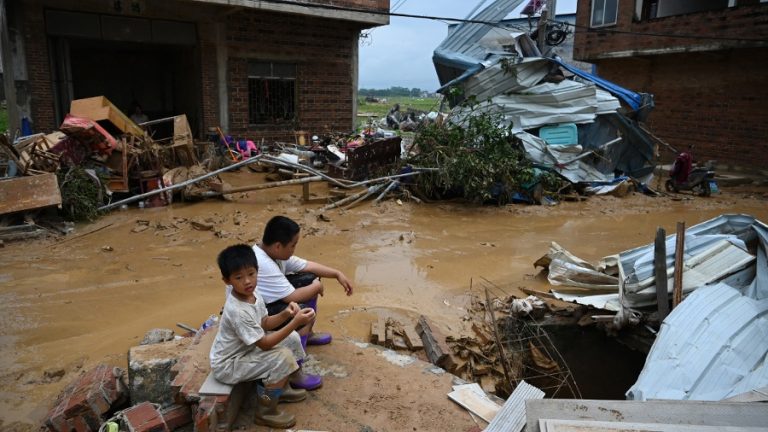
Multiple reservoirs in Hengzhou, a city under Nanning in the Guangxi region of southern China, failed on July 6 after extreme rains from Typhoon Mesak, which dumped over 700 millimeters on parts of the region in 24 hours. On July 9, officials said the disaster had killed 39 people across Guangxi with 9 missing, attributing 26 of the deaths and 7 of the missing to the breach at Liulan Reservoir, the area’s largest mid-sized reservoir. No updated figures have been released since.
The fullest public account of how the dam failed came from the reservoir’s own station chief, 37-year-old Xie Zhijie, in a roughly 10,000-character investigation the Guangzhou-based newspaper Southern Weekly published on July 14 under the headline “The Liulan Reservoir station chief on the 24 hours before the breach.” Within a day, the article had been scrubbed from the entire Chinese internet. The censorship monitoring group China Digital Times preserved a full copy in its archive of deleted articles.
Floodgates failed one by one through the final night
By Xie’s account, the reservoir sat below its flood-limit level before the rains arrived on July 5, with capacity to spare. Then the rainfall intensified and the water began climbing fast.
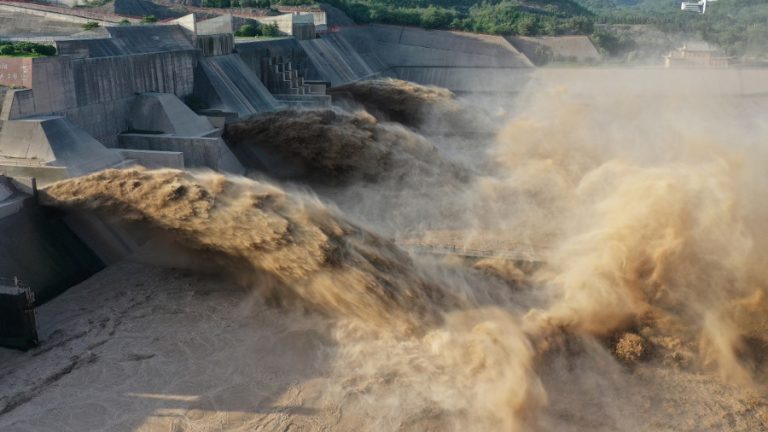
At 5:50 that afternoon, the station notified downstream townships that it would open the floodgates at 10 PM; some township governments had to be reached over the WeChat messaging app because their official email inboxes were full. The release actually began early, at 8:30 PM, but at a throttled 50 to 200 cubic meters per second, held down for fear of exceeding the downstream channel’s maximum safe flow of 220. Workers raised the spillway’s five roller gates only about half a meter, far short of fully open. Water stood at 105.42 meters by 10:10 PM, above the tops of the floodgates and still rising.
Three hours into July 6, the hydrology station 14 kilometers upstream stopped transmitting in the storm, leaving staff to track the flood by eye against a painted water gauge. At 4 AM, gate number five burned out and slid downward, and repairs would not hold; gate number three then failed the same way, sliding shut on its own. Xie said the station never fully opened the gates because no order had come from the water resources authorities above it. The order arrived at 5:07 AM, by which time the control room was visibly shaking. Gate five failed again at 5:50, beyond repair, and at 6:18 the staff evacuated. Of five gates designed to open 2.9 meters, two had slid closed and the other three apparently never reached full height.
Success
You are now signed up for our newsletter
Success
Check your email to complete sign up
The water passed the design safety limit of 112.16 meters at 6:48 AM and kept climbing. By 9:20 it stood at 116.26 meters, a level without precedent in the reservoir’s records, and a 30-meter gap opened in the eastern dam. The breach then widened to 110 meters, and the flood went through the villages below.
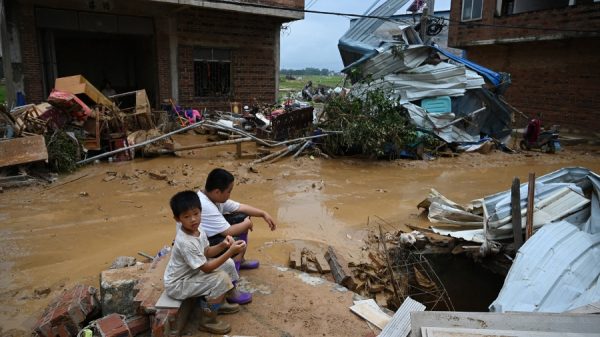
The emergency dam that was supposed to collapse had been packed solid by timber trucks
Beside the main dam sat the installation meant for exactly this emergency: a “self-collapsing dam” at the auxiliary spillway, an earthen plug designed to wash away when floodwater overtops it, dumping the excess and saving the main structure. It could also be broken open deliberately in an extreme crisis. When the flood came, it held. The 2009 reinforcement project’s own design report had recorded why: the village road ran across the plug, a timber mill operated nearby, and years of overloaded log trucks had compacted the soil so thoroughly that the report described it as dense and highly resistant to erosion. The plug designed to wash away no longer could.
Blasting it open required approval from above, and Xie could not reach anyone. “We have no satellite phone, and that’s a big problem,” he told Southern Weekly, describing dialing over and over into dead signal. Call records show he phoned the Hengzhou mayor 11 times around 9 that morning without an answer. He tried to arrange an excavator on his own; the operator replied that the storm had made the roads impassable. Xie also told the paper that dynamiting the plug carried its own horror, since the village of Dengxu, home to more than 7,000 people, sat below it. “I certainly feel guilt,” he said of the days since, with everyone asking why the reservoir hadn’t been emptied earlier.
A ‘model project’ that never passed final inspection
Liulan, built in 1958 in the valley of a Yu River tributary, underwent a risk-removal reinforcement project starting in 2009, and in 2025 the Hengzhou water bureau celebrated its transformation from “problem reservoir” to “model project.” Multiple reservoir workers told Southern Weekly a different story: the 2009 reinforcement never passed final completion inspection because the quality was substandard, and without that inspection, as one worker emphasized, many functions cannot be used at their designed strength. The reservoir’s 2020 safety appraisal recorded that the rainfall monitoring system had failed and gone unrepaired, with staff reading data by hand, and described parts of the monitoring regime as primitive and backward. The station was also badly shorthanded: authorized for 74 staff, it employed 45, and on the day of the disaster 14 people were on duty at the main dam while also covering four small reservoirs in the station’s charge. Southern Weekly repeatedly called the Hengzhou water bureau director to ask about the inspection; no one picked up.
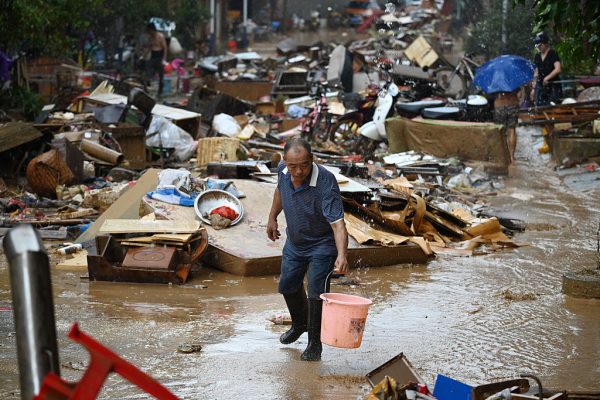
Villagers tell overseas reporters the real toll runs into the thousands
The official casualty count has not moved since July 9. Multiple villagers told The Epoch Times, in interviews published July 14 by reporters Tang Bing and Gu Xiaohua, that the actual death toll from the floods is at least in the four digits, with some villages losing everyone. The claims cannot be independently verified, but the official record has done little to settle them. Hengzhou’s emergency management bureau initially insisted the event was not a dam collapse at all, describing a “local breach” with the main dam’s core structure intact, while state broadcaster CCTV’s own on-site report on July 8 called the main dam’s damage “very serious,” with the earthen dam body washed out and the reservoir’s hydrology building destroyed and out of service.
Commenters on X reacted to the deletion with fury. One repeated the old saying that China’s disasters are three parts heaven and seven parts man, asking how a corrupt tofu-dregs dam could do anything but fail, while another thanked the paper’s journalists for pursuing the story purely for the sake of journalism, knowing it would be killed and would earn them nothing. A third asked what the Party is afraid of: afraid the people will see the reservoirs are tofu dregs, afraid they will see money showered abroad while their own people struggle in the floodwater. The disaster is not a state secret, the commenter wrote, and the people are not chives to be harvested, a Chinese internet expression for citizens treated as endlessly exploitable.