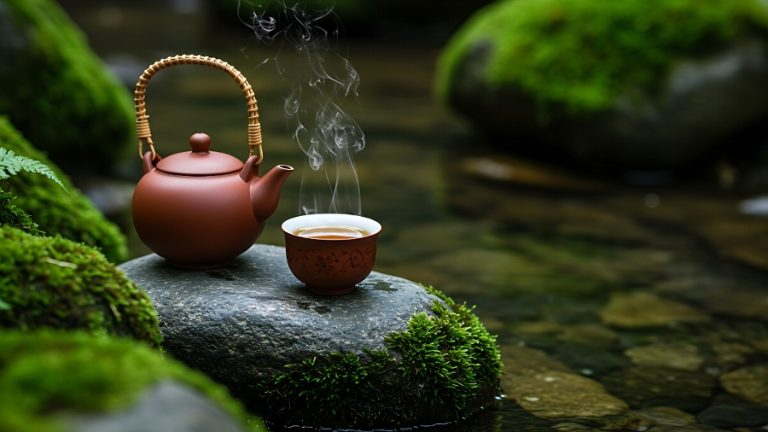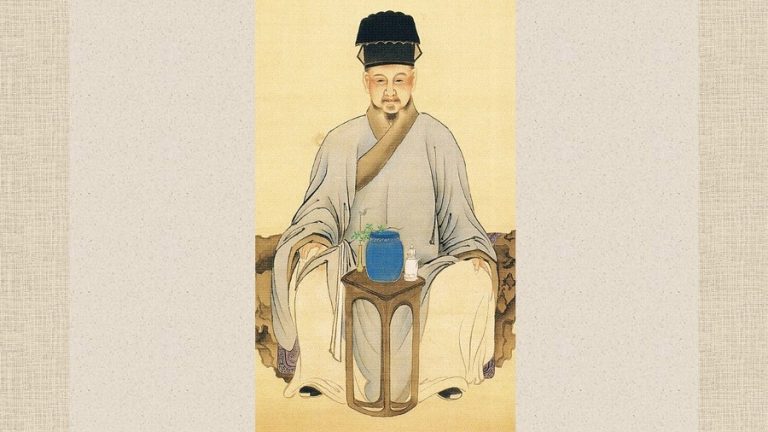
Serving tea to guests has been one of China’s traditional forms of etiquette since ancient times, and it became especially widespread during the Song dynasty. More than a simple refreshment, a cup of tea embodies a profound philosophy of hospitality. A cup of clear tea represents not only the host’s warmth and respect for guests, but also carries deeper cultural and moral significance.
Drinking tea is itself an art, governed by its own principles and etiquette. As the Chinese saying goes, “Just as people possess character, tea possesses virtue.” But what exactly is meant by the virtues of tea (cha de)? Let us take a closer look.
What are the virtues of tea?
Lu Yu, the revered “Sage of Tea,” placed great importance on moral character and believed that tea drinkers should cultivate virtue. In his classic work, The Classic of Tea (Cha Jing), he wrote: “Tea, at its finest in flavor and use, is most suited to those who are refined in conduct and frugal in virtue.”
The ideals of “refined conduct and frugal virtue” (jing xing jian de) advocated by Lu Yu came to be regarded as the fundamental virtues of tea and the essential moral qualities that every tea drinker should possess.
Later, during the Late Tang dynasty, Liu Zhenliang proposed the “Ten Virtues of Tea:”
- Tea dispels melancholy.
- Tea drives away drowsiness.
- Tea nourishes vitality.
- Tea helps dispel illness.
- Tea allows one to appreciate exquisite flavors.
- Tea promotes physical well-being.
- Tea fosters propriety and benevolence.
- Tea expresses respect.
- Tea can serve as a means of cultivating the Way (Dao).
- Tea elevates one’s aspirations and refines one’s taste.
Success
You are now signed up for our newsletter
Success
Check your email to complete sign up
Liu Zhenliang expanded the concept of tea virtue beyond Lu Yu’s emphasis on personal moral cultivation, aligning it more closely with Confucian philosophy and the pursuit of ethical ideals.
RELATED:
- Savor Tea’s Aroma Through Its Vessel; Understand the Tea Ceremony With the Heart
- For Powerful Traditional Remedies, Know and Grow Medicinal Herbs (S) Sage
Tea stories in The Classic of Tea
Tea is not merely a beverage; it is also a means of self-cultivation. The Classic of Tea preserves many anecdotes about famous historical figures and their relationship with tea.
Among them, the story of Yan Ying, who lived simply and exercised remarkable self-restraint, is especially inspiring. His example has long been admired and is considered worthy of emulation by later generations.
During the Spring and Autumn Period, Yan Ying, the Chancellor of the State of Qi, was renowned for his frugality. Although he held one of the highest offices in the state, his daily meals were remarkably simple.
Chapter Seven, “Miscellaneous Matters,” of The Classic of Tea records that while serving Duke Jing of Qi, Yan Ying’s ordinary fare consisted of nothing more than hulled millet (a coarse grain), three slices of roasted dried meat, five eggs, along with tea and vegetables.
The Outer Chapters, Volume Seven of the Yanzi Chunqiu (The Annals of Master Yan) also records that when Yan Ying served as Chancellor of Qi, he attended court dressed only in plain cloth garments and a deerskin robe. Seeing how modestly Yan Ying lived, Duke Jing was astonished by his apparent poverty and blamed himself for having failed to notice his minister’s circumstances.
Yan Ying replied: “I have heard that one who thinks of others before providing for his own food and clothing will never be accused of greed. One who considers others before acting will never be condemned as selfish or improper. Though I possess little virtue, the members of my clan are even less fortunate than I. Today, more than five hundred households depend upon me for support so that they may continue honoring their ancestral temples. I have cloth garments and a deerskin robe to wear to court. That is sufficient for me. There is no need to pursue luxury or extravagance.”
Having said this, he bowed to his ruler once more and respectfully withdrew.
Duke Jing later wished to reward Yan Ying with a white fox-fur coat and a purple leopard-fur robe, together worth more than a thousand pieces of gold. Yan Ying declined the gifts, arguing that accepting such lavish rewards would set a poor moral example for others.
The duke also intended to grant him a fief as a reward. Yan Ying again refused, saying that he had merely fulfilled his official duties and avoided wrongdoing, and therefore did not deserve additional rewards.
Confucius praised Yan Ying, saying that he relieved the suffering of the people without boasting of his generosity, faithfully served three successive rulers of Qi—Duke Ling, Duke Zhuang, and Duke Jing—without seeking personal gain, and was therefore a man of genuine ability. Although Duke Jing was known for his extravagance, Yan Ying served him with reverence, humility, and frugality, embodying the qualities of a true junzi—an exemplary gentleman.
Cha Yuan Tea (Image source: Cha Yuan Tea)
Follow “Cha Yuan Tea.”
Cha Yuan Tea official website
Exclusive content from the Cha Yuan website. (Image: Cha Yuan Tea)