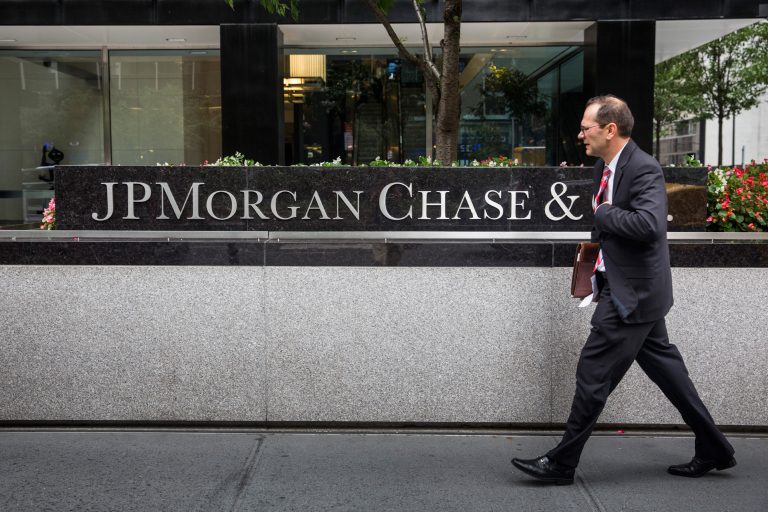
Recently, Marianne Lake, the head of Chase Bank — a division of JPMorgan Chase & Co. — notified 86 million of her customers that they should brace for new fees for their banking services if proposed new regulations, including capping overdraft and late fees, come into effect.
Chase, the country’s largest consumer bank and a major credit card distributor, said that if the legislation is implemented the loss of revenue for the bank would be recovered through new fees on its customers.
Lake implied that the cost to consumers would be significant.
“The changes will be broad, sweeping, and significant,” she said, according to the Wall Street Journal (WSJ). Lake added that the costs will impact customers who can least afford it the most.
The Consumer Financial Protection Bureau has proposed regulations that would put a cap of $8 on credit card late payment fees and a cap of $3 on overdraft charges.
Success
You are now signed up for our newsletter
Success
Check your email to complete sign up
In addition, the WSJ reported that there are also plans in the works to limit debit card fees and charges to companies like Venmo and CashApp for accessing consumer data.
There is also talk that the new regulations could make it more difficult for banks to lend money due to a requirement that banks hold more reserves against mortgages and credit card loans.
READ MORE:
- US Supreme Court Rules Presidents Have ‘Some Immunity’ From Criminal Prosecution
- America ‘On Schedule’ for 2026 Moon Landing, NASA Head Says Following Chinese Chang’e-6 Mission
- Economic Woes Drive Chinese Investors to Foreign Markets Amid Mass Exodus
Fewer free services
Lake says that should the new regulations be implemented, a range of currently free services, including credit score trackers and financial planning tools may now come with a cost.
She noted that previous changes in regulations produced a similar effect, such as what happened when new regulations came out on debit card swipe fees.
The WSJ, citing a consulting partner at PricewaterhouseCoopers, reported that while some of the country’s larger banks would most likely absorb the new costs, smaller banks would struggle and would be forced to charge their customers.
However, the partner also said that the competitive environment for retail deposits could force banks to keep services free in order to retain customers.
Dennis Kelleher, president of Better Markets, an economics think tank, is in favor of the new regulations and argues that banks don’t necessarily have to raise fees on their customers.
“The banks say that their only option is to pass on their costs to customers, but that’s not true,” he told the WSJ. “Yet again, banks are dressing up their attempts to maximize their own profit under the guise of what’s good or bad for customers.”
READ MORE:
- EU Follows US Lead by Slapping Tariffs on Chinese EVs, Sparking Retaliation Threats
- Focus of German Foreign Trade Shifting From China to US, Experts Suggest
- Vladimir Putin Visits North Korea in Boost for Growing Alliance
Banks have more options
In 2010, following the 2008 financial crisis, similar changes were proposed when banks faced increased scrutiny, however financial institutions ultimately decided not to pass on any new costs to customers.
Dan Goerlich, a consulting partner at PricewaterhouseCoopers told the WSJ that large banks should be able to absorb the costs, and that “any change in regulations that would cap fees will create opportunities for institutions that are highly efficient.”
“Big banks can make up for a dent in consumer banking revenues with profit from their wealth management and investment banking arms,” he said, adding that ”smaller and regional banks will struggle to make up for that.”
“Most customers can access retail banking easily and seamlessly today. It might be disadvantageous to keep services at zero cost, but banks’ hands could be forced by other competitors who will offer customers low-cost services,” he said.