Wedding bands have a rich and varied history, steeped in symbolism, tradition, and folklore. More than just jewelry, these small, circular pieces of metal carry significant meaning, representing love, unity, and commitment. Their evolution over the centuries reflects changes in societal beliefs, technological advancements, and the ways people have sought to express their love.
From ancient Egypt and Rome to modern Western and Eastern cultures, the wedding band has evolved and adapted to new customs and beliefs while retaining its core symbolism of lasting love.
The origins of wedding bands
The tradition of exchanging wedding bands dates back thousands of years and spans various cultures worldwide. Ancient Egyptians were among the first known to use rings to symbolize commitment and love, crafting bands from natural materials like reeds and hemp. For them, the circular shape of a ring represented eternity, embodying the idea of a lasting bond of love between two people.
These early rings were often worn on the fourth finger of the left hand because they believed a special vein, called the “vena amoris” or “vein of love,” ran directly from that finger to the heart. This symbolic idea persists today, though the anatomical belief has since been disproven.

Ancient Romans later adopted the same custom, solidifying the practice of wearing rings on the fourth finger. Meanwhile, they introduced metal wedding bands, including iron rings, which represented strength and permanence. Sometimes, the rings were engraved with images of clasping hands to represent the union and trust between the couple, and these became known as fede (Latin for “faith”) rings.
Success
You are now signed up for our newsletter
Success
Check your email to complete sign up
During the Middle Ages, wedding rings became more elaborate, with European couples using silver or gold rings inlaid with gemstones. In England, poesy rings — bands inscribed with romantic poems or declarations of love — became popular among the upper classes. The tradition of the wedding ring continued to evolve, eventually reaching the broader population and taking root in Western culture.
Symbolism and meaning of wedding bands

The design of the wedding band carries significant meaning. The unbroken circle of the ring symbolizes infinity, reflecting the eternal nature of love and the unending commitment between spouses. Unlike other types of jewelry, wedding bands are typically simple in design and meant to represent the sincerity, purity, and strength of the marital bond.
In addition to representing love and eternity, wedding bands also symbolize unity and mutual commitment. The exchange of rings during a wedding ceremony signifies the joining of two lives, a shared future, and a commitment to face life’s challenges together. The act of exchanging rings is also often viewed as a public promise, where each partner makes a visible commitment to the other.
For some cultures, wedding bands hold a spiritual dimension. In Christianity, for example, the wedding band is sometimes blessed before the couple exchanges it and the circular shape is thought to represent the endless nature of God’s love. In Jewish ceremonies, rings must be completely smooth and unadorned to symbolize an unbroken bond, free of obstacles or flaws.
Folklore and superstitions
Wedding rings are rich with folklore and superstition. Some beliefs focus on the ring itself, while others revolve around how it is worn or lost. Here are a few well-known superstitions:
Breaking the band: Many cultures consider it unlucky to lose or break a wedding ring, seeing it as a sign of relationship trouble or misfortune. The act of repairing a broken ring can sometimes represent mending difficulties in the relationship.
Inherited rings: There is a long-standing belief that wearing an inherited wedding ring brings good luck to a marriage. The love and happiness experienced by previous generations are thought to be passed on to the current couple, strengthening their bond. In some traditions, a mother’s or grandmother’s ring is given to the bride as a way of welcoming her into the family.
Left-hand tradition: Western tradition dictates that the wedding ring is worn on the left hand, a custom based on the “vena amoris” belief. However, in some Eastern European and Orthodox Christian cultures, wedding bands are worn on the right hand, as the right hand is considered the side of strength, integrity, and honor.
Never removing the ring: Some believe that once a wedding ring is placed on the finger, it should never be removed, as doing so may weaken the marital bond. This superstition is less common today, as many people take off their rings for work or activities.
Global cultural variations in wedding bands
Across the world, the design, materials, and customs surrounding wedding bands vary greatly, with each culture adding its own unique flair and meaning.
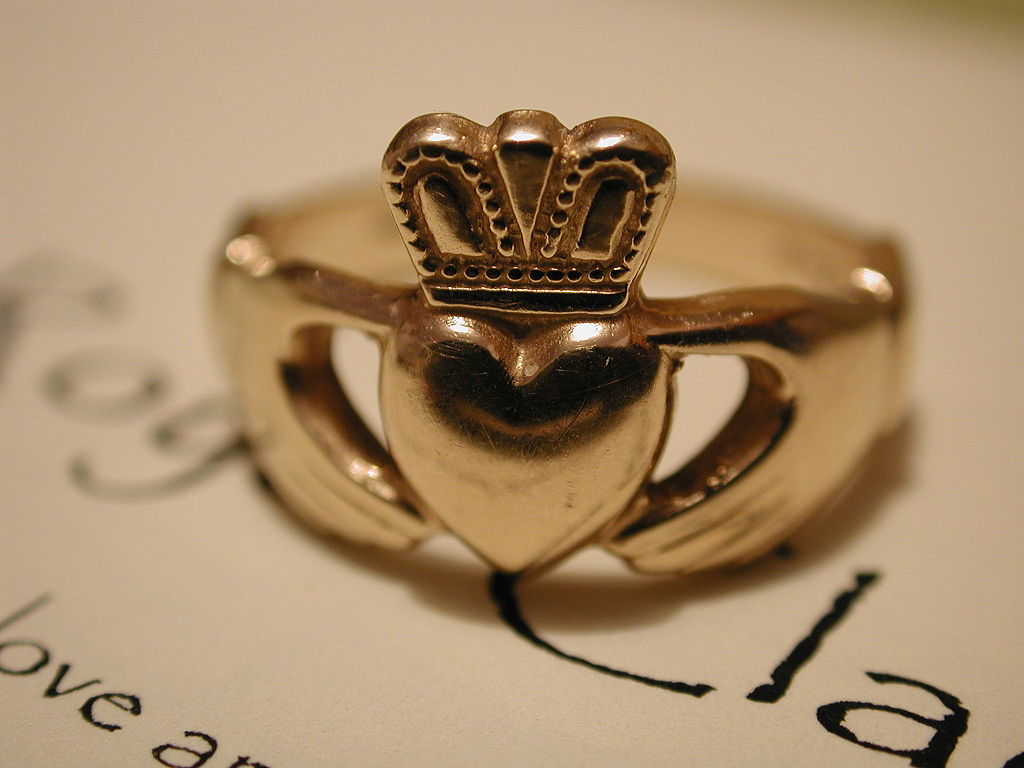
Irish Claddagh rings: This Irish version of the fede ring is a popular choice for wedding and engagement rings. Featuring two hands holding a crowned heart, the Claddagh ring represents love (the heart), loyalty (the crown), and friendship (the hands). Worn on the left hand with the heart facing inward, it signifies that the wearer is married.
Russian trinity rings: Traditional Russian wedding rings consist of three interlocking bands, usually made of yellow, white, and rose gold. These rings are thought to represent the Holy Trinity in Christianity or the past, present, and future of the couple’s relationship.
Hindu toe rings: In many Hindu cultures, instead of rings on the fingers, married women wear toe rings on their second toe. This custom, particularly common in South India, is both a symbol of marriage and thought to promote health and longevity for the husband.

Chinese wedding bands: In modern China, it has become common for couples to exchange rings due to Western influence; but traditionally, jewelry exchanges focus more on gold bracelets or necklaces, with a sentiment of permanence and prosperity.
Modern trends in wedding bands
Today, wedding bands are often personalized to reflect the individuality of the wearer and the couple’s unique relationship. Some trends and shifts in modern wedding bands include:
Diamond Rings: While diamond engagement rings were popularized by the 20th-century De Beers campaign, they continue to be a favorite for wedding bands as well. The durability of diamonds is viewed as a metaphor for the resilience of love.

Alternative materials: With changing lifestyles, many people now prefer bands made from materials like tungsten, wood, or silicone. These choices are often driven by comfort, affordability, and personal values, such as a preference for eco-friendly materials.
Gender equality in rings: For centuries, wedding bands were primarily worn by women, as men were not expected to wear rings. This shifted during World War II when soldiers wore wedding bands to remind them of their families. Today, it is common for both partners to wear rings, symbolizing equality in their commitment to the marriage.
Nowadays couples often choose bands that resonate with their personalities, lifestyles, and values, creating a blend of tradition and individuality in their commitment to each other. Regardless of design or material, the wedding band remains a timeless and universal symbol of love, uniting people across cultures and time.