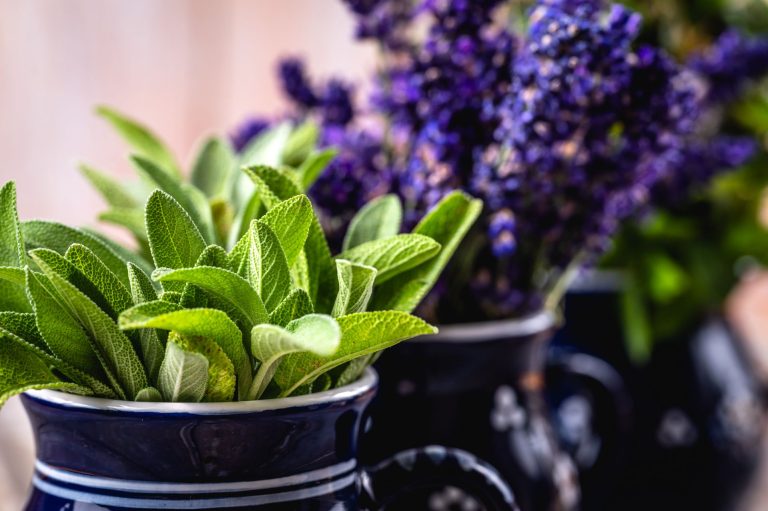
While sage is a splendid seasoning for meats, soups and Thanksgiving stuffing, its usefulness extends well-beyond the kitchen. In ancient cultures around the world, sage was a highly esteemed medicinal herb.
What is sage?
Common sage (Salvia officinalis) is a semi-woody, perennial shrub in the mint (Lamiaceae) family. This species is native to the Mediterranean region, and it is the one you would most likely find as a fresh herb at your supermarket, or plant in your herb garden. It has cousins with some overlapping medicinal properties — including red sage (Salvia miltiorrhiza) from East Asia and white sage (Salvia apiana) from southwestern US — as well as more ornamental relatives.
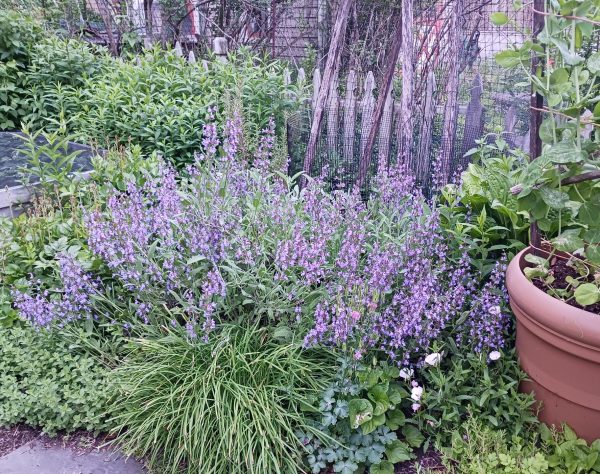
This sensageonal bloom brought welcome color to my garden in late spring. (Image: Ila Bonczek for Vision Times)
Both the genus and species names hint at the plant’s healing capacity. Salvia comes from the Latin “salvere,” which means “to save,” or “to cure;” and officinales is a Latin epithet given to plants that have historically been used and sold as medicine.
Sage has purplish flowers that appear on tall spikes in late spring to early summer. While these have medicinal value, it is mainly sage’s fuzzy, aromatic, grey-green leaves that have long been treasured for traditional remedies, as well as for ceremonial purposes.
Traditional uses of sage
Success
You are now signed up for our newsletter
Success
Check your email to complete sign up
Indigenous Americans used white sage for thousands of years. They considered this herb sacred, and used it both for healing rituals and purification ceremonies.
Ancient Egyptians also regarded sage as a sacred plant, and used it for both healing the sick and embalming the deceased.
Even the Romans treated this herb with reverence. To harvest sage, one had to have clean hands, clean clothes, and use a bronze (rather than iron) knife. In both ancient Rome and Ancient Greece, sage was commonly used to ease digestion and reduce inflammation.
The medicinal use of sage was documented by the likes of Roman author Pliny the Elder, Greek physician Dioscorides, Arab physician Avicenna, and English herbalist John Gerard, who wrote that sage “is singularly good for the head and brain…”
In medieval times, sage was practically a panacea. The Latin proverb “Cur moriatur homo cui Salvia crescit in horto?” or “Why should a man die who has sage growing in his garden?” circulated widely, and there was no shortage of sage remedies.
A sage infusion might have been sipped to improve digestion, or gargled to relieve sore throats. Sage syrup and lozenges would have been taken against coughs and scratchy throats. A poultice of crushed sage leaves or a cooled infusion could have been applied to wounds to prevent infection. Ointments made with sage-infused oils were likely applied topically to reduce swelling or itching.
Sage has also been used to reduce anxiety and depression, improve mental clarity, ease the symptoms of menopause, and stop milk production.
Medicinal properties of sage
While this herb is not an actual panacea, modern science has discovered many active compounds in sage that can explain its effectiveness in traditional medicine.
- Antioxidants like rosmarinic acid, carnosic acid, carnosol, and flavonoids found in sage help protect against harmful free radicals. Sage boasts an impressive 160 different antioxidants, which reduce the risk of chronic disease, help lower ‘bad’ cholesterol, and improve insulin sensitivity.
- Compounds like eucalyptol, alpha-pinene, beta-pinene, ursolic acid, and rosmarinic acid possess anti-inflammatory properties that improve comfort levels, help support the digestive system, and reduce the risk of disease.
- Sage has powerful antimicrobial properties thanks to camphor, thujone, carnosic acid, rosmarinic acid, essential oils, and flavonoids, validating its use as an antiseptic and for respiratory health.
- Flavonoids also give sage a neuroprotective advantage, as do salvianolic acids, supporting its use for cognitive enhancement.
- Tannins found in sage boost oral and digestive health with their astringent qualities.
Medical research suggests that sage may be effective in many areas:
- According to a study published in the Journal of Ethnopharmacology, sage extracts effectively inhibited the growth of several bacterial strains.
- Multiple studies indicate improved cognitive function and memory with the help of sage, including patients with Alzheimer’s disease.
- Research has also revealed sage’s effectiveness in alleviating multiple symptoms of menopause, due to its estrogenic activity.
- Double blind studies support the use of sage for the relief of sore throats.
How to grow sage
If you’re not growing sage, you probably should be. Not only is this plant beautiful, fragrant, and useful, it is also very forgiving. Sage tolerates drought and poor soils, and can thrive either in the ground or in a container. This small shrub will take up about 30 inches in your garden at maturity, and provide you with fresh leaves and pretty flowers for up to a decade.
Plant sage in a sunny spot with well-drained soil. Regular pruning will help it maintain a more compact shape. After the plant is established, leaves can be harvested throughout the growing season by snipping sprigs off the new growth. Only prune woody stems if they are dead or unwanted, as they do not readily sprout new shoots.
The flowers attract beneficial insects and are also safe to consume in limited portions, such as a garnish.
To reduce the risk of foliar disease or insect infestations, maintain good air circulation with selective pruning.
Fresh stems of sage can be dried by hanging them in a warm, dry place, out of direct sun. Once they are crispy, store them in a sealed, glass jar for later use.
Home remedies with sage
Aside from using sage in cooking, a sage infusion is the simplest way to reap the benefits of this herb.
Sage infusion
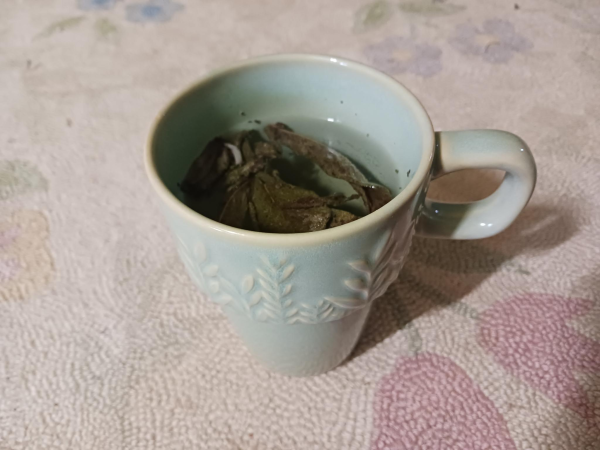
Steep a few leaves (fresh or dried) in a cup of boiled water for 5-10 minutes for a tasty tea that can be consumed regularly as a tonic. For medicinal use, make a stronger brew with more leaves.
- Drinking sage tea regularly can help improve memory, focus and cognitive function.
- Sage tea can also serve to help balance hormones and reduce symptoms of perimenopause.
- Warm sage tea after a meal can help improve digestion, relieve bloating, and reduce gas.
- A stronger brew can be gargled to soothe and prevent sore throats, coughs, and respiratory infections.
- Use a cooled sage infusion as a mild, balancing and regenerative wash for troubled skin.
Sage decoction
For other topical applications, make a potent sage decoction by simmering the leaves for 10 minutes or longer.
- Use a cooled decoction as an antibacterial mouthwash to maintain oral health naturally.
- Rinse your hair with cooled decoction to reduce dandruff, improve shine, and naturally darken grey strands.
Fresh sage poultice
For fast action of sage’s antimicrobial and anti-inflammatory effects, crush fresh sage leaves and apply to insect bites, minor cuts or rashes.
Sage-infused oil
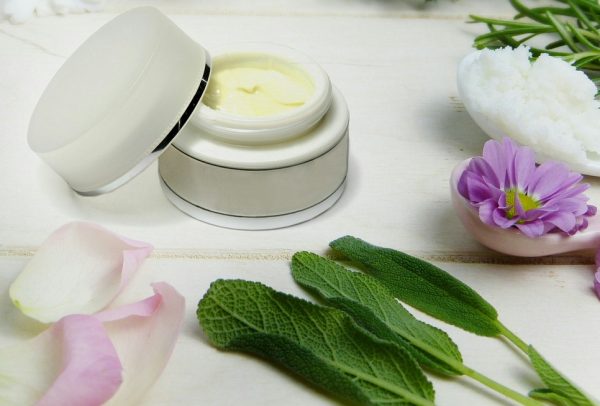
Infuse sage in a carrier oil like olive or almond oil for a flavorful cooking oil, a soothing massage oil, or as a base for healing ointments.
Fill a clean, glass jar with dried sage leaves, then pour in enough oil to cover the plant material. Secure the jar with a tight-fitting lid, and place it in a sunny window for about a month. Shake the contents whenever you remember, to help collect all the volatile oils.
After four weeks, strain the infused oil into amber bottles and store in a cool, dark location.
- Cooking – Add the aroma of sage to marinades, pasta, soups, stews, and stuffing.
- Massage – Make a hair oil by adding 3 drops of rosemary essential oil to 1 teaspoon sage-infused oil, and use it to massage the scalp daily for improved hair growth; or relax and invigorate sore muscles with a massage oil of 10 drops of a citrus-scented essential oil (like lime or lemongrass) added to two tablespoons of sage-infused oil.
- Ointments – Salves and balms made with sage can act as a soothing antiseptic to help heal minor wounds, scrapes, insect bites and rashes.
Caution:
While consuming sage in cooking and as tea is safe for almost everyone, sage contains thujone, which can be toxic in high doses. Strong infusions (using more than 2 teaspoons of sage) should be reserved for topical use unless recommended by a trusted physician. Always use a carrier oil when applying sage essential oil to the skin, and never consume it.
Remember, sage is a potent medicinal plant that earned the respect and reverence of our ancestors. Honor that tradition, and be blessed with the many gifts of sage.