In a rare display of defiance from China’s wealthy elite, over 100 multimillionaire property owners took to the streets of Shanghai on Nov. 18 to protest against the “prolonged delays” in the completion of their high-end apartments.
The protests, which took place at the Suhe Bay No. 1 residential complex in the city’s affluent Jing’an District, reflect growing frustrations with China’s struggling real estate sector and the government’s handling of the crisis. Despite their wealth, protesters were met with swift police action, with multiple arrests reported on-site.
Videos shared on social media depicted chaotic and violent scenes as protesters clashed with police. One woman, seated on the street, was forcibly dragged away by armed police officers as she cried out in distress. Another clip showed six officers struggling to carry a screaming woman away as another witness said, “It’s truly shocking to see such scenes in Shanghai — a city that represents progress and wealth.”
Empty promises
The Suhe Bay No. 1 project — developed by Hopson Development Holdings and its affiliated Guangdong Pearl River Investment Holding Group — was marketed as the ultimate symbol of luxury and urban renewal. Launched in November 2021, apartments were sold for an average of 128,800 yuan per square meter (approximately $18,000), with units costing millions of dollars each. Since the launch, over 300 units have been sold, generating nearly 10 billion yuan in revenue.
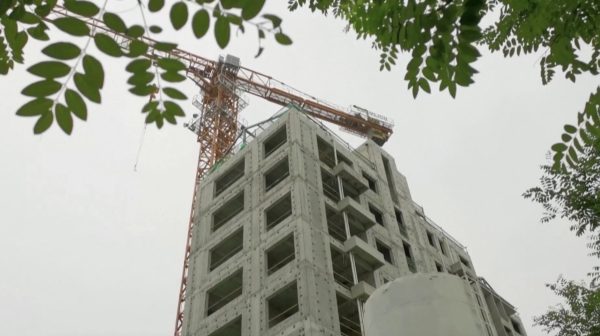
Originally scheduled for completion by June 2024, the project has faced multiple delays and “zoning complications.” Developers cited the pandemic as the initial reason for postponement, pushing the delivery date to September 2024. However, other financial and permit issues resulted in further delays to November.
Success
You are now signed up for our newsletter
Success
Check your email to complete sign up
Now, unresolved disputes with contractors have extended the timeline indefinitely. With no resolution in sight and construction grinding to a halt, buyers are left grappling with mounting mortgage payments for homes that may never be delivered. This string of delays has eroded public trust in the developers and cast a shadow over the country’s real estate market.
Netizens react
In a joint statement issued on Nov. 14, homeowners announced a collective mortgage suspension. They emphasized that the development, hailed as a landmark project, has devolved into a nightmare. “Despite paying astronomical prices, we are left with nothing but empty promises,” the statement read.

It also further criticized the developers for their “lack of transparency and accountability,” accusing them of hiding behind excuses like the pandemic while failing to address the project’s deeper financial mismanagement. “We invested not just money but trust in what was sold to us as a pinnacle of modern luxury,” said the homeowners as they expressed a profound sense of betrayal. “Instead, we are left fighting for what is rightfully ours.”
Wealth offers no immunity
The participation of multimillionaires in these protests challenges the assumption that wealth provides immunity in China’s tightly-controlled society. Protesters lamented that their financial status had no bearing on the government’s response. “In the face of the regime’s power and violence, even billions mean nothing,” wrote one protester on social media. “Money is just waste paper here.”
This sentiment was echoed online. “No matter how much money you have, you’re just another lamb to be slaughtered in the eyes of the Chinese Communist Party (CCP),” said one comment that went viral on Weibo (China’s version Twitter). Others pointed out the irony of wealthy individuals, who may have previously supported the system, now becoming victims of its inefficiencies.
RELATED: The Politics of Evergrande’s Collapse
Online netizens were unsparing in their assessment. As one observer noted, “These individuals once looked down on others fighting for their rights. Now that they’ve been hurt, they finally understand.” Another added, “In China, those who accumulate wealth often benefit from the CCP’s privileges. Now, they are reaping the results of their blind faith in the system.”
Broader implications
The protests are part of a wider trend of civil unrest in China, fueled by economic woes and growing disillusionment with the CCP. According to an overseas analysis, there were at least 237 collective protests in mainland China in October alone — with property-related demonstrations accounting for 125 of these incidents. Many such protests are suppressed by authorities before gaining significant traction.
MORE ON THIS: Hundreds of Homeowners Protest Unfinished Developments in China Amid Police Crackdown
Cai Xia, a former professor at the CCP’s Central Party School, highlighted the rising significance of non-violent resistance in a commentary earlier this year. “Non-violent protests have become the most fundamental and impactful way for Chinese citizens to oppose authoritarian rule,” she said. Cai also stressed their importance for China’s potential political transformation, adding, “These protests not only challenge the government but could pave the way for democratic consolidation in the future.”
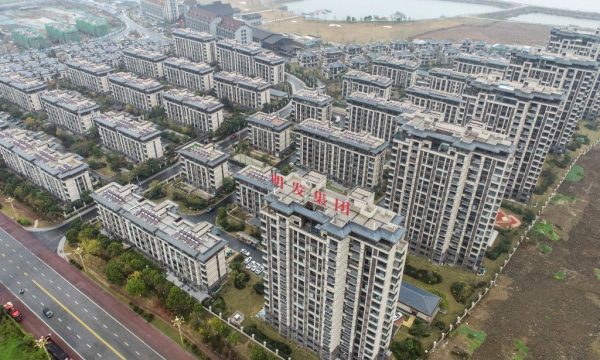
China’s real estate sector has long been a cornerstone of the country’s economy. However, a combination of overleveraging, regulatory crackdowns, and declining consumer confidence has pushed the industry into a crisis, leaving millions of homebuyers in limbo. Delayed projects and mortgage boycotts have become increasingly common, with even affluent buyers now bearing the brunt of systemic failures.
RELATED: In Rare Admission, Xi Jinping Says China’s Economy Is Struggling
But are the Suhe Bay No. 1 protests a turning point? These mounting protests, which are becoming commonplace across the country, demonstrate that dissatisfaction with the government’s handling of the real estate crisis across all socioeconomic classes. While these multimillionaires possess the resources to relocate abroad or absorb financial losses, their decision to protest highlights a deeper frustration with systemic injustices and unfulfilled government promises.
For China’s elite, the message is clear: in the current climate, wealth offers little protection. As one online commenter notes, “In the CCP’s world, even the richest are just fattened crops waiting to be harvested.”