As China continues to grapple with a sputtering national economy, Japanese companies are growing increasingly wary of the Asian power’s economic and political landscape, with nearly half deciding to scale back or cease investments entirely.
According to a recent survey by the China-Japan Chamber of Commerce, approximately 64 percent of Japanese firms believe that China’s economic situation has worsened compared to the previous year, up from 60 percent in the last survey. The findings highlight both the growing unease and potential exodus among foreign businesses operating in China, especially as geopolitical tensions and safety concerns exacerbate these issues.
New investments nosediving
The survey, which was conducted in late October and involved 1,513 companies, revealed that 44 percent of Japanese firms plan to reduce or halt investment in China this year — a figure that remains largely unchanged from earlier studies.
Despite China being Japan’s largest trading partner, geopolitical tensions, worsening bilateral relations, another potential trade war with the U.S. following Trump’s re-election, and fierce competition from domestic Chinese firms have driven many Japanese businesses to reconsider their presence in the country.
RELATED: Once the ‘World’s Factory,’ Closing Businesses and Decaying Industrial Parks Litter Dongguan, China
Success
You are now signed up for our newsletter
Success
Check your email to complete sign up
Notably, foreign direct investment (FDI) in China has been declining as well. Data from China’s State Administration of Foreign Exchange showed an $8.1 billion drop in FDI liabilities in the third quarter of 2024 — with a cumulative reduction of nearly $13 billion in the first nine months of the year. This trend underscores even broader concerns about China’s sluggish economy and its diminishing appeal to investors.
Corporate exodus gains momentum
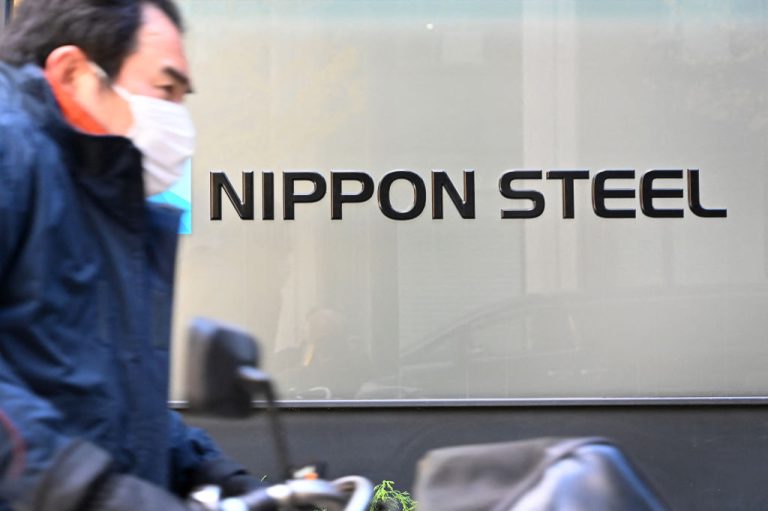
Several prominent Japanese companies have already scaled back their operations in China. Nissan Motor and Konica Minolta are among the first firms to reduce their business goals in the Chinese market, while Nippon Steel announced in July that it would “exit a joint venture” with China’s Baoshan.
Furthermore, equipment investment by Japanese companies in mainland China and Hong Kong fell by 16 percent year-on-year in the second quarter of 2024, according to Japan’s Ministry of Economy, Trade, and Industry. Sales from Japanese subsidiaries in China have also lagged, marking seven consecutive quarters of decline compared to the previous year.
RELATED: Desperate Times: China’s Youth Take to Social Media to Lament Skyrocketing Unemployment
Beyond economic challenges, Japanese firms are increasingly worried about safety and political risks. Over 40 percent of surveyed companies expressed dissatisfaction with China’s operating environment, citing concerns about the safety of employees and their families. The death of a 10-year-old Japanese student in Shenzhen from a stabbing hate crime in September has further fueled these fears and strained efforts to improve Sino-Japanese diplomatic ties.
To make matters worse, China’s refusal to reinstate visa-free travel for Japanese citizens and its ongoing ban on Japanese seafood imports have sparked outrage and frustration among Japanese businesses.
Though Beijing has signaled a willingness to lift the seafood import ban, progress has been slow and riddled with obstacles. As a result, companies like those in Hokkaido’s fishing industry have been forced to diversify their markets into the U.S. and Southeast Asia in hopes of remaining profitable.
A wary eye on Beijing’s economic stimulus
While Beijing has introduced stimulus measures since late September to address economic stagnation, these efforts have not stemmed the decline in foreign investment. Japanese firms, in particular, remained skeptical over the effectiveness of these policies amid persistent structural issues within the Chinese economy.
MORE ON THIS: Investors Wary of China’s Economy Amid Stagnant Post-Pandemic Recovery and Anticipated Stimulus Measures
“Despite Beijing’s efforts to signal economic openness, the business environment for foreign firms in China remains fraught with uncertainty,” said an expert familiar with the survey findings that chose to remain anonymous. This wariness is reflected in the broader decline of FDI and the reluctance of Japanese companies to commit to long-term investments in the country, the source added.
In a bid to ease bilateral tensions, China and Japan reached an agreement in September to pave the way for lifting the seafood import ban. But progress has been stagnant, with Japan remaining skeptical about China’s commitment to restoring trade ties between the two nations.
Growing disenchantment
Adding to the strain, Beijing admitted that a military aircraft had entered Japanese airspace in August under “unavoidable circumstances.” The “unprecedented incident” drew the ire of Tokyo officials, who labeled the breach as a “serious violation” of Japan’s sovereignty and demanded an official apology from the Chinese government.
As China grapples with increased diplomatic friction, Japanese firms are exploring alternative markets to mitigate risks. “We are actively diversifying our export destinations,” said a spokesperson for a Hokkaido fisheries company. “The focus is shifting to regions like Southeast Asia and the United States, where the business environment feels more stable and predictable.”
The broader trend underscores a growing shift among Japanese businesses away from China, which was once seen as a “key growth market.” But with economic and political risks mounting, Japan’s corporate retreat calls for a re-evaluation of Beijing’s role in global trade and investment.