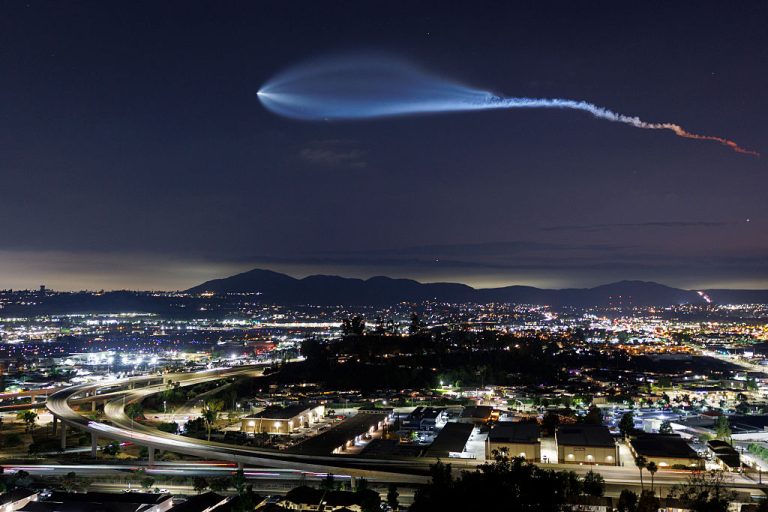
SpaceX’s Starlink has evolved from an ambitious idea into the world’s largest and most successful satellite internet constellation. It now dominates orbital broadband, effectively holding a near-monopoly in the sector. However, competition is beginning to emerge, alongside growing concerns about access, regulation, and the rising risk of space junk.
As of mid-2026, Starlink operates approximately 10,400 satellites (with over 10,397 active), accounting for roughly 75 percent of all maneuverable satellites in Earth orbit. To put this into perspective, prior to Starlink, at the end of 2018, there were only around 1,957 active satellites in orbit.
According to Barron’s, Starlink’s network now serves more than 12 million active subscribers across 160+ countries and territories, adding millions of users in 2025 alone. Speeds frequently exceed 100–200 Mbps in many regions, outperforming traditional providers in rural and underserved areas, including much of Sub-Saharan Africa.
SpaceX also has aggressive growth plans. The company’s next-generation “Gen3” satellites — promising terabit-level capacity — are slated for deployment later this year using Starship, aiming to support ambitious targets like 25 million users by the end of 2026. Each Gen3 satellite is expected to deliver more than one terabit per second of downlink capacity, while a single Starship mission could add as much as 60 terabits per second of new capacity to the network—more than 20 times the capacity added by current launches.
Meanwhile, Starlink’s manufacturing and launch cadence remains unmatched. According to a recent GeekWire report, SpaceX is producing roughly 70 Starlink satellites per week at its Redmond facility while continuing to deploy hundreds more each month aboard Falcon 9 rockets.
Success
You are now signed up for our newsletter
Success
Check your email to complete sign up
These advancements will support denser user clusters, lower latency (potentially under 20 ms in optimized shells), and continued expansion into high-demand sectors such as enterprise connectivity, mobile backhaul, and even future space-based AI data centers.
Starlink’s own business and case studies demonstrate that, beyond consumer broadband, Starlink has become a critical infrastructure provider. It powers in-flight Wi-Fi for dozens of airlines, keeps cargo ships and cruise vessels connected across oceans, delivers emergency communications after natural disasters, and brings high-speed internet to schools, clinics, and businesses in previously unserved regions.
By proving that low-Earth orbit satellite systems can deliver reliable, high-performance connectivity at global scale, Starlink has captured the majority of the market and fundamentally reshaped expectations for internet access worldwide. This success has ignited an intense global race, accelerating the entire satellite broadband industry and forcing competitors to innovate at breakneck speed.
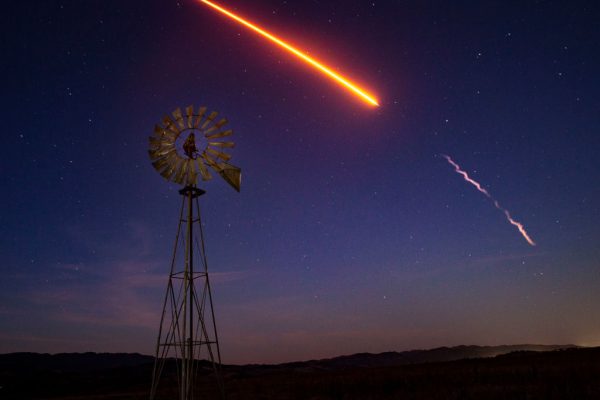
Global competition — China, Canada, and others ramp up
China is the most ambitious challenger in the satellite internet race, pursuing multiple state-backed projects that could eventually total more than 50,000 satellites.
According to China in Space, the Guowang (GuoWang, or National Network) constellation is planned to include around 13,000 satellites, with roughly 190 launched as of mid-2026 and targets of about 310 launches in 2026 before rapid scaling in the years ahead. The Qianfan (G60 or Thousand Sails) project aims for approximately 15,000 satellites, with around 200 already in orbit and a first-phase target of 1,296. Additional initiatives, such as Honghu-3, further expand China’s planned capacity in low-Earth orbit.
China’s drive is motivated by a mix of strategic autonomy, national security, and geopolitical influence. Beijing views independent satellite broadband as essential for reducing reliance on Western systems—particularly after observing Starlink’s critical role in Ukraine—and for securing orbital slots and spectrum before they are dominated by competitors.
Consistent with China’s state-led governance model, these projects are designed for both civilian and military use. They also support the Digital Silk Road initiative by expanding connectivity—and Beijing’s technological standards—across the Global South, including regions where Starlink encounters regulatory barriers.
This intensifying competition underscores a new era of orbital geopolitics: it accelerates global innovation and lowers costs for underserved regions, but it also raises risks of spectrum interference, orbital congestion, and heightened U.S.-China tensions over space as a strategic domain.
Meanwhile, Canada’s Telesat Lightspeed is advancing more modestly with a planned 198-satellite constellation. Pathfinder satellites are targeted for late 2026, with initial global service expected in 2027–2028. The project focuses on reliable broadband for remote northern communities and has government backing.
Other players include Amazon’s Project Kuiper (now Amazon Leo), with over 330 satellites in orbit and thousands more planned, and Blue Origin’s emerging TeraWave constellation (5,400+ satellites targeted for 2027+ deployment). This competitive surge is driving innovation, lowering costs, and expanding global connectivity options.
Taken together, when considering all the satellites already in orbit plus the tens of thousands more planned by China and others, the existing space junk problem is only set to worsen.

The growing space junk problem
Low Earth Orbit (LEO) is becoming increasingly crowded. Thousands of new satellites are launched annually, joining hundreds of thousands of existing debris pieces traveling at high speeds. Experts warn of heightened collision risks, which could trigger a cascading “Kessler Syndrome” effect — where debris generates more debris, potentially rendering parts of LEO unusable.
The space debris problem was first formally raised in 1978 by NASA scientist Donald J. Kessler (along with Burton G. Cour-Palais) in their seminal paper “Collision Frequency of Artificial Satellites: The Creation of a Debris Belt.”
At the time, with only about 300 active satellites in orbit, they warned that growing orbital congestion in low-Earth orbit could trigger a self-sustaining cascade of collisions. If left unsolved, the absolute worst outcome is full Kessler Syndrome: a runaway chain reaction where collisions generate exponentially more debris, eventually rendering entire orbital shells — particularly critical low-Earth orbits — unusable for generations.
In this nightmare scenario, space access becomes nearly impossible, satellites are destroyed en masse, global communications, GPS, weather forecasting, internet infrastructure, and military systems collapse, and humanity loses reliable access to space for decades or longer, effectively trapping us on Earth with a permanent debris barrier.
Mitigation efforts
Mitigation efforts are already underway on multiple fronts. The Inter-Agency Space Debris Coordination Committee (IADC) guidelines, widely adopted by space agencies and regulators like the FCC, enforce the “25-year rule” (now often tightened to 5 years for new U.S. satellites), requiring post-mission deorbiting, passivation to prevent explosions, and collision avoidance maneuvers.
Currently, SpaceX is lowering thousands of existing satellites to safer, lower orbits (from ~550 km to ~480 km) to improve safety and reduce long-term debris risks. According to Space News, this orbital reconfiguration involves roughly 4,400 satellites and is being conducted in close coordination with international regulators, other satellite operators, and U.S. Space Command. The lower altitude shortens deorbit times from years to just months, significantly reducing the risk of long-term space debris.
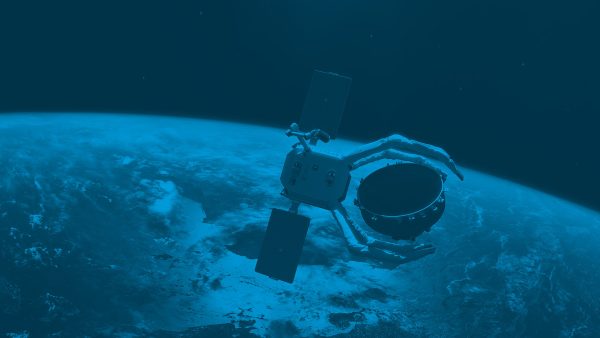
Beyond prevention, active debris removal (ADR) projects represent the next critical step. ESA’s ClearSpace-1 mission, targeted for the late 2020s, aims to capture and deorbit a derelict payload adapter using robotic arms, while companies such as Astroscale are testing rendezvous, docking, and magnetic capture technologies.
Other concepts include drag sails, ion-beam shepherding, and ground-based lasers to nudge debris into decaying orbits. These combined efforts—stronger international rules, better engineering, and actual cleanup—offer the best chance of stabilizing the orbital environment before cascading risks become unmanageable.
As Starlink continues to expand the boundaries of what’s possible in space-based infrastructure, the coming decade will test humanity’s ability to balance unprecedented opportunity with responsible stewardship of Earth’s orbital environment.
Musk has articulated an even bolder long-term vision, proposing constellations of up to one million satellites dedicated to orbital AI data centers that would harness unlimited solar power and vacuum radiative cooling to power the next generation of artificial intelligence at scales impossible on Earth.
Whether this future arrives or not, Starlink has already proven that large-scale LEO constellations can deliver transformative global connectivity. The ultimate challenge — and opportunity — lies in ensuring that the rush toward orbital dominance does not compromise the very environment that makes it all possible.