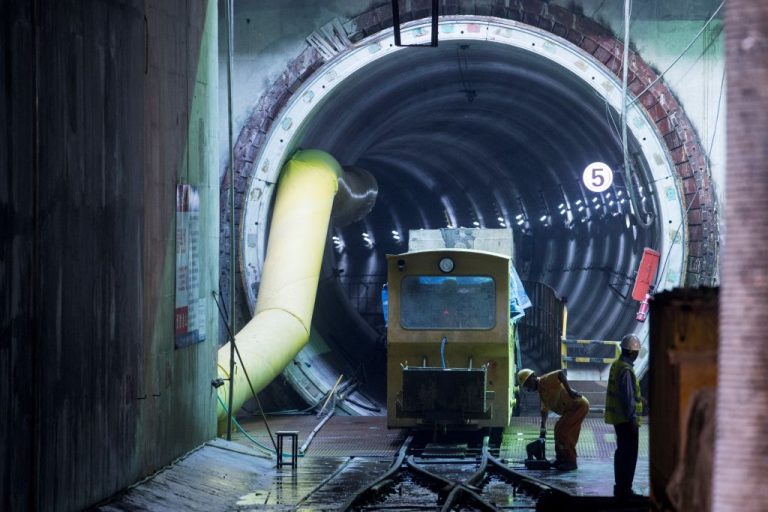
Amid China’s efforts to rapidly modernize and pull itself out of economic turmoil, a financial paradox is unfolding beneath its city streets. Long seen as symbols of urban modernization, subway systems across the country are grappling with staggering losses and spiraling debt.
According to multiple recent reports, subway companies across 29 Chinese cities collectively owe over 4.3 trillion yuan (USD$590 billion) in debt, sparking concerns over the sustainability of these massive infrastructure projects. Despite expanding networks and increasing ridership, transit systems in China have struggled to break even, with most relying heavily on government subsidies to get by.
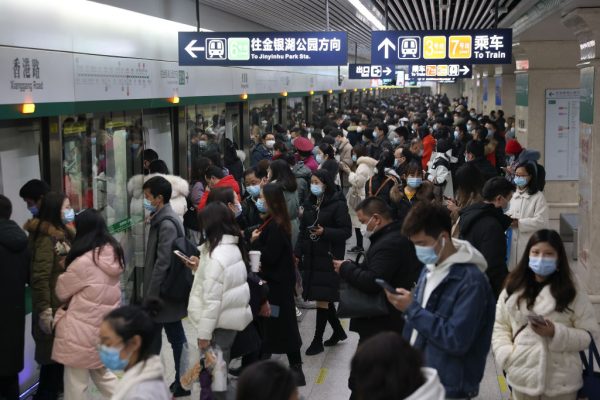
In early December, multiple cities across China launched new subway lines, bringing the country’s total operational rail transit mileage to over 10,000 kilometers (about 6,200 miles). Projects like Suzhou Metro Line 7, Chengdu Metro Line 8 (Phase II), and Xi’an Metro Line 8 began operations. Cities such as Beijing, Tianjin, and Wuhan are also set to open new lines by the end of the month.
RELATED: ‘My blood is on Xi Jinping’s hands’: Chinese Civil Servant’s Note Exposes CCP Failures
A house of cards
While the expansion of subway systems has enhanced urban transportation, it comes at an enormous cost. According to reports by state-owned Yicai and Jiemian News, the financial health of these projects is deteriorating. Though revenues have risen for most subway companies, profits have declined. In 2023, 17 out of 29 subway companies reported profit drops, even as government subsidies increased.
Success
You are now signed up for our newsletter
Success
Check your email to complete sign up
“Many second- and third-tier cities are experiencing population declines and do not need further subway expansion,” said Tang Maoqin, a U.S.-based scholar. Yet, local governments still view infrastructure as a tool to boost their political achievements. “They hope to create jobs and inflate GDP figures, even if it means building and rebuilding streets, bridges, and railways repetitively,” added Tang.
MORE ON THIS: As China’s Population Growth Stalls, So Will the Global Economy
Shenzhen Metro, which leads the nation in revenue, reported 25.15 billion yuan (USD$3.45 billion) in 2023 — an 11.8 billion yuan increase from the previous year. Yet, after deducting government subsidies of 730 million yuan, Shenzhen Metro recorded a net loss of 180 million yuan.
Beijing Metro — one of the few profitable systems — reported a net profit of 2.4 billion yuan, which was heavily reliant on 25.34 billion yuan in government subsidies. If subsidies were excluded, none of the subway companies would turn a profit.
‘Losing money like a high-speed rail’
The financial struggles of Chinese subway systems have been likened to the country’s high-speed rail networks, where only a few profitable routes — like the Beijing-Shanghai line — offset the losses of the majority. “Subways essentially don’t generate profits,” Ms. Guo, a supplier with ties to the subway industry, told Radio Free Asia (RFA). “Even major systems in Shanghai and Beijing operate at a loss.”
Guo also noted that many of her industry peers who supplied equipment to subway projects have exited the business due to the slimming profit margins. “The construction costs are enormous — five to ten billion yuan per kilometer — and the return on investment is minimal with ticket prices of just a few yuan.”
RELATED: China’s ‘Belt and Road Initiative’ Falters as Beijing Runs Out of Funding
“Most metro systems are operating at a loss, just like high-speed rail,” said another Shanghai-based metro supply chain expert who spoke under the condition of anonymity. “Only a few routes, like the Beijing-Shanghai line, actually generate profit. Many suppliers have already abandoned the market.”
A race to the bottom
Despite widespread financial woes, the approval pipeline for new subway lines remains active. Chengdu, for example, has submitted plans for a fifth construction phase spanning 199.8 kilometers (about 124 miles) that will cost billions, while Suzhou and Guangzhou are preparing to submit similar proposals. Suzhou’s fourth-phase plan (2025–2030) has already completed environmental and risk assessments, while Guangzhou’s proposed eight lines, covering 175.5 kilometers, are under provincial review.
RELATED: The Great Corporate Shift: 4 Reasons Why US Companies Are Pulling Out of China
But the feasibility of these projects is now under more scrutiny, says Guo. “These plans may not all gain approval,” she said, adding, “The government is under fiscal pressure, and with such long payback periods, these projects are far from guaranteed.”
In recent years, China’s National Development and Reform Commission (NDRC) has also tightened approval criteria for new subway projects. Cities with high debt ratios, like Harbin, have had their plans rejected. In fact, 12 provinces, including Heilongjiang and Jilin, are now prohibited from initiating new rail transit projects. Only economically robust cities with strong fiscal health are expected to gain approval in the future.
Saving face ‘at what price?’
While China’s subway systems have undoubtedly transformed urban life by providing millions with more efficient and affordable transit options, the economic reality behind the massive infrastructure push paints a sobering picture. As debt and unemployment levels rise while profitability remains elusive, cities must now balance their aspirations for modernization with the pressing need for financial stability.
The question remains: Will the Chinese government continue to prop up these systems with subsidies, or will it reevaluate its ambitious expansion plans in light of fiscal constraints?
“Construction seems endless — roads and bridges are constantly demolished and rebuilt, a perpetual cycle of spending,” said Guo, adding, “Subways are a face-saving project, but at what price?”