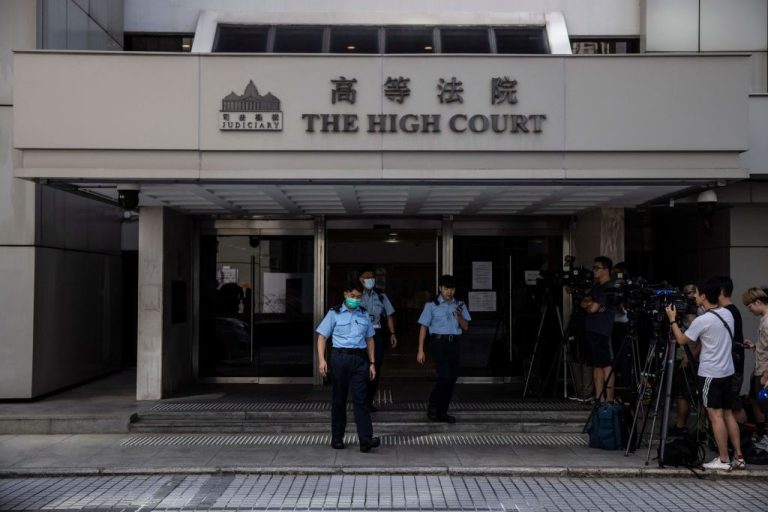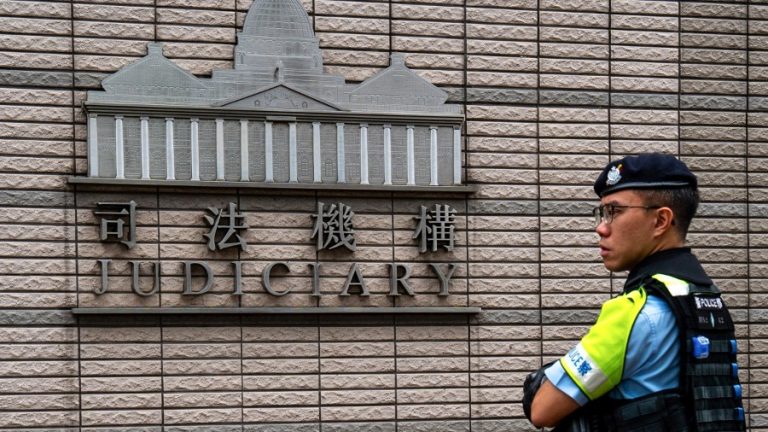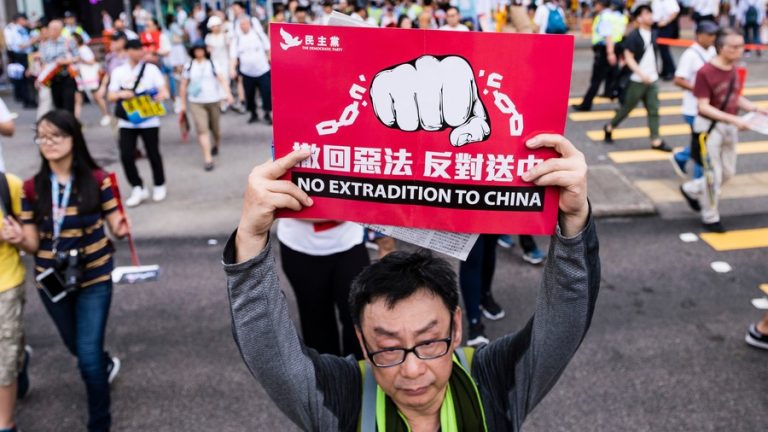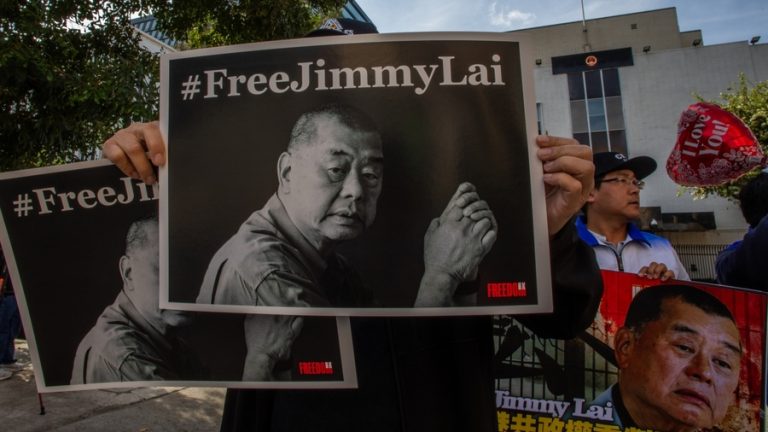
According to a report released by the Reuters Institute for the Study of Journalism at the University of Oxford on June 16, Hong Kong’s media landscape continues to be reshaped by the National Security Law, with journalists increasingly facing intimidation, senior media figures such as Jimmy Lai receiving prison sentences, and online media increasingly providing readers with perspectives outside the mainstream.
The report also found that 61 percent of respondents in Hong Kong said they wanted to read news that does not take a predetermined editorial stance. The growing popularity of online media stems from the declining effectiveness and credibility of mainstream media, said an analysis of the report.
Hong Kong National Security Law continues to reshape the media landscape
The report says that the Hong Kong National Security Law continues to reshape Hong Kong’s media environment, with journalists engaging in self-censorship to avoid crossing political and legal “red lines.”
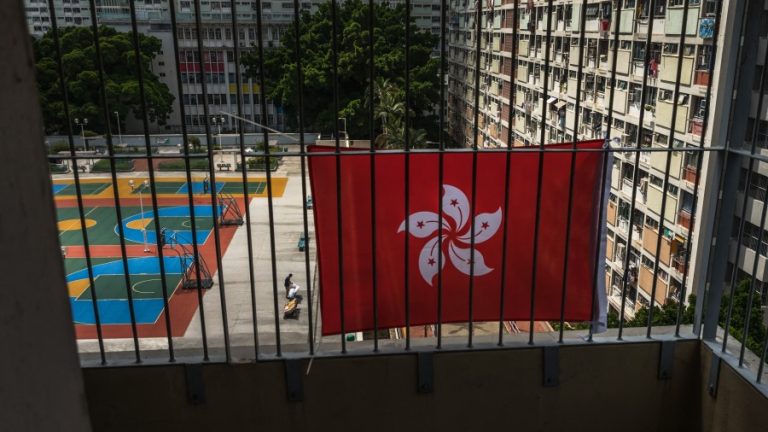
The report also notes that this pressure has extended to foreign media. Following the fire at Wang Fuk Court (宏福苑) last year, representatives of foreign news organizations were reportedly summoned for questioning by China’s Office for Safeguarding National Security in Hong Kong.
In recent years, the Hong Kong National Security Law has exerted substantial pressure on foreign media through measures such as increasingly ambiguous legal red lines, visa scrutiny, official warnings, summonses for questioning, and arrests. The Office for Safeguarding National Security has directly summoned foreign journalists for questioning, publicly criticized their reporting as “spreading false information,” and warned them not to cross legal red lines.
Success
You are now signed up for our newsletter
Success
Check your email to complete sign up
In addition, the Hong Kong government has denied work visas and entry to foreign journalists and documentary filmmakers. For example, Antoine Védeilhe, a journalist with France Télévisions, produced a documentary about Hong Kong’s National Security Law. At the end of 2024, he was denied entry upon arrival at Hong Kong International Airport and was deported.
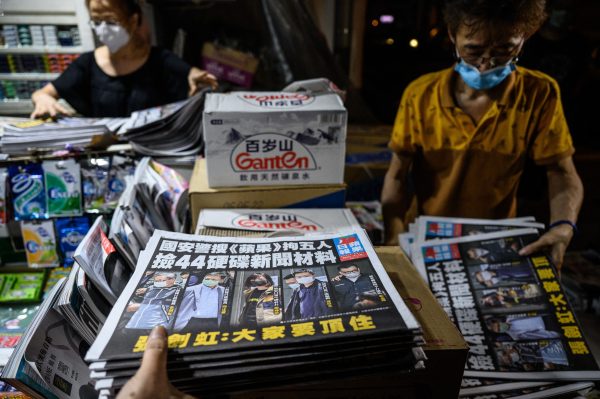
Independent online media fill the void left by Apple Daily
The report states that several independent online news outlets—including Photon Media (追光者), The Witness (法庭线), Collective HK (集志社), and Initium Media (端传媒)—are working to expand their reach by leveraging a “low-cost, high-reach” model. These outlets provide perspectives that differ from those of the mainstream media and have “filled the gap left by the closure of” Apple Daily.
At the same time, pro-government online media outlets such as Speak Out HK (港人讲地), DotDotNews (点新闻), and Orange News (橙新闻) have also expanded their influence by drawing on greater institutional resources, making Hong Kong’s media landscape more fragmented than in the past.
However, the report also notes that 15 percent of Hong Kong respondents said they do not trust DotDotNews, making it the second least trusted news outlet after Bastille Post (巴士的报), which registered a 16 percent distrust rate.
According to publicly available information, the organizations behind these three pro-government outlets are:
- Speak Out HK is backed by the One Country Two Systems Youth Forum Foundation (齐心基金会), established by former Hong Kong Chief Executive Leung Chun-ying.
- DotDotNews is operated by the Ta Kung Wen Wei Media Group.
- Orange News is affiliated with the United Publishing Group, a Chinese state-owned publishing conglomerate.
The report also found that 61 percent of respondents in Hong Kong said they prefer to read news that does not have a predetermined viewpoint, ranking fifth among the surveyed markets, behind Germany, Sweden, Taiwan, and Denmark. Meanwhile, 18 percent of respondents preferred news that aligns with their own views, while 11 percent preferred news presenting viewpoints that differ from their own.
TVB remains the most widely reached news outlet
Television Broadcasts Limited (TVB) remains the most widely used source of news in Hong Kong. Fifty-five percent of respondents said they had obtained news from TVB during the previous week, according to the report.
Meanwhile, Yahoo News, which ceased operations in April, ranked third among online news outlets, with 25 percent of respondents saying they had viewed its news coverage during the previous week.
The report also discusses the financial challenges facing the media industry. It notes that Ming Pao and Hong Kong Economic Times are both suffering significant financial losses. Although TVB has returned to profitability, the report says its earnings have been driven largely by licensing its television dramas to streaming platforms in mainland China.

AI is playing a growing role in news consumption
The report also examines the impact of artificial intelligence on how the public consumes news. Globally, about 10 percent of respondents said they used generative AI tools to access news every week last year, an increase of three percentage points from the previous year. Younger people were found to be more likely to rely on AI for news.
Among the countries surveyed, Nigeria and Kenya had the highest proportions of people using AI to read news, while the United Kingdom and the United States had the lowest.
The report also notes that respondents in Hong Kong, Turkey, and Hungary were more likely to favor using AI to verify the accuracy of news. It suggests that this tendency is more common in places where press freedom is limited and public trust in the media is relatively low.
The 2026 Digital News Report was produced by the Reuters Institute for the Study of Journalism and sponsored by Google, BBC, Reuters, and Ofcom, among others. It covers 48 countries and territories. In the Asia-Pacific region, the survey includes Australia, Japan, Hong Kong, Taiwan, South Korea, and Thailand, but does not include mainland China.
Mainstream media’s decline draws greater attention to online news
Former assistant professor of journalism at Hong Kong Baptist University, To Yiu-ming, believes that the declining effectiveness of mainstream media has led readers to increasingly turn to and trust online news outlets, according to Pulse HK News, an independent overseas Hong Kong media outlet officially launched on Oct. 20, 2025, through the merger of The Chaser News (《追新聞》) and Photon Media (《光傳媒》) .
He argued that mainstream media now largely frame stories from the government’s perspective, leaving readers with little choice but to “seek information elsewhere” by turning to emerging independent online media. As an example, he said that mainstream outlets have paid little attention to the hardships and concerns expressed by residents of Wang Fuk Court (宏福苑) following the earlier fire, whereas online media have continued to report those community voices.
Yiu-ming said that independent online media also face certain external pressures that are “understood without needing to be stated explicitly.” However, the journalists he has spoken with remain committed to overcoming these challenges through perseverance and by adapting to each new obstacle as it arises. He called on readers to continue valuing and supporting these independent voices.