The senior U.S. senator representing Maryland has introduced legislation that, if passed, would end the special trade and diplomatic arrangement America currently applies in its dealings with Hong Kong.
Ben Cardin, a Democrat who chairs the Senate Foreign Relations Committee, said on Dec. 9 the revision was necessary to counter the “erosion of Hong Kong’s autonomy and democratic values” by Communist China in recent years.
Hong Kong, a major port and financial hub, was a British colony for over 100 years before being returned to Chinese sovereignty in 1997. Under the “one country, two systems” deal, it was allowed to keep a separate political system — including many Western-style civil liberties.
As such, the U.S. has treated Hong Kong as a separate diplomatic and economic entity from the rest of the People’s Republic of China (PRC), with different trade and travel requirements.
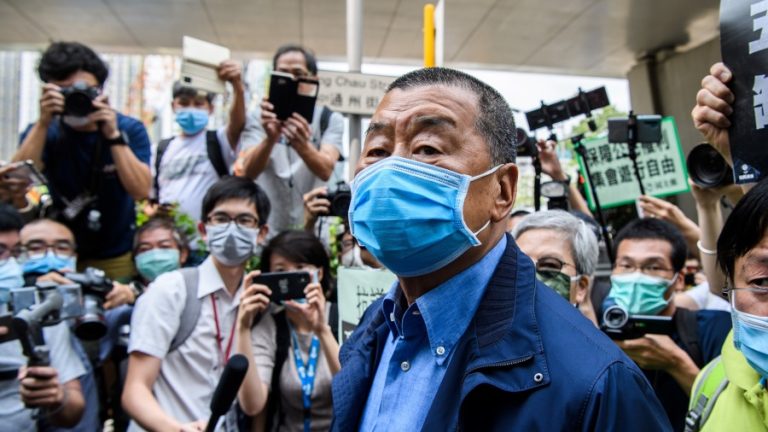
However, while the “one country, two systems” arrangement still exists on paper, the National Security Law (NSL) imposed by Beijing in June 2020 vastly curtailed the rights of Hong Kong residents, especially freedoms of speech and assembly.
Success
You are now signed up for our newsletter
Success
Check your email to complete sign up
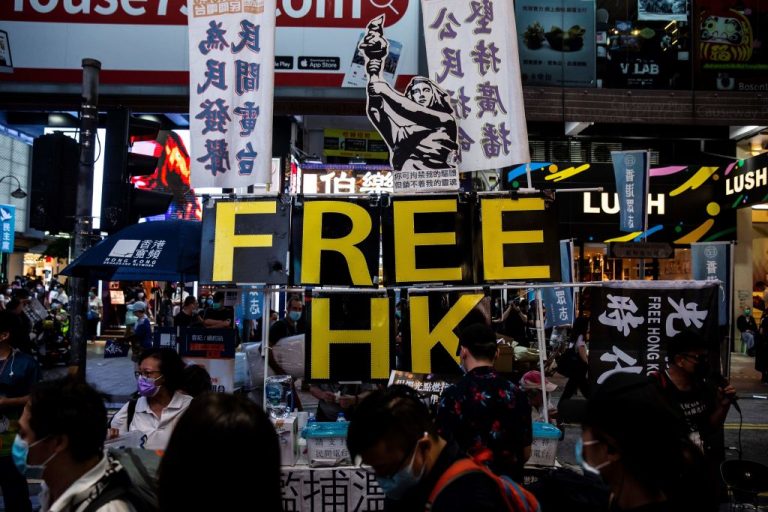
The NSL came after a year of large-scale protests — with many demonstrations gathering over 1 million people — by Hongkongers to demand political reforms and stave off the influence of the Chinese Communist Party (CCP) in the city. A combination of police force and the unfolding novel coronavirus pandemic in early 2020 thinned out the protests ahead of the law’s passage.

New Hong Kong policy
Cardin’s bill, called the “Hong Kong Policy Act of 2024,” was introduced on Dec. 9. It would replace the existing U.S. policy set in 1992.
““The United States must strengthen and update its policy to counter the PRC and Hong Kong governments” for their strengthening of CCP control over the city, Cardin said in the Dec. 9 statement on the bill’s unveiling.
“The bill also calls for enhanced multilateral cooperation with allies to pressure Beijing to restore the autonomy and freedoms once guaranteed to the people of Hong Kong.”
Under the bill, “Hong Kong will no longer receive differential treatment from the PRC except in certain circumstances,” and the State Department will be allocated resources to “advance democracy, human rights, civilian security, and Internet freedom in Hong Kong,” as with mainland China.
It would also offer “legal pathways for Hong Kong residents to immigrate to the United States” if they face persecution and grant “temporary protected status for those currently residing in the U.S.”
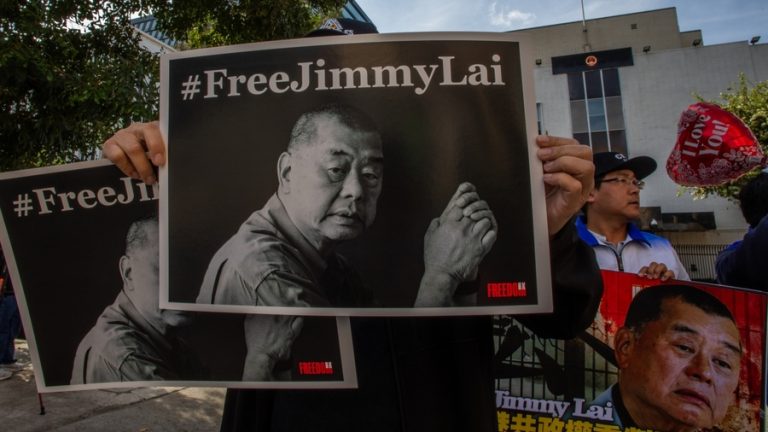
Hundreds of Hongkongers have been arrested and many tried under the CCP’s National Security Law.
This March, the Hong Kong authorities also enacted legislation called “Safeguarding National Security Ordinance,” developed from the long-dormant Article 23 of the city’s Basic Law.
The controversial article stipulated that Hong Kong must pass legislation to protect “national security,” but was never acted upon until this year — a move Chinese dissident Hu Ping described as redundant given the existence of the NSL.
A shift in the making
In 2019, the first Trump administration had passed and signed into law the Hong Kong Human Rights and Democracy Act, which required the annual renewal of Hong Kong’s special trade status.
The next year, after the NSL’s passage, then-45th President Donald Trump also signed the Hong Kong Autonomy Act into law, which imposed sanctions on officials and entities in Hong Kong, as well as throughout the PRC, that are deemed to have played a role in suppressing freedoms in the city.
Trump, who will return to the White House as 47th U.S. President in January, also signed Executive Order 13936 to “hold China accountable for its aggressive actions against the people of Hong Kong” and to eliminate preferential treatment for Hong Kong over mainland China by U.S. government agencies.
“It is essential to stand with the people of Hong Kong as they fight for their basic freedoms – both at home and abroad,” Cardin wrote in his Dec. 9 statement on the new bill.
Cardin, 81, served three terms as senator. He declined to re-run this year, and gave his retirement speech on Tuesday, Dec. 10.