One of the world’s favorite flavors — vanilla — is so versatile and ubiquitous that its name has become a slang term for “bland;” but its history is anything but. This coveted spice is difficult to grow, but thanks to an innovative young lad, vanilla leapt from its humble and sheltered origin of Mexico, to a billion dollar market with commercial crops grown in 15 countries.
Almost every dessert we eat has some vanilla in it. Pairing effortlessly with dairy, fruits and nuts; and harmonizing the bitter notes in chocolate and coffee, vanilla has the ability to enhance almost anything from delectable to delightful. Although it is most often associated with ice cream and baked goods, vanilla is more than just a flavor. Its enticing aroma is also used to scent beauty products, candles, lotions and more.
After saffron (tiny stigmas collected from a specific species of fall crocus) vanilla is the second most expensive spice in the world. Also the product of a beautiful flower, vanilla beans are the fruit of a specific orchid species endemic to Mexico, where our story begins.
The history and origins of vanilla

Vanilla was first discovered by the Totomac people, who inhabited Mexico during the first millennium. According to legend, King Teniztli fiercely guarded his beautiful and talented daughter Tzacopontziza from all prospects of marriage. When he sent her on an errand to offer sacrifices at a temple for the goddess Tonacayohua, however, the young maiden encountered a young warrior, Zkatan-Oxga, and it was love at first sight.
To avoid the problems of forbidden love, the couple fled; but their flight was observed by the temple priests, who quickly told the king. Between a magical beast sent by the priests and the strongest warriors sent by the king, the couple was soon cornered and captured.
Success
You are now signed up for our newsletter
Success
Check your email to complete sign up
The punishment for such sacrilege was death, and their hearts were extracted and discarded (in opposite directions) over a cliff. Tonacayuhua (the goddess) took pity on the lovers and collected their hearts. When she placed the lifeless organs together, a lush vine emerged, bearing a delicate and beautiful flower.
When the Totomac people came to witness the miracle several days later, they were astonished to find not just the beautiful plant, but also richly-aromatic, dried pods hanging from where the flowers had been. The orchid was declared a sacred flower, and its scented pods were used for both medicine and religious rituals.
It wasn’t until the Aztecs arrived in the 13th century that vanilla was adapted for culinary use. Added to ‘xocolātl’ (chocolate) it made a heavenly beverage fit for the gods. With the Spanish conquest 200 years later, vanilla was exported to Europe, where it became widely popular. The increasing demand for vanilla was hard to meet, however, due to its very specific cultivation requirements.
Vanilla cultivation

The vanilla orchid is a climbing vine with fleshy, thick stems. In its natural habitat, it climbs tall trees, using small aerial roots to attach to the bark. The plant needs warm weather, lots of humidity, and shade to grow well; but the hardest part of growing vanilla is getting it pollinated.
The flower has both male and female parts, so it can reproduce on its own. However, this hermaphroditic flower blooms for just one day during its two-month season. It must be pollinated within 12 hours in order to form a pod.
As an added complication, the vanilla orchid is naturally-pollinated exclusively by a rare Melipona bee, found only in Mexico. For this reason, the plant could not be cultivated anywhere outside Mexico, which kept vanilla rare, special, and expensive for hundreds of years.
A brilliant discovery

A quick and efficient way to hand-pollinate vanilla was discovered by a boy born into slavery on the French island of Réunion, about 420 miles east of Madagascar.
In 1841, 12-year-old Edmond Albius, who had learned the basics of botany from his master, devised a way to hand-pollinate vanilla flowers using a simple blade of grass and a flick of the thumb. For a short time, Réunion became the leading producer of vanilla, but Albius’ technique quickly expanded the cultivation of vanilla around the world.
A labor of love
Real vanilla is still expensive because it requires a lot of work to produce. The plants need two to four years to mature before they will produce vanilla beans. Aside from providing the proper growing conditions and hand-pollinating each flower, the pods require a special curing process to develop their rich aroma.
Pods start out green, but when the tips begin to yellow they are ready for harvest. After harvest the pods are “sweated” in a warm towel for a few days before they can be dried in the sun. As the pods (vanilla beans) dry, they turn dark brown and leathery, and the aroma develops and matures.
Vanilla production
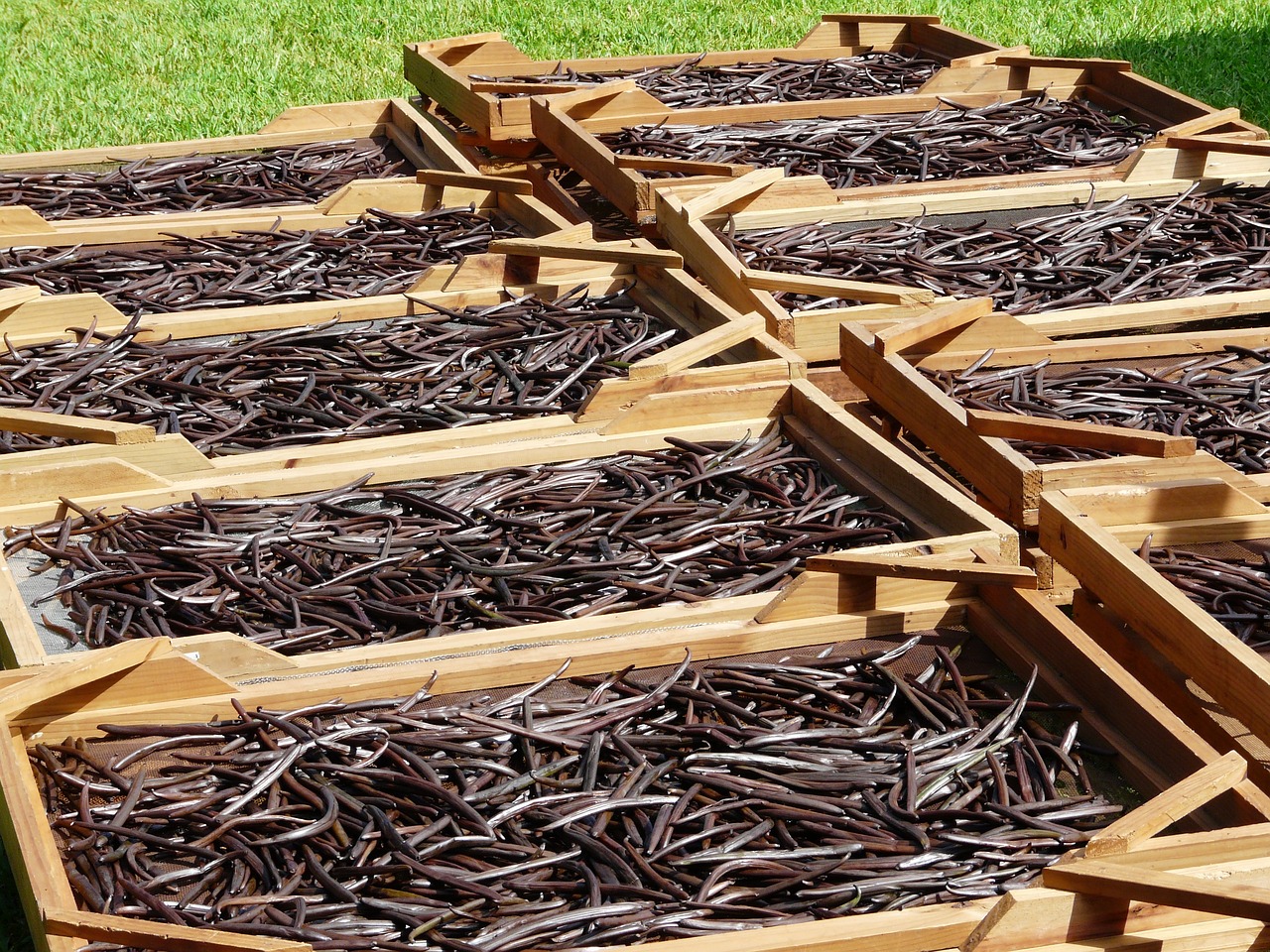
In the 1800s, vanilla plants were introduced to Madagascar, which happened to have the perfect weather and soil for growing vanilla. With poor farmers devoted to growing this lucrative crop, Madagascar became the world’s top vanilla producer.
Now, Madagascar produces 80% of the world’s vanilla. It became famous for producing high-quality vanilla, especially the Bourbon variety, named after the island’s old name; but even high vanilla prices cannot keep these farmers out of poverty, whose hard work is often threatened with theft and violence.
Vanilla is commercially produced in over a dozen countries today; including Indonesia, China, Papua New Guinea, Turkey, and of course, Mexico; with each country’s particular climatic conditions lending a unique flavor to its vanilla.
The next time you enjoy the flavor or scent of vanilla, take a moment to remember the colorful history and meticulous labor that brought this unique spice your way. With this appreciation you may find the vanilla tasting even better and the money well-spent.
READ ALSO:
- 13 Things You Need to Know About Chili Peppers
- Healing Herbs of India Part VII – Saffron
- Healing Herbs and Spices of India Part III – Ceylon Cinnamon
Ila Bonczek contributed to this report.