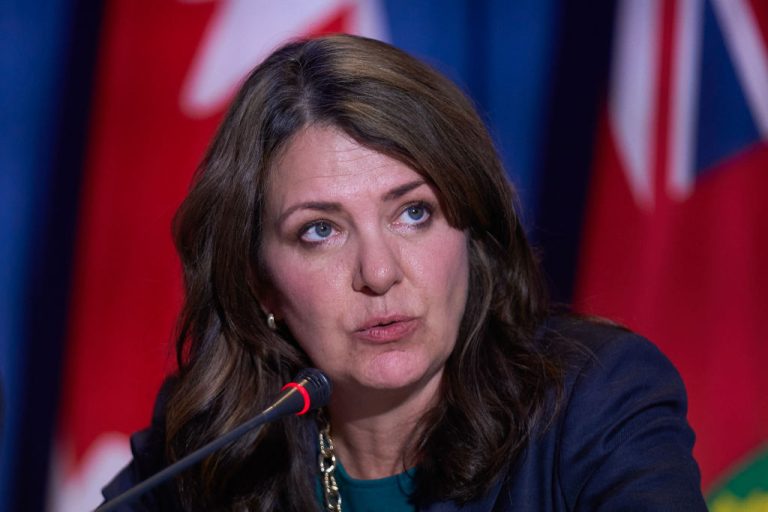
Over the weekend of January 11, the Premier of the Canadian province of Alberta, Danielle Smith, met with President-elect Donald Trump at his Mar-a-Lago estate in Florida where she discussed Trump’s threats of imposing a 25 percent tariff on Canadian exports.
At a news conference, on Jan. 13, Smith said that following her conversation with Trump there was no indication that he would back down from his threats.
A number of Canadian politicians, including New Democratic Party (NDP) leader Jagmeet Singh and Foreign Affairs Minister Mélanie Joly have said that cutting the flow of oil, and other exports, to the U.S. from Canada as retaliation for the 25 percent tariffs remains on the table.
However, Smith says that doing so could cause a “national unity crisis.”
“Oil and gas is owned by the province, principally Alberta, and we won’t stand for that,” Smith said Monday, adding, “I can’t predict what Albertans would do.”
Success
You are now signed up for our newsletter
Success
Check your email to complete sign up
On Sunday, on CTV’s Question Period, a Canadian talk show, Foreign Affairs Minister, Mélanie Joly, when asked if her government is considering cutting the flow of oil to the U.S. in retaliation to Trump’s tariffs said, “everything is on the table.”
At another news conference, NDP leader Singh told reporters that meeting with Trump, “does nothing.”
“She [Smith] met with him, she tried to wine and dine him and she came back and said, ‘Yep, there’s definitely tariffs coming,’” Singh said.
He then suggested that Canada should retaliate by first restricting the export of critical minerals to the U.S. and then escalate to limiting or blocking the flow of oil, if required.
Late last year, the Premier of Ontario, Doug Ford, suggested cutting off the electricity supply to the northeastern United States in retaliation.
Smith disagrees with this approach, saying on Monday, “We have to wait and see what he does, and then we have to have a measured and mature response to it that hopefully does not damage the relationship or damage Canadian consumers and Canadian businesses too much.”
READ MORE:
- Canada’s Trudeau Announces Intent to Resign, Prorogues Parliament
- Meta to Replace Fact-checkers With ‘Community Notes’ Like System Similar to X
- New York’s Congestion Pricing Scheme to Bring in $500 Million Annually
Trump not backing down
Speaking to reporters on Monday, Smith said, “I haven’t seen any indication in any of the president’s public commentary, or even in the comments that he had with me, that he’s inclined to change his approach.”
Smith has been lobbying American lawmakers directly, meeting with governors and appearing on a number of American news broadcasts, making the case for Canadian energy.
She argues that placing tariffs on Alberta energy products would lead to an increase in energy costs for Americans. “I’m hoping that by talking about the importance of energy, that we’ll be able to avoid tariffs on every Canadian product,” Smith said.
In response to Joly’s comments, Smith said Canada shouldn’t be throwing around “empty threats,” and that if Ottawa cuts exports to the United States, “they will have a national unity crisis on their hands at the same time as having a crisis with our U.S. trade partners.”
Smith says Canadians need to brace for tariffs coming into effect on Jan. 20th, immediately following Trump’s inauguration.
Smith’s weekend visit to Mar-a-Lago was just the latest Canadian politician to lobby Trump ahead of his inauguration.
Embattled Canadian prime minister, Justin Trudeau, met with Trump last month for diplomatic discussions, only to be met with a number of calls by Trump for Canada to become the 51st state.
Should Trump make good on his tariff threat, researchers say it would threaten tens of thousands of Canadian jobs, would lead to a direct contraction of the country’s GDP, and if Canada was to respond by limiting or stopping the flow of goods into the U.S. it would increase the cost of purchasing American goods in Canada.
“I think the solution is that we find ways to buy more American goods. We know the president’s opening position, we’ve got to try to find a way to dig down and get to a resolution. And I think that will have to happen in earnest once the inauguration happens on Jan. 20.”