Thailand has launched an investigation into the causes of a 30-story building’s sudden collapse in the capital Bangkok, as observers cite substandard Chinese construction methods as being a likely contributing factor.
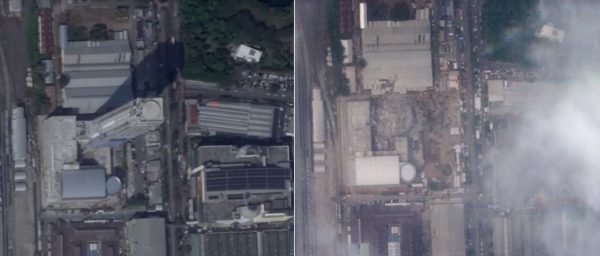
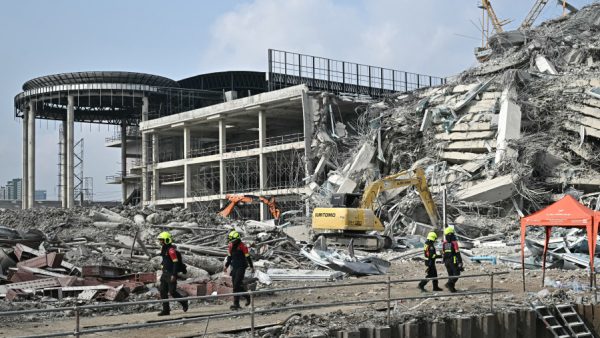
The structure, under construction as a joint Thai-China project, was the only high-rise building in Thailand to collapse following the Friday, March 28 earthquake that hit the neighboring country of Burma (also known as Myanmar).
While the earthquake, measuring magnitude 7.7 on the Richter scale, has caused widespread destruction and over 2,700 deaths in Burma, Bangkok is 800 miles away from the epicenter.
Thirty-four other government buildings throughout Thailand suffered severe, though non-total damage.
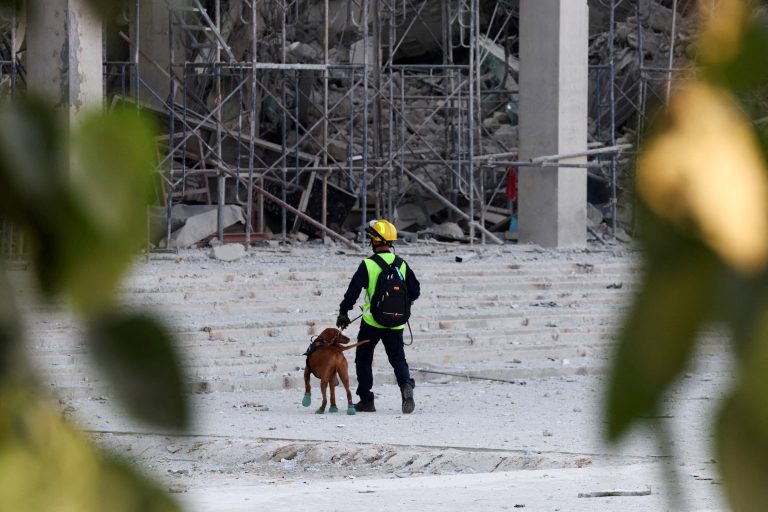
Footage shared on social media shows the building collapsing within seconds. At the time, about 100 workers were at the site; around 20 have been confirmed dead while the others are missing, as of the tie of writing.
Success
You are now signed up for our newsletter
Success
Check your email to complete sign up
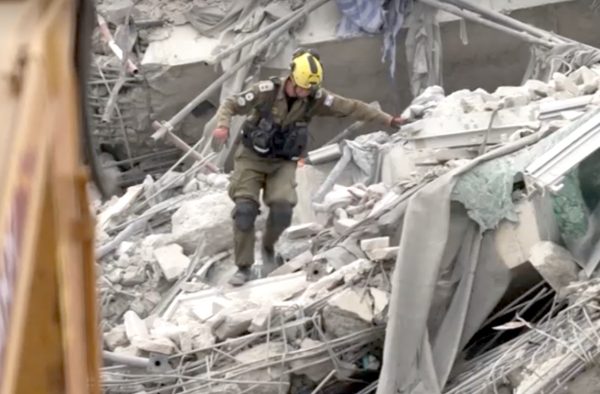
Bangkok officials on April 2 (Wednesday) said the hope of finding survivors amid the rubble of a skyscraper that collapsed after last week’s earthquake is getting “slimmer each day,” though rescue workers continue their search.
A US$63 million joint project between Thailand’s Italian-Thai Development Co. (ITD) and China Railway No. 10 Bureau Group Co, the building was intended to be a new office for the Thai Auditor General, but was well-past its intended completion date of Dec. 31, 2023.
China Railway Engineering Corp. (CREC) owns 49 percent — the most a foreign company is allowed to own in a local corporation — of the shares in China Railway No. 10 Bureau Group Co, which is based in Thailand.
The project had an unconventional “core tube + flat slab” design, and was about a third done at the time of its collapse.
Investigation and concerns
While uncompleted, the building’s destruction 800 miles away from the epicenter of the earthquake has led many to scrutinize the quality of materials and construction in the project.
According to a report by The Nation, a Thai outlet, the Ministry of Industry sampled six types of steel found in the wreckage, which were sent to Thailand’s Iron and Steel Institute in Bangkok’s Khlong Toei district for examination.
Of the three companies that the steel was sourced from, two of the companies’ steel was found to be of passing quality, according to Thitipas Chotedechachainan, an assistant to Thailand’s Minister of Industry. But the steel from the remaining company, Xin Ke Yuan Steel Co. Ltd, was found to be substandard.
Xin Ke Yuan Steel Co. Ltd. is majority-owned by Chinese nationals.
Thitipas Chotedechachainan, an assistant to Thailand’s Minister of Industry, said one of the three steel samples did not meet the requirements. However, no problems were found in the steel samples of the remaining two companies.
Thailand is a participant in China’s “Belt and Road Initiative” (BRI), a massive infrastructure construction and investment scheme that Beijing has promoted worldwide for over a decade. The China Railway No. 10 Bureau Group Co. is a primary contractor of the BRI Thai–China high-speed rail project connecting Bangkok to Laos, a country that lies between Thailand and China.
According to Thai daily newspaper Matichon, on March 29, the Thai police received a report from the public that four Chinese men had broken into the destroyed construction site and moved a large number of documents from the wreckage. This was in contravention of local law, as the Bangkok government had already designated the site as a disaster control area, meaning that unauthorized entry was prohibited.
After receiving the report, the police found and arrested one of the men near the scene of the accident, who claimed to be the engineering supervisor in charge of the construction. The police recovered 32 documents that had been taken by the Chinese men.