On April 4, China imposed new restrictions on the export of rare earth elements to the United States in retaliation to U.S. President Donald Trump’s imposition of a 145 percent tariff on Chinese goods, escalating tensions in the ongoing technology and trade rivalry between the two superpowers. The move targets critical materials essential to the production of advanced electronics, electric vehicles, and defense systems, raising concerns in Washington about supply chain vulnerabilities and strategic dependence on Beijing.
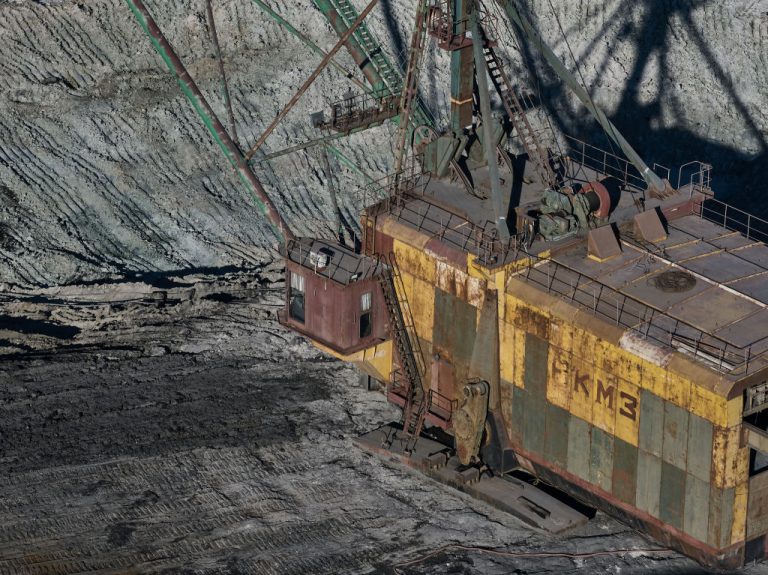
The United States holds deposits of all 17 rare earth elements and 50 critical minerals, but lacks the industrial capacity to refine them into usable materials, according to Melissa Sanderson, a board member of American Rare Earths and co-chair of the Critical Minerals Institute.
Sanderson told The Epoch Times that in order to access and refine these resources it would take the United States upwards of five years to build the infrastructure required to mine the resources to start producing key products.
“I certainly hope, as the administration is working through this critical area—no pun intended, it’s a critical area—they realize there’s this vulnerability gap, a four to five year gap, no matter how you look at it, in terms of ramping up domestic production,” Sanderson said.
For example, she said, “Currently in the United States, we have zero magnet manufacturers.”
Success
You are now signed up for our newsletter
Success
Check your email to complete sign up
Magnets are used in a number of different industries including electronics and electrical equipment, renewable energy, medical equipment, defense and aerospace and national security. They are especially important in areas like missile systems, defense electronics, and advanced technologies that require high performance magnets.
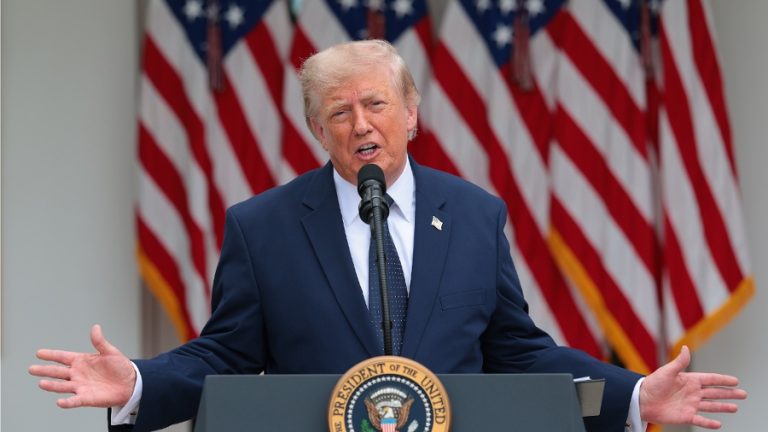
Following Trump’s April 2 “Liberation Day” announcement, the president gave Commerce Secretary Howard Lutnick 180 days to come up with a recommendation as to how the federal government can develop a “circular” domestic rare earth supply chain.
Trump is also looking into allowing deep sea mining of rare earths off the coast of the U.S. as well as commercial stockpiling.
Commercial stock piling involves businesses, industries, or, in this case, governments storing large quantities of materials, goods or resources in anticipation of future demand or potential supply disruptions.
READ MORE:
- US House Names China’s DeepSeek a Security Threat, Investigates Chip Origins
- Shanghai’s Population Crisis Deepens Amid Migrant Exodus, Dwindling Birth Rates
- Japan an ‘Indispensable Partner in Deterring Communist Chinese Military Aggression’: US Defense Secretary Hegseth
What if China bans rare earth exports to the US?
Amidst the ongoing SINO-U.S. trade war, China may escalate to the point of completely banning the export of all rare earths to the United States.
Economist Antonio Graceffo told The Epoch Times that if China escalated to such a point, “that’s a positive thing because it’s going to force the United States to find a solution.”
One way the United States could fill a hole left by a ban by Beijing, is by leveraging relationships in other countries, like Ukraine.
Ukraine possesses significant rare earth element deposits, accounting for approximately five percent of the world’s total reserves, according to the United Nations.
However, the majority of Ukraine’s rare earth deposits are located in regions currently under Russian occupation, including areas in the east and south of the country which highlights another reason a swift end to the conflict between Russia and Ukraine would be beneficial.
Trump has proposed that Ukraine could repay American war aid by allowing the U.S. access to these materials or some of the profits from current mining operations.
Trump could also turn to Canada, its largest trading partner, for rare earths; however Canada is in a similar situation as the United States, having significant deposits but lacking the infrastructure to access them. Like the United States, it would take Canada years to build the infrastructure required to mine the resources.
READ MORE:
- Journalists Face Death Threats for Exposing Forced Labor in Chinese Factory
- Taiwan Expels Mainland Chinese Influencer Wives for Advocating Communist Invasion
‘Tons of solutions’
Graceffo said that there are “tons of solutions” to building a domestic rare earth supply chain in the United States, including the ongoing talks with Ukraine.
“Absolutely, we can overcome the problem. In the long run, it’s going to be much better if China cuts us off. [Industry] will definitely find a way,” he said.
Ian Lange, an economics professor at the Colorado School of Mines agrees, telling The Epoch Times, “I’m on the optimistic side.”
He also questioned whether China would escalate as far as banning rare earth exports to the United States, since the United States is their largest market.
“We’ll see if this is real or just another hoop to jump through. And we have been slowly building up the supply chain over the last couple years,” he said.
“We’re getting close to having something here in the United States,” he added.
Among a number of companies entering the American rare earth market is Australian-based American Rare Earths, a start-up engaged in rare earth and critical mineral mining stateside.
The company is currently building a refinery near its mine in Halleck Creek, near Wheatland, Wyoming.
It produces dysprosium and terbium, two of seven restricted “heavies” that are used in the production of magnets incorporated in motors and generators for wind turbines, as well as electric vehicles and nuclear reactor control rods.
The company also operates a mine in Arizona and recently secured a $7.1 million grant from Wyoming in addition to a Letter of Interest for up to $456 million in debt financing from the U.S. Export-Import Bank.