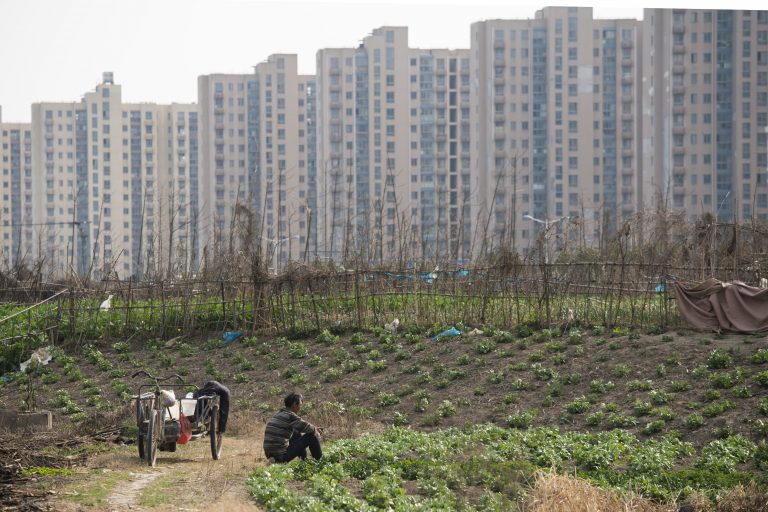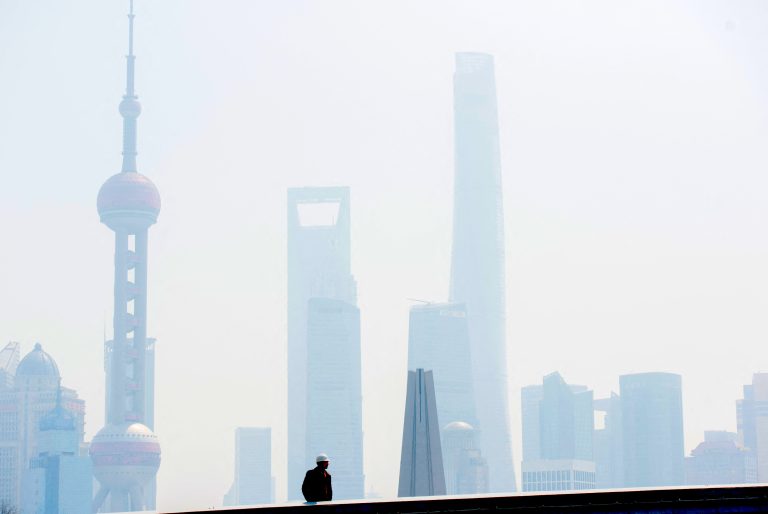
Known as one of China’s financial strongholds, Shanghai now finds itself grappling with a dual population crisis that has alarmed officials and experts alike. According to newly released data, the number of non-resident (or migrant) workers living in the city has dropped below 10 million for the first time in years.
The figures come from the “2024 Shanghai National Economic and Social Development Statistical Bulletin” released by Shanghai authorities on March 25. As of the end of 2024, Shanghai’s total resident population stood at 24.8 million, a decline of 72,000 from the previous year. Most strikingly, the city’s non-resident population decreased by 237,900, falling to 9.83 million — the first time it has dipped below 10 million.
RELATED: South Korea’s Birthrate, Already Lowest on Earth, Falls Even Further
What’s driving the exodus?
Shanghai’s migrant population reached its peak in 2020 with 10.48 million people. Since then, the numbers have dropped each year: 10.32 million in 2021, 10.06 million in 2022, 10.07 million in 2023, and now under 10 million in 2024.
The reasons for this downward trend are multi-faceted. The slowing economy and changing industrial structure in Shanghai have reduced the demand for migrant labor. As noted in official data released by Shanghai authorities, “In recent years, the demand for migrant workers in traditional manufacturing and low-end service industries has declined.” At the same time, though high-tech industries like AI are expanding, the number of high-skilled jobs available is limited and not enough to offset the decline in lower-skilled opportunities.
Success
You are now signed up for our newsletter
Success
Check your email to complete sign up
RELATED: Trump Raises China Tariffs to 20 Percent, Citing Lack of Cooperation on Fentanyl
In addition, the skyrocketing cost of living, especially housing, has made it difficult for many to remain in the city long-term. Analysts note that high rent remains a top barrier to migrant settlement in the city, with many younger workers now opting to return to their hometowns or move to smaller cities where housing and daily expenses are more manageable.
Another obstacle lies in traditional expectations around home ownership. In Chinese culture, it’s common for young professionals to set priorities like buying a house before marrying and starting a family. However, in cities like Shanghai, even renting a modest apartment can be prohibitively expensive. This has led many young migrants to delay both marriage and child-bearing indefinitely.
Birth rates drop further
While the drop in the migrant population is troubling, Shanghai’s plummeting fertility rate has stirred even more concern. According to a June 2024 report from the city’s Health Commission, the total fertility rate (TFR) dropped from 0.7 in 2022 to 0.6 in 2023 — a figure that’s well below the replacement level of 2.1 and even lower than South Korea, which holds the record for the country with the lowest fertility rate.
In some of Shanghai’s central districts, such as Huangpu, Xuhui, Changning, Jing’an, Putuo, and Hongkou, the fertility rate has dropped below 0.5, meaning that two couples are not even having one child on average.
The delayed age of childbirth also reflects this downward trend. The average age for first-time mothers among Shanghai’s registered residents has steadily risen from 29.01 years in 2015 to 31.66 years in 2023, with the average overall childbirth age rising to 32.56 years.
RELATED: China’s Birth Rate Hits a New Low, Population Falls by 2 Million
Despite the Chinese government easing its once-strict family planning policies over the years and even encouraging couples to have more children, the desire among Shanghai’s younger population to expand their families remains low. A previous survey conducted by China’s National Health Commission found that the number one reason women of childbearing age were unwilling to have more children was “heavy economic burden.”
A rapidly graying city
The costs associated with raising a child in Shanghai go beyond money. Many women also cite the difficulty of balancing work and family, especially with young children. Even with financial support from the government, the time and emotional investment required for parenting, combined with worsening childcare and education costs, have become a major deterrent.
Now, with both a shrinking non-resident population and one of the lowest fertility rates in the world, Shanghai is rapidly aging. The city is now facing an unprecedented demographic challenge. According to a report from the Shanghai Municipal Civil Affairs Bureau, the city’s aging level is already comparable to that of Japan — a country known for its rapidly-aging society and dwindling birth rates.
Projections indicate that by 2030, 40 percent of Shanghai’s registered residents will be elderly. By 2050, that figure could rise to 44.5 percent, making Shanghai one of the most aged cities in the world. This could then wreak havoc not only on the city’s labor force but also on its healthcare, pensions, and other social service systems.