The United States Trade Representative (USTR) is preparing to impose tariffs of up to 100 percent on Chinese-made ship-to-shore cranes, part of the Trump administration’s push to counter China’s growing dominance in maritime manufacturing. The proposed move has drawn concern from industry leaders, who are requesting more time to adapt to the potential economic impact.
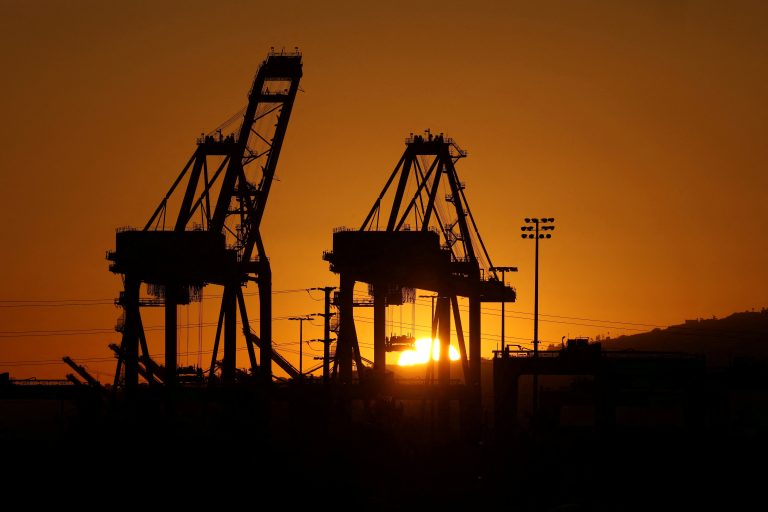
China, via state-owned Shanghai Zhenhua Heavy Industries (ZMPC), now commands the global market and has supplied some 80 percent of the ship-to-shore cranes in the United States. ZPMC has more than 200 cranes in operation across nearly two dozen U.S. ports, including Houston, Los Angeles and New York. Each of those cranes costs anywhere from $10 million to $20 million.
Countering that trend is a priority for the Trump administration, whose officials stated in meetings they intended to put an end to such purchases, said Carl Bentzel, president of the National Association of Waterfront Employers (NAWE), which represents terminal operators and other groups.
Asked whether he expected the tariff rate to land at around 100 percent when USTR issues its pending decision on the matter, Bentzel said, “I’ve been operating under the position that that’s the floor. This essentially is a ban on the use of Chinese manufactured cargo equipment.”
Trump is not the first U.S. president to encourage ports to purchase higher-cost cranes from manufacturers linked to U.S. allies, such as Finland’s Konecranes, Japan’s Mitsui E&S, and Switzerland-based Liebherr.
Success
You are now signed up for our newsletter
Success
Check your email to complete sign up
A similar Konecranes crane model with a 170-ton lift reportedly costs over $55 million, while similar equipment from Japan’s Mitsui E&S is estimated to range between $6 million and $20 million, closer to the price of Chinese cranes.
READ MORE:
Expanding Biden era tariffs
Joe Biden imposed 25 percent tariffs on ship-to-shore cranes from China in 2024 after the Cybersecurity and Infrastructure Security Agency, the Federal Bureau of Investigation and the National Security Agency publicly stated that China has sought to preposition cyber vulnerabilities in American critical infrastructure, including port equipment.
U.S. officials have also warned that the modems, software, and other technology embedded in the equipment could serve as backdoors for espionage or be used as kill switches to disrupt port operations and potentially compromise military activities.
Nevertheless, ports and terminal operators continued buying lower-cost Chinese cranes.
“The inaction and resistance from the port operator community is focused on short-term cost savings and massively underestimates the ultimate cost of inaction,” said William Henagan, a Council on Foreign Relations research fellow who was director for critical infrastructure at the National Security Council under Biden.
U.S. port operators and representatives for ZMPC in letters to USTR in May said security concerns linked to the cranes were out of proportion to the risk. Opponents also warned that the tariffs could heave billions of dollars of unexpected costs on the industry, stifling improvements meant to keep U.S. ports competitive.
These days NAWE, one of the industry organizations representing terminal operators, is working to mitigate the impact of the new tariffs by asking for exemptions for previously ordered cranes and a transition period for the implementation of new duties.
“We’ve chosen to work with them,” Bentzel said.
Reuters contributed to this report