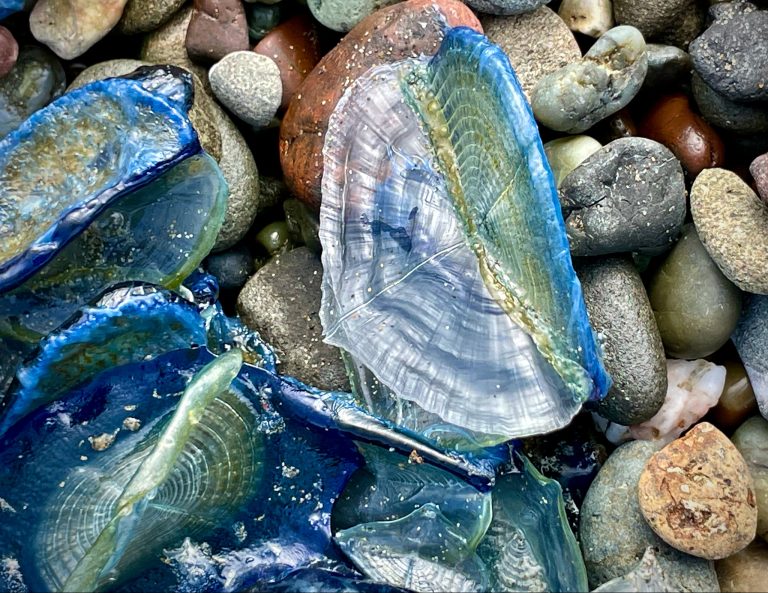
If you have been enjoying the beach this summer, you may have noticed oddly ornate bits of clear film littering the sand; or, if it was soon after a storm, perhaps they were attached to rubbery blue discs. At first glance it might look like a deplorable pile of plastic pollution, yet closer examination reveals a unique sea creature called Velella velella.
Also known as “by-the-wind sailors,” Velella velellas are like a miniature cross between a jellyfish and a sailboat. They float on the surface of the ocean with stinging tentacles dangling beneath a raft-like disk with a built-in sail.
What are Velella velellas?
Velella velellas are classified as hydrozoans, aquatic invertebrates in the phylum Cnidaria — which also includes jellyfish (scyphozoans), sea anemones (anthozoans) and box jellies (cubozoans). They were originally believed to be colonial hydrozoans, or siphonophores. Siphonophores are made up of multicellular units called zooids, which are specialized to cover all the different bodily functions. The Portuguese man o’ war is a siphonophore.
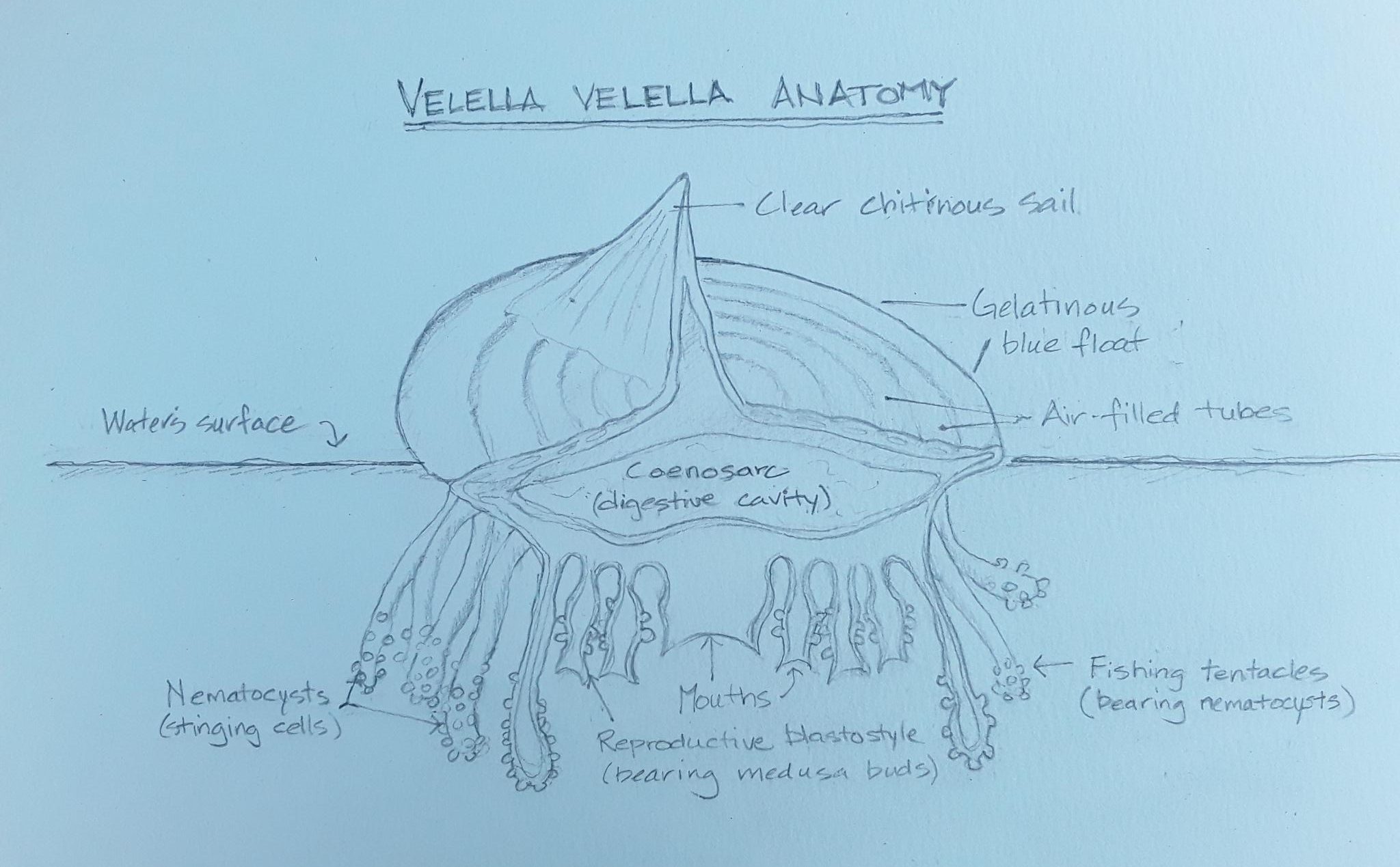
Siphonophores reproduce asexually by budding and fission; but recent studies suggest that Velella velellas also reproduce sexually, exhibiting alternate generations of medusa and polyp. Thus, many scientists now consider them singular hydrozoans. The stage of their life cycle that we see floating on the water and stranded on the beach is the polyp.
Medusae are produced asexually on the underside of the polyp by budding. Similar in appearance to tiny jellyfish, they drop into deeper water where they mature and reproduce sexually to form new polyps, which rise to float on the surface. Polyps normally grow to a maximum diameter of around three inches.
Success
You are now signed up for our newsletter
Success
Check your email to complete sign up
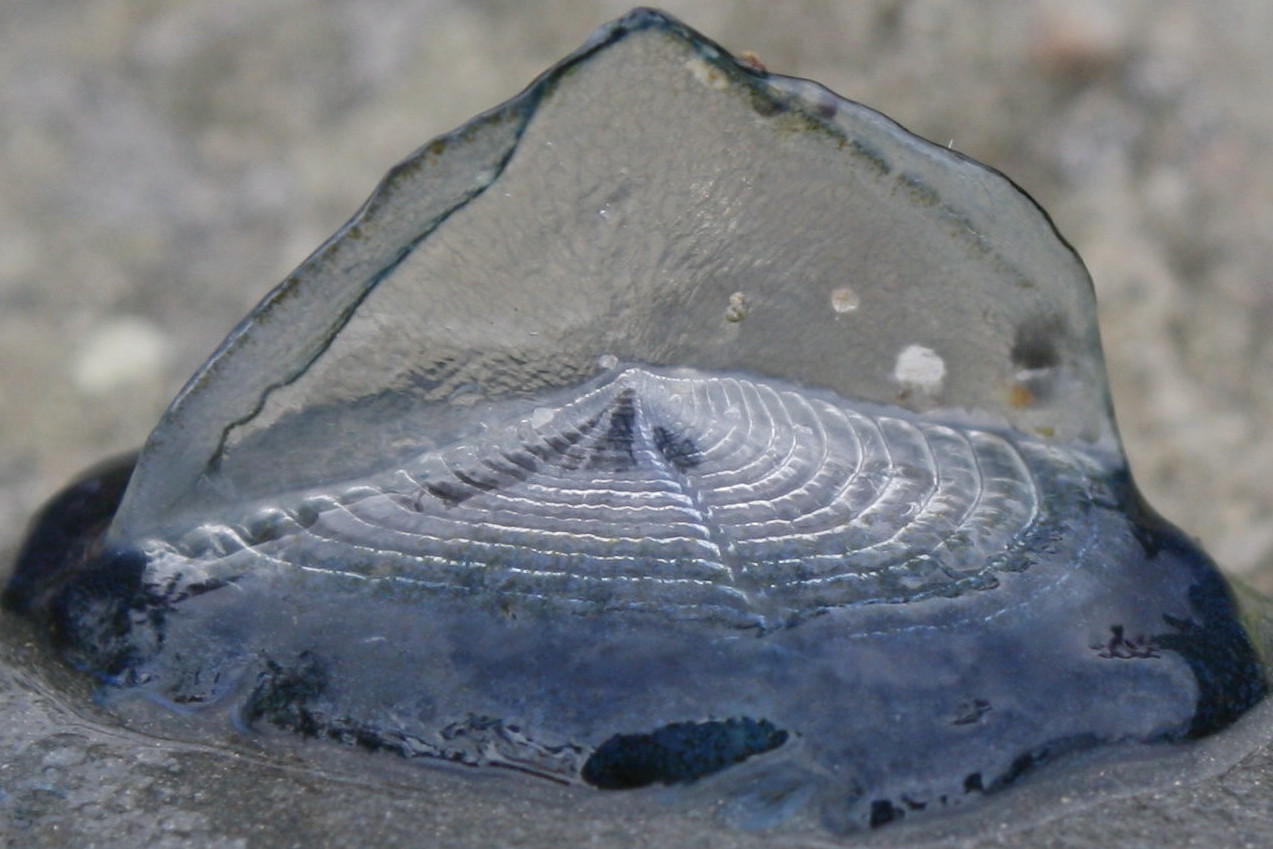
The most fascinating feature of the Velella velella is its sail, which rests atop a floating disc of gas-filled concentric tubes. Situated diagonally across the body, it is in the perfect position to catch the wind at a 45 degree angle for traveling at top speed. Curiously, two distinct forms of Velella velella exist — one with a left-angled sail, and another with a right-angled sail. The wind naturally separates the two forms by blowing them in opposite directions.
Left-angled forms are more frequently found in the northern hemisphere. We are most likely to see them in the spring and summer, when storms send them ashore. Left-angled Velella velellas visit the south in accordance with prevailing wind patterns.
Like other hydrozoans, Velella velellas are carnivorous predators. Their short, blue tentacles contain stinging cells, called nematocysts, which help capture prey close to the water’s surface. Their diet consists mainly of planktonic crustaceans like krill and copepods.
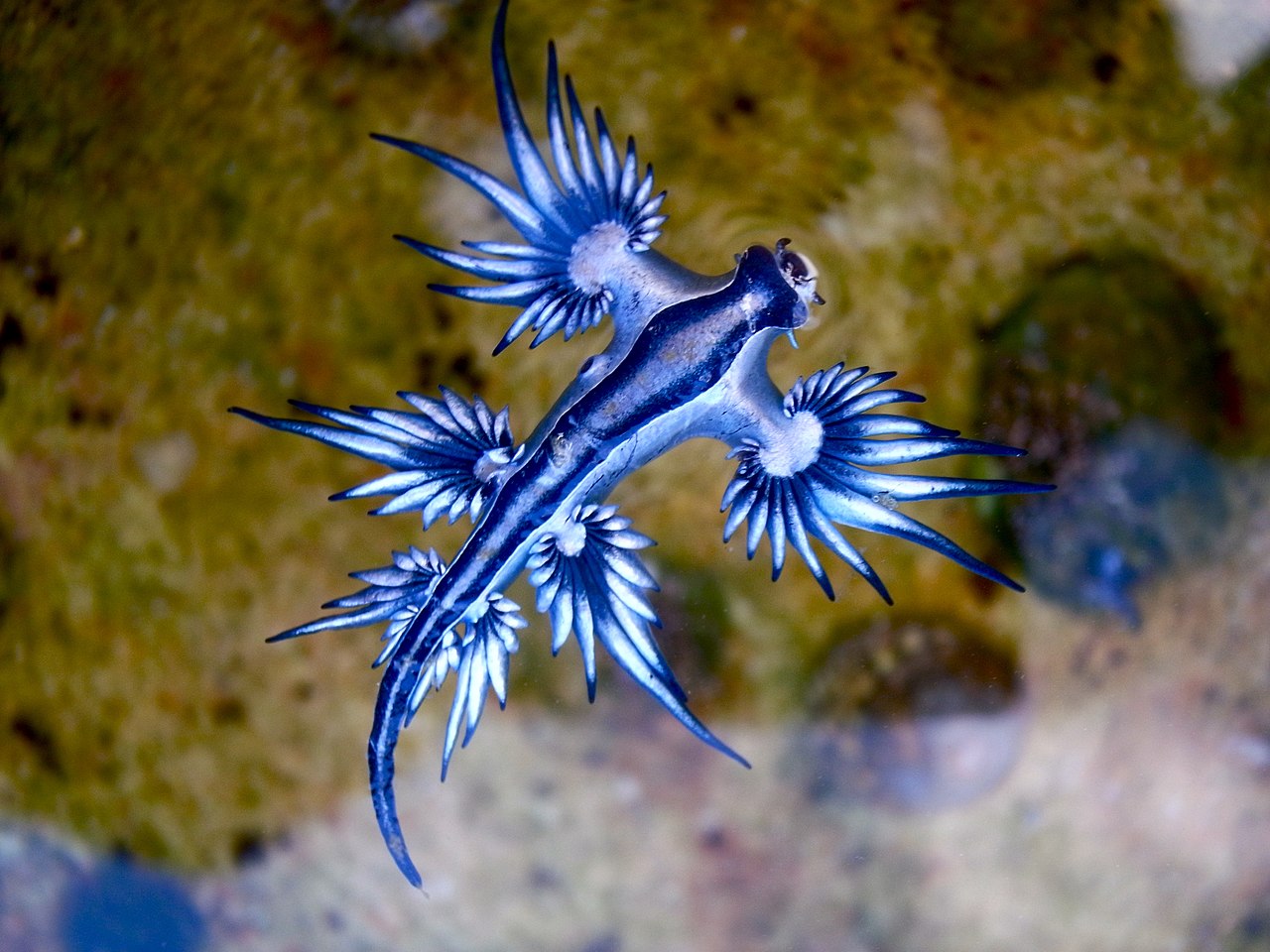
Velella velellas are also an important source of food for larger marine life — like sea turtles, sea slugs and albatross.
How Velella velellas affect us
Velella velellas are commonly seen in multitudes on the West Coast, and only occasionally show up on the eastern shore. In 2019, hundreds of the by-the-wind sailors were spotted along the Jersey shore, possibly thrown our way due to the strong winds of Hurricane Dorian that August.
If you encounter living specimens, rest assured; the sting is neither painful nor harmful to humans except in the rare case of an allergic reaction. Still, it is not recommended to handle them. Dead and rotting Velella velellas have a repulsive odor that might drive you to dive into the ocean.
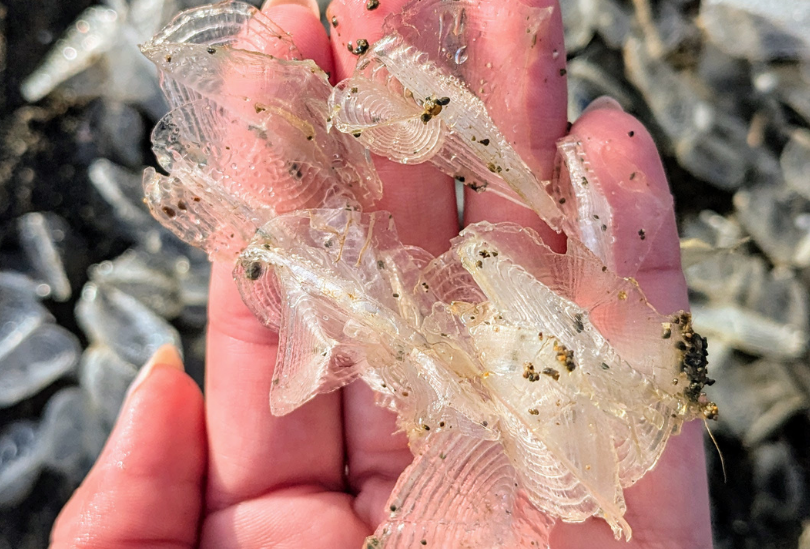
Besides being beautiful, the chitinous remains of Velella velellas might someday prove valuable as a source for chitosan. This dietary supplement is commonly taken as a pre-biotic to boost immunity and assist with weight loss.
By-the-wind sailors also seem to have inspired a global initiative in offshore hydrodynamics. “Velella” is a project aimed at developing technologies to improve efficiency and reliability of floating wind farms, while mitigating their environmental impact.
READ ALSO: