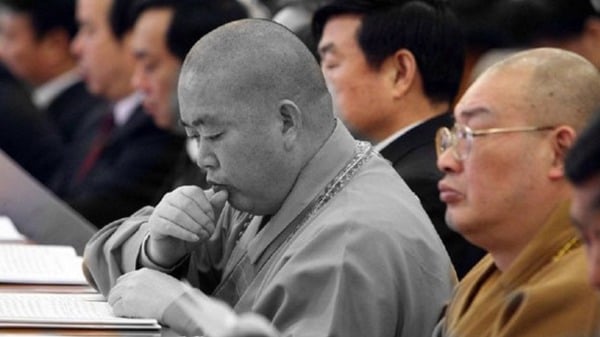
By Janet Huang, Vision Times
As speculation continues to mount around China’s First Lady Peng Liyuan, reports of Shaolin Temple Abbot Shi Yongxin’s arrest have swept through public discourse like a political typhoon — potentially serving as a calculated distraction by the Chinese Communist Party (CCP), experts note.
With the CCP’s annual Beidaihe retreat — a secretive period of internal leadership consultations — fast approaching, state media coverage has become markedly subdued and deliberate. At the same time, international observers are closely monitoring rumors surrounding Peng Liyuan’s apparent removal from the “Central Military Commission Cadre Evaluation Committee,” lingering controversy over former Premier Li Keqiang’s sudden death, and even whispered romantic entanglements.
MORE ON THIS: The Mysterious Death of Li Keqiang and the Fractures Splitting China’s Leadership
Against this backdrop, Peng’s public appearance on July 17 was widely seen as an effort to dampen speculation. Peng participated in the 2025 “Guling Friendship” U.S.-China Youth Exchange event, delivering remarks. Xinhua reporters were dispatched to cover the occasion, and, as expected, she was referred to only as the “wife of President Xi Jinping.”

Success
You are now signed up for our newsletter
Success
Check your email to complete sign up
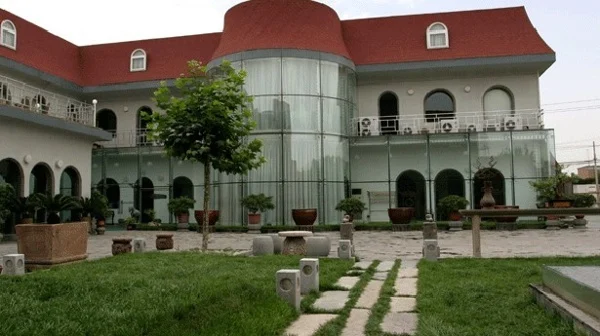
On July 22, she appeared again at the opening ceremony of the “Love in the Sunshine” 2025 Summer Camp held at the CCP’s Archaeological Museum. Her participation seemed intended to reaffirm her visibility. Yet, questions remain about whether the invitation came solely from the National Health Commission. For someone with the title of WHO Goodwill Ambassador for Tuberculosis and HIV/AIDS, the event’s theme struck many as awkward, if not outright self-defeating, netizens noted.
RELATED: Beijing Courts Global Influencers in New Propaganda Push to Shape Public Opinion
‘Goodwill’ role turns into a liability
In a telling move, China’s National Health Commission (NHC) released exclusive coverage of Peng’s appearance — conspicuously omitting her official title as “Wife of President Xi Jinping.” This subtle change hinted to many observers that Peng may no longer hold a formal or politically valid position, reduced instead to a symbolic or honorary figure. The absence of Xinhua’s coverage and the muted treatment across major web portals further suggested a quiet demotion and marginalization.

The irony runs deep. Peng’s once-celebrated role as a WHO Goodwill Ambassador for HIV/AIDS prevention has increasingly become a public relations nightmare. As China relaxes restrictions on HIV-positive travelers and aggressively recruits students from high-prevalence countries such as South Africa, Tanzania, Mozambique, Nigeria, Kenya, and Uganda, its domestic HIV/AIDS crisis has worsened.
Estimates place China’s HIV/AIDS cases at over 4.7 million — second highest in the world — sparking public concern. Critics have described the crisis as a “necessary consequence” of Beijing’s international ambitions, particularly under Xi’s controversial Belt and Road Initiative, which has intensified ties with HIV-stricken regions.
RELATED: Watchdog Report: CCP Using Belt and Road to Expand Organ Harvesting Network
Peng’s presence at a youth summer camp under the banner of HIV/AIDS goodwill was, to many, an act of grim irony. Once a symbol of soft diplomacy, her involvement is now viewed by some as a case study in reputational collapse — “high-level black humor” where the messenger is inseparable from the message.
Xi’s political standing in question
Notably, since May 2025, Peng has not been publicly seen in her usual role beside Xi Jinping—a conspicuous absence that has fueled speculation about Xi’s political standing and possible decline.
Tensions continue to rise across mainland China amid a string of social controversies that are eroding public trust and intensifying pressure on the regime. Chief among these is the Hangzhou tap water crisis, now widely referred to as the “sewage water incident.” Public outrage erupted after it was revealed that tap water had been contaminated, prompting authorities to announce that seven officials would be “strictly held accountable.”

However, the failure to disclose their identities has led many to believe the punishment is symbolic — a smokescreen to prevent broader political fallout.
Compounding the unrest is a surge in Chikungunya fever, which has rattled public confidence even further. As fear spreads, citizens are questioning vaccine safety, mosquito control programs, and, above all, the government’s transparency. Increasingly, these concerns are directed at systemic failings within the CCP’s governing structure. Amid mounting economic and social instability, a perfect storm appears to be forming — one with potentially destabilizing consequences for Party leadership.

As societal cracks widen and unrest becomes more visible, the CCP has reverted to familiar tactics of information suppression and psychological manipulation. Blending classic propaganda methods with new tools, the regime is working to channel public emotion through distraction, misdirection, and tightly-curated narratives.
At the heart of this effort lies the Party’s core doctrine: the collective interests of the ruling elite supersede all individual considerations. As history has shown, within this system, even its most loyal functionaries can become both instruments — and victims — of the machinery they serve.
Shi Yongxin’s arrest
On July 26, independent sources confirmed that Shaolin Temple’s abbot, Shi Yongxin, has been taken in for investigation. A highly active figure on Weibo (a popular social media and blogging site in China), Shi abruptly stopped posting on July 24. Given that he typically posts 1.5 updates per day and leverages his online presence for revenue, it’s unlikely this silence was voluntary.

While the details of the investigation remain unclear, the Shaolin Temple’s external affairs office acknowledged that Shi has not been seen. Had he voluntarily entered seclusion, his aides would have arranged food and care — standard protocol for a figure of his stature.
Adding intrigue, online records show that back in 2015, a Shaolin disciple using the name “Shi Zhengyi” lodged five complaints accusing Shi of serious misconduct: dual residency, multiple mistresses, and fathering a child with a nun named Shi Yanjie. The claims were supported by alleged evidence, yet local police dismissed them after a vague “investigation.” The story faded under heavy censorship.
This reluctance to act against Shi reflected deeper political considerations and mirrored broader corruption within China’s Buddhist institutions. The current case will likely be viewed as another chapter in the CCP’s steady erosion of traditional religious culture.

Shi is no ordinary monk. With estimated assets of $3 billion USD, he holds titles such as Vice President of the Chinese Buddhist Association and President of the Henan Buddhist Association. His wealth is ostentatious: robes adorned with 160,000 yuan worth of decorations, prayer beads so valuable that one could buy an apartment, redwood furniture, and a fleet of luxury vehicles.
Nicknamed the “CEO of Mercedes Temple,” he runs a business empire generating over 100 million yuan annually — all protected under the legal status of temple property. Though Shi officially draws a salary of just 700 yuan per month — barely enough for breakfast — he is known for maintaining no assets in his own name. As one insider put it, “He understands the principle: even if you own ten million cows, you can only eat one plate of beef per meal.”
Shi’s empire, built on political-business collusion and rent-seeking, is hardly subtle. Its blueprint traces directly to officials “stuck like mud to a carrot.”

This case also highlights a much deeper economic rot. Henan province reported a fiscal deficit of 655 billion yuan in 2023 and stopped releasing figures entirely in 2024. Just days ago, the province issued 27.6 billion yuan in local bonds. Earlier reports even revealed that Tianjin’s Hebei District borrowed billions from a Buddhist temple to pay salaries — an extreme symptom of systemic dysfunction.
In contrast, the so-called “Shaolin Temple Social Capital Group” remains flush with cash. A single transfer from Shi could, in theory, cover Henan’s shortfalls.
A convenient distraction?
Yet what truly propels Shi Yongxin’s name into the headlines may not be his fall — it’s what he helps the regime distract from.
Recent tragedies — like a university student’s death in an industrial flotation tank, toxic tap water, and widespread lead poisoning — have ignited public ire. Amid the turmoil, Shi’s arrest functions as more than a crackdown; it’s a narrative pivot, a misdirection of the national spotlight.
Also worth noting is how Shi’s arrest is not within the authority of local police or even Henan’s provincial anti-corruption body. But the most pivotal question still remains: Who ordered Shi Yongxin’s detention
That’s the story to watch. His dramatic fall has cast a long shadow over the normally secretive Beidaihe retreat. For those reading between the lines, it may be the first sign that a senior Party figure is on the verge of falling.