
A disturbing report by the World Organization to Investigate the Persecution of Falun Gong (WOIPFG) alleges that the Chinese Communist Party (CCP) is exploiting its Belt and Road Initiative (BRI) to export its forced organ harvesting model globally. The 70-page investigative report, which was released on May 10, outlines how Beijing has systematically integrated organ transplant programs into its foreign policy infrastructure, enabling international expansion of what WOIPFG calls “a crime against humanity.”
At the heart of the report is the assertion that the CCP has turned China’s transplant industry into a streamlined, industrialized system — one that now uses the Belt and Road platform to train foreign doctors, establish cooperative hospitals in developing countries, and conceal the true source of organ supplies through a vast network of regional transplant models.
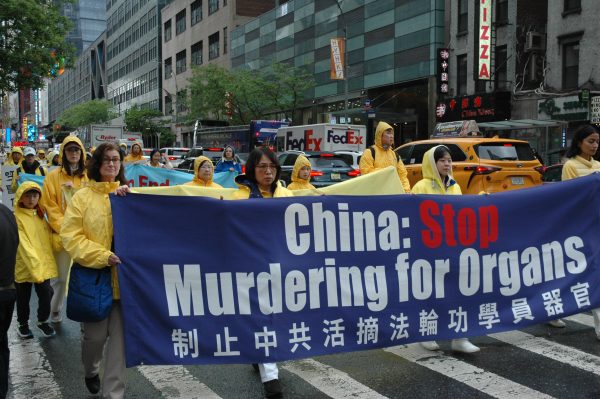
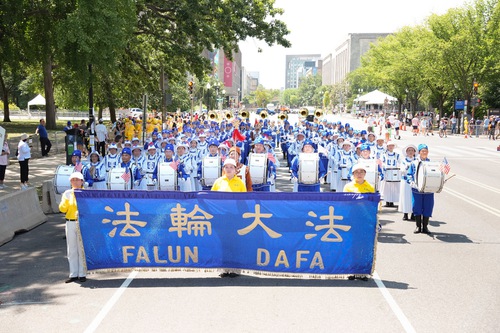
The findings are based on years of telephone investigations, witness testimonies, leaked government data, and public records. It also found that many of the organs used in transplants were illegally harvested from imprisoned Falun Gong practitioners. Falun Gong, also known as Falun Dafa, is a spiritual practice that has been severely persecuted in China since 1999.
RELATED: Former Journalist Exposes Chilling Organ Harvesting Crimes at Wuhan Tongji Hospital
“We observed many abnormal transplant phenomena in countries along the Belt and Road,” said WOIPFG Director Wang Zhiyuan in an interview. “The purpose of this report is to explain the deep connection between the CCP’s industrialized organ transplant system and the Belt and Road Initiative. The focus is on how this international strategy is being used to spread the CCP’s model of forced organ harvesting.”

A systematic cover-up
Success
You are now signed up for our newsletter
Success
Check your email to complete sign up
According to the report, since 2016, the CCP has integrated its transplant industry into the Belt and Road Initiative through formal programs such as the “Belt and Road International Organ Transplant Cooperation Development Alliance.” In 2019, during the Fourth China-International Organ Donation Conference in Kunming, representatives from 62 countries signed the “Kunming Consensus,” forming a multinational transplant alliance.
RELATED: China’s ‘Belt and Road Initiative’ Falters as Beijing Runs Out of Funding
“Integrating organ transplantation into the Belt and Road framework essentially promotes the CCP’s forced organ harvesting model to other countries,” said Wang. He highlighted the case of the KK Park Zone in Myawaddy, Myanmar, which the Chinese government has identified as a Belt and Road project, yet WOIPFG’s investigation reveals it is heavily involved in organ trafficking. “This definitely has a connection,” he said.
The report also alleges that victims from China, Taiwan, and Malaysia were trafficked to international waters for forced organ removal, with their organs later funneled through black-market routes to locations like Dubai. The bodies were reportedly then dumped at sea.
RELATED: Italy’s Defense Minister Calls the Belt and Road Agreement ‘a Destructive Act’
China’s Belt and Road Initiative (BRI), launched in 2013 by leader Xi Jinping, is a global infrastructure and economic development strategy aimed at enhancing connectivity between Asia, Europe, Africa, and beyond. Modeled after the ancient Silk Road trade routes, the BRI involves massive investments in railways, ports, highways, and energy pipelines across more than 140 countries.
While China presents the initiative as a win-win for global development, critics argue it expands Beijing’s geopolitical influence, creates debt dependency, and in some cases, enables the export of authoritarian practices under the guise of economic cooperation.

Regional transplant models
In the repot, WOIPFG identified four primary transplant operation models being deployed through the Belt and Road Initiative:
1. Kunming Model: Gateway to Southeast Asia
Yunnan’s capital, Kunming, is positioned as a transplant hub targeting Southeast Asia. At the center is Kunming First People’s Hospital, whose liver and kidney transplant volume have skyrocketed since 2015. Phone interviews revealed that staff admitted to using Falun Gong practitioners’ organs. “The Kunming model exploits geographic advantages to expand into Southeast Asia,” said Wang. “The hospital admitted to using Falun Gong organs.”
2. Xi’an Model: Central China transplant network
Based in Xi’an Jiaotong University’s First Hospital, this model serves as a centralized organ transplant training and procurement base for central and western China. By 2023, the hospital had performed more than 7,000 kidney transplants, with 96.5 percent of donors unaccounted for. “The essence of the Xi’an model is creating a central base for organ procurement in the western regions under Belt and Road,” noted Wang.
3. Guangzhou Model: Hub for foreign patients
Leveraging its location, Guangzhou’s system caters to overseas patients, especially from Taiwan and Southeast Asia. Sun Yat-sen University First Hospital reportedly carried out 66 kidney transplants for Taiwanese patients in just three years; that equals to five surgeries in as few as three days. “The Guangzhou model specifically targets overseas patients. The surgery frequency violates all known norms of voluntary donation,” said Wang.
4. Hainan Model: International transplant base
Tied to China’s “free trade” agreements, Hainan has emerged as a transplant base targeting Belt and Road countries. Military-linked hospitals such as PLA 301’s Hainan branch play a prominent role, said Wang. “Hainan is using free trade policies to build an international transplant base,” he noted. “Military hospitals are deeply involved.”
A global supply chain of organs
The report also highlights the CCP’s long-standing promotion of “organ transplant tourism,” which surged in the early 2000s. Tianjin First Central Hospital, for example, expanded from 100 to 700 beds, with a capability to serve thousands of foreign patients from over 20 countries. In 2004, the hospital reached 800 transplants in a single year.
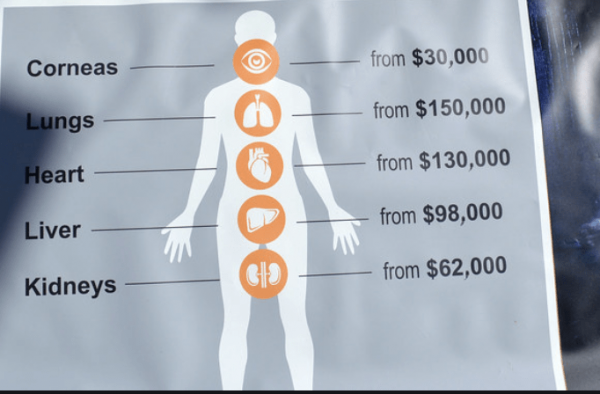
“Tianjin even rented out a floor of a hotel for overflow transplant patients,” said Wang. “They had so many organs that they couldn’t even accommodate them all.”
WOIPFG also uncovered that even small-town hospitals like Dongguan Taiping People’s Hospital had performed over 3,000 transplants for international patients by 2007. These hospitals, which are often linked to military or regional transplant hubs, reportedly share live organ donor databases, indicating a nationwide live donor pool system.
Legislative action
The release of the report has stirred global concern. Just days before its publication, on May 5, 2025, the U.S. House of Representatives once again unanimously passed the Falun Gong Protection Act (FGPA), which officially recognizes the CCP’s suspected involvement in the harvesting of Falun Gong practitioners’ organs. The House also passed the Stop Forced Organ Harvesting Act by a vote of 406-1, which would sanction anyone implicated in the abuse, including members of the CCP, blocking their property and barring them from engaging in U.S. transactions. Such individuals would also have their visas revoked and lose other immigration benefits. 22 countries have now passed legislation banning organ transplant tourism to China.
The bills now move on to the Senate, where if passed, will go to President Trump to be signed into law. “He’s going to understand that forcibly taking a person’s organs out is unacceptable at any level,” said Rep. Scott Perry, lead sponsor of the FGPA,“There’s no possible explanation that can justify it.
“I believe the world will soon conduct deeper investigations, stop this immediately, and dismantle the CCP — the criminal syndicate behind it,” said Wang. He also urged the international community to take “coordinated action” to hold perpetrators accountable and prevent further export of China’s forced organ harvesting system.