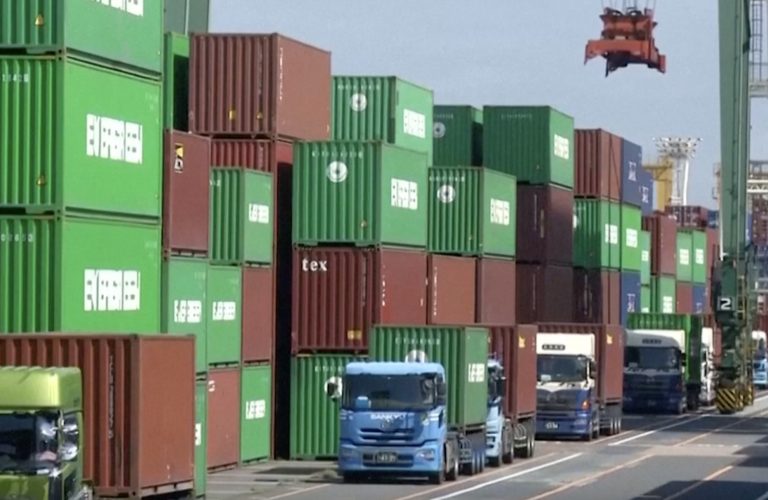
The export-reliant Japanese economy is showing signs of strain as U.S. tariffs weigh on the country’s trade flows. Government data released Wednesday, Aug. 20 showed exports in July dropped 2.6 percent from a year earlier — the sharpest decline since February 2021 — marking the third consecutive monthly fall.
Economists had expected a 2.1 percent decrease. The slump follows a modest 0.5 percent dip in June, suggesting growing challenges for Japanese manufacturers.
The United States, Japan’s top trading partner, saw the greatest decline in purchases. Shipments to the U.S. sank 10.1 percent in July, with automobiles falling 28.4 percent by value and auto parts 17.4 percent. In volume terms, however, car exports fell only 3.2 percent, indicating that Japanese automakers have slashed prices to adapt to U.S. tariffs.
- Trump Admin Working With Japan to Ensure Reciprocal Tariffs Won’t Stack
- Thousands Gather Outside Chinese Embassy in South Korea to Protest CCP Influence
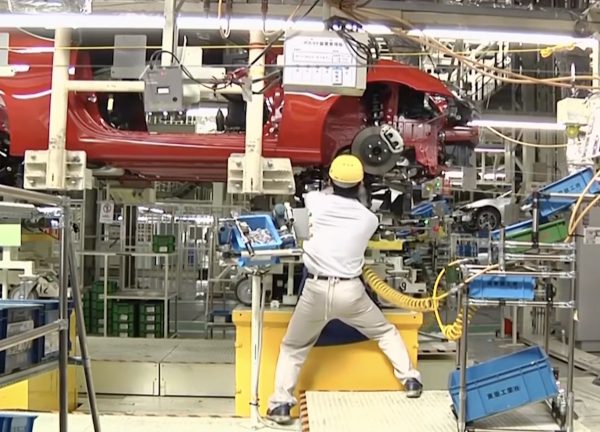
Washington imposed 25 percent tariffs on Japanese autos and parts in April before softening its stance in a late-July trade agreement. Under the new deal, the rate was trimmed to 15 percent in exchange for a US$550 billion Japanese investment pledge.
Even so, the levy remains well above the previous rate of 2.5 percent, putting pressure on one of Japan’s most important export industries.
Success
You are now signed up for our newsletter
Success
Check your email to complete sign up
Takeshi Minami, chief economist at Norinchukin Research Institute, warned that the current strategy of holding down prices cannot last indefinitely. “Eventually, costs will have to be passed on to U.S. consumers, and that will likely dampen sales further in the months ahead,” he said.
Exports to other regions were also weak. Those to China were down 3.5 percent, the data showed.
Total imports in July dropped 7.5 percent from a year earlier, compared with market forecasts for a 10.4 percent fall.
As a result, Japan ran a deficit of 117.5 billion yen (US$795.4 million) in July, compared with a forecast of a 196.2 billion yen surplus.
The outcome follows unexpectedly strong growth in gross domestic product (GDP) in the April-June quarter, separate data showed last week, fuelled by surprisingly resilient exports and capital expenditure.
Economists said the strong exports growth in GDP data reflected differences in how the impact of price changes is factored in.
Nevertheless, Norinchukin’s Minami said that the Japanese economy has so far avoided the worst.
“As the tariff deal has at least reduced uncertainties, the Bank of Japan is likely to resume rate hikes as early as in October,” he said.
Reuters contributed to this report.