NATO defense ministers convened in Brussels on Wednesday, Oct. 15, for a meeting to strengthen support for Ukraine and reinforce Europe’s defences following a series of drone incursions across allied borders.
The talks, chaired by NATO Secretary General Mark Rutte, centered on a new initiative to sustain Ukraine’s war effort — the Prioritized Ukraine Requirements List (PURL) — a framework developed by the United States and its partners to coordinate weapons deliveries funded by NATO members.
“The session will focus on how to make our deterrence and defence even stronger,” Rutte said ahead of the meeting. He added that NATO and the European Union were working in tandem to build a “drone wall” across Europe’s eastern flank, combining NATO’s military capabilities with the EU’s financial and regulatory support. “NATO provides the hard edge,” Rutte said. “The EU ensures the resources are there.”
Washington pushes for harder commitments
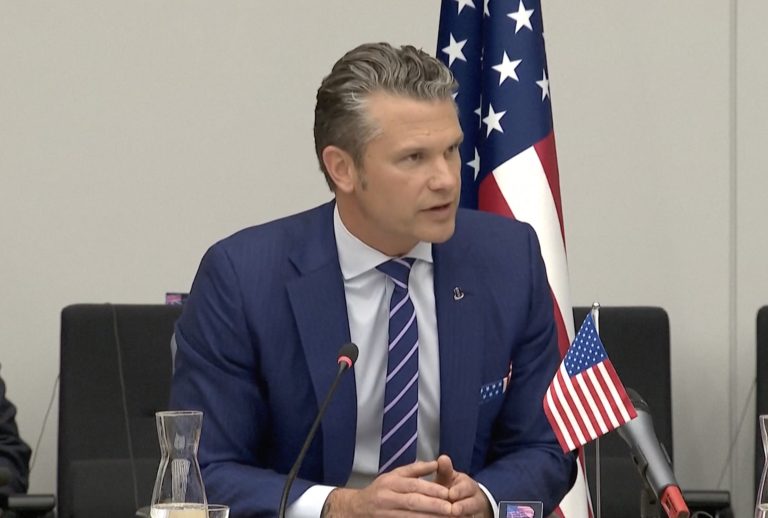
At the meeting, U.S. War Secretary Pete Hegseth used the gathering to deliver one of Washington’s sharpest warnings in months, telling ministers that the United States and its allies would “impose costs on Russia for its continued aggression” if the war in Ukraine showed no signs of ending.
“If we must take this step,” Hegseth said at a meeting of the Ukraine Defense Contact Group at NATO headquarters, “the U.S. War Department stands ready to do our part in ways that only the United States can do.”
Success
You are now signed up for our newsletter
Success
Check your email to complete sign up
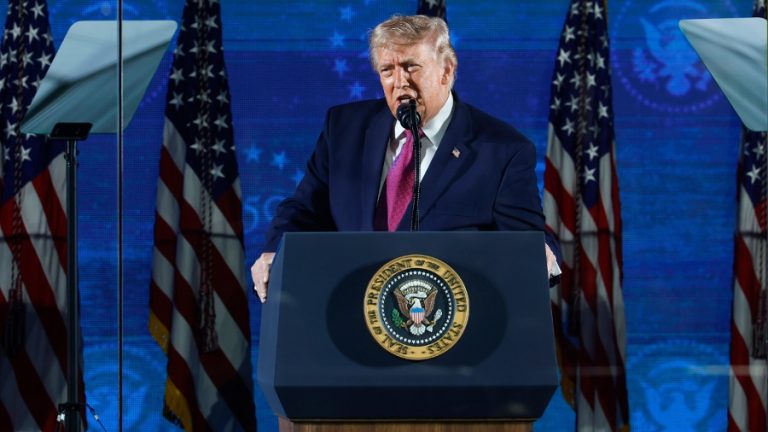
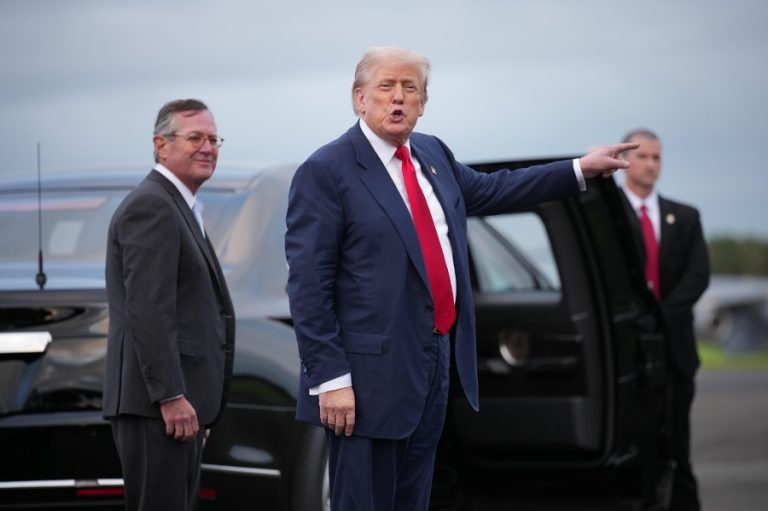
Hegseth’s pro-Ukraine rhetoric follows statements made by U.S. President Donald Trump in recent weeks criticizing the Russian Federation for its lack of cooperation in peace negotiations.
Russian forces, under the presidency of Vladimir Putin, have been engaged in full-scale operations in Ukraine since early 2022, and control about a fifth of the country’s territory.
Owing to new military advances, particularly the widespread use of cheap drones for bombardment and reconnaissance, both sides have found it challenging to make rapid breakthroughs on the battlefield. However, the Russian army has been making incremental gains over the past two years, mostly in the eastern Donbass region.
Hegseth called on European partners to ramp up their participation in the PURL program, which has replaced the previous system of direct U.S. donations to Kyiv. Under the scheme, NATO members and other U.S. allies now contribute funds to PURL to purchase U.S.-made weapons for Ukrainian forces.
“All countries need to translate goals into guns, commitments into capabilities, and pledges into power,” Hegseth said. “That’s all that matters. Hard power. It’s the only thing belligerents actually respect.”
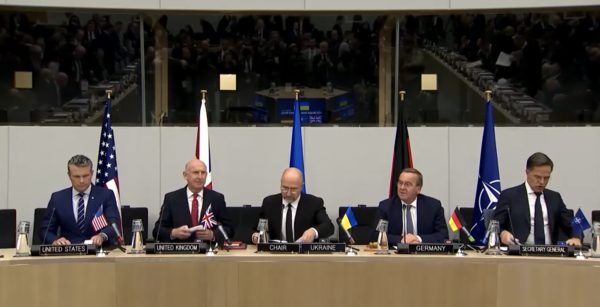
Ukrainian Defence Minister Denys Shmyhal, participating via video link, told NATO that Kyiv would require between $12 billion and $20 billion in military aid next year to maintain its battlefield momentum. He said Ukraine’s domestic arms industry could produce up to 10 million drones by 2026 with sufficient financing, but that the country urgently needed more long-range artillery and air-defence systems to withstand intensified Russian strikes.
Germany’s Defence Minister Boris Pistorius announced Berlin would contribute more than €2 billion in new support, including a $500 million package to provide Patriot interceptors, radar systems, precision-guided rockets, and additional ammunition. “We will continue and expand our support for Ukraine,” Pistorius said. “This package addresses several of Ukraine’s most urgent defence needs.”
Strengthening European defense
While military aid for Ukraine dominated discussions, ministers also reviewed new defence plans to protect NATO territory against unconventional threats, particularly drone incursions that have tested the alliance’s airspace over recent months.
As the meeting closed, ministers agreed to expand coordination on logistics, drone defence, and joint procurement, framing the PURL initiative as both a test of allied cohesion and a model for collective rearmament.
Rutte emphasized that NATO and EU coordination was essential to counter this growing challenge, with member states planning to integrate detection systems and share data in real time. “The goal is not just to respond to drone attacks, but to prevent them,” one senior NATO official said.
The proposed “drone wall” would stretch along Europe’s eastern frontier, combining military radars, civilian air-traffic networks, and electronic countermeasures to identify and neutralize hostile unmanned aircraft.
“If there is no path to peace in the short term,” Hegseth said, “the United States, along with our allies, will take the steps necessary to impose costs on Russia for its continued aggression.”
European officials echoed that stance, with Rutte affirming that deterrence remained at the heart of NATO’s mission. “Our unity and resolve are the best guarantees of peace,” he said.
Reuters contributed to this report.