The mystery surrounding the death of Chinese actor Yu Menglong has deepened after a self-described insider claimed that the actor’s body was secretly stored in an underground facility beneath a Beijing art museum with ties to state-owned companies.
The claim—shared by independent Chinese commentators on overseas media platforms—alleges that Yu’s remains were not cremated, as previously reported, but preserved in a restricted cold-storage area at the Qihai Art Museum, located next to the Bulgari Hotel Beijing.
The source, described as a “whistleblower from inside the facility,” said Yu’s body appeared to have been treated with formalin and could be undergoing “biological plastination”—a process of preserving human remains used in anatomy and exhibition industries.
He was brought here that night
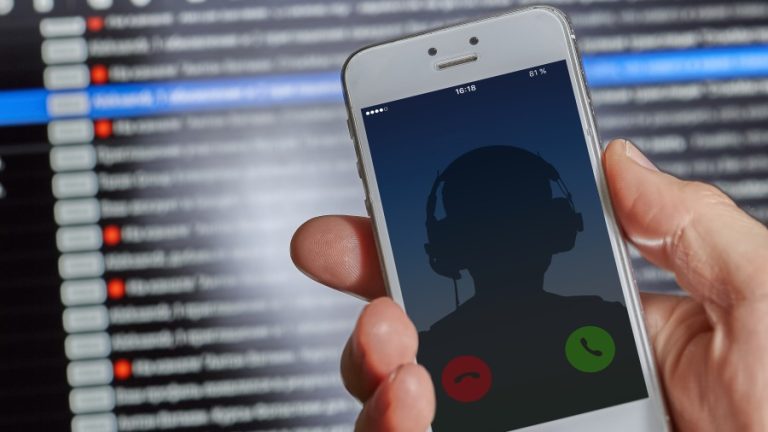
The whistleblower reportedly told Chinese commentator Li Muyang, host of a popular YouTube channel, that Yu’s body was transferred to the art museum shortly after his death on Sept. 11, 2025.
“Stop guessing—he’s here,” the whistleblower was quoted as saying. “At around three in the morning, Yan Shijie, director of the Red Brick Art Museum, personally came with a team to move him from the tunnel. He was covered only by a black cloth. I saw purple marks on his ankles.”
Success
You are now signed up for our newsletter
Success
Check your email to complete sign up
According to the account, Yu’s body was not taken to the main gallery but to B4, the museum’s deepest basement level.
That floor, the whistleblower claimed, is a private archive and cold-storage unit, sealed behind biometric access controls requiring three physical keys and Yan’s own iris scan.
“All staff were ordered to stay away from B4,” the person said. “Anyone who tries to approach faces serious consequences.”
Suspicious closures and unusual activity
The whistleblower further alleged that after Yu’s death, the Bulgari Hotel temporarily shut down and the Qihai Art Museum closed for two days.
The closures, they claimed, were to “destroy evidence.”
During that time, a group of people in white protective suits allegedly spent two full days and nights inside B4.
“When they came out,” the source said, “the air reeked of disinfectant and formalin.”
Their speech reportedly had a foreign accent, and they did not appear to be cleaning or medical staff.
“They looked more like technicians from a biological lab,” the whistleblower added.
“I fear they’re preparing to turn him into a specimen.”
The story gained further traction after another Chinese blogger, known as Caijing Lengyan, cited a separate leak circulating on an encrypted foreign forum.
That post, traced to an IP address in Tokyo, echoed the claim that Yu’s body had not been cremated.
According to the post, what Yu’s mother received was “a carefully prepared urn with symbolic remains,” while the actor’s real body was kept in a private underground collection room within the Qihai Art Museum.
The author—using the alias Dr. Kitagawa—alleged that Yu’s face had been preserved using “advanced plastination technology” to capture the expression of “terror and defiance from his final moments.”
Digital shadows and missing maps
Adding to the intrigue, several internet users noticed that the Qihai Art Museum had vanished from Google Maps, though it still appeared on China’s Baidu Maps.
On Google’s satellite imagery, only the adjacent Bulgari Hotel remains visible.
Some commenters speculated that Google may have been pressured by Chinese authorities—or compensated—to remove the listing, citing its proximity to sensitive sites and growing online scrutiny.
Public records show that both the Qihai Art Museum and the Bulgari Hotel Beijing are operated by Qihai Xingye (Beijing) Co., Ltd., a subsidiary of Hualong Tourism Industrial Co., which in turn is fully owned by Beijing Capital Tourism Group—a state-owned enterprise with a registered capital of 4.4 billion yuan.
The chain of ownership, critics say, makes it clear that the two institutions are effectively state-held entities.
“This means the museum and hotel are not private at all,” Li Muyang said on his program. “They belong to the Beijing municipal government.”
That connection, he argued, explains why the case has been so heavily censored on Chinese social media and why the topic remains taboo in mainstream outlets.
A whistleblower’s broader allegations
In his commentary, Li claimed that the Chinese authorities have long operated a system of coercion within the entertainment industry, detaining actors and forcing them into submission.
Those who complied, he alleged, were rewarded with roles and lucrative contracts; those who resisted were “frozen out, imprisoned, or worse.”
He went further, accusing Chinese officials and state-linked firms of running a shadow trade in human organs and remains—profiting from both living and deceased victims.
According to Li, body parts were harvested and sold to hospitals, while flesh was allegedly used in the food industry.
He cited rumors of consumers finding false teeth, surgical screws, and human tissue in meat products sold in supermarkets.
These claims cannot be independently verified and have been widely disputed, but they continue to circulate among Chinese dissident communities overseas.
The allegations sparked a wave of reactions online, many expressing horror and disbelief.
“Today’s news is unbearable,” one user wrote. “How could something so grotesque be possible?” Others focused on the corporate linkages: “To learn that the Bulgari Hotel and the Qihai Museum are state-run—my jaw dropped. No wonder the story is sealed so tightly.”
Some commenters went further, drawing moral and spiritual conclusions. “They can hide the truth,” another post read, “but not from heaven. Every crime is being recorded.”
Others called for justice for Yu Menglong, arguing that silence would only embolden wrongdoing.
Several claimed to have had eerie experiences of their own.
“I’ve lived in this apartment for ten years,” one wrote. “One morning I found half a denture on my kitchen floor. It didn’t belong to anyone in my family.”
Still others invoked broader conspiracies—about organ harvesting, “baby factories,” and covert laboratories—linking them to a belief that the Communist Party has “crossed every moral line.”
Anxieties about China’s entertainment industry
Li Muyang’s broadcast revived older controversies about Dalian Hongfeng Biotechnology, a company known for its plastinated human specimens.
Public filings show that the firm also has a branch—Hongfeng Life Mystery Museum Co.—registered in Kunshan, Jiangsu, which began producing pre-cooked food in mid-2022.
For many listeners, the idea of a body-preservation company entering the food business was “beyond disturbing.”
One comment summed up the online mood: “The evil may be powerful now, but justice will come. Every act is recorded by heaven.”
Meanwhile, the Bulgari Hotel announced that it would host a Ferrari exhibition from October 17 to 18, coinciding with growing public scrutiny of the museum next door.
Critics questioned the timing, asking whether the event might serve to “relocate certain items” or “shift attention.”
No evidence has emerged to support those theories.
Still, the overlap between elite culture, politics, and secrecy in Beijing has left many wondering how deep the connections go.
For some, the Yu Menglong affair has come to symbolize the uneasy relationship between state power and cultural production in contemporary China—a space where art, capital, and authority blend until truth itself becomes impossible to separate from rumor.
Editorial Note:
This article summarizes allegations and commentary shared by independent Chinese media figures including Li Muyang and Caijing Lengyan, as well as online user reports.
All claims regarding the Yu Menglong case, the Qihai Art Museum, and related institutions remain unverified and are presented for the purpose of documenting ongoing public discussion and censorship surrounding the incident.