By Li Jingyao, Vision Times
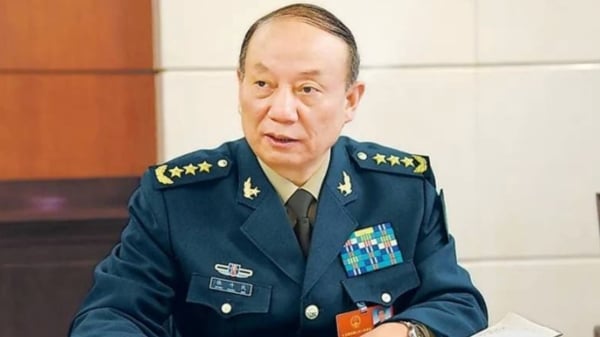
As the Chinese Communist Party (CCP) wraps up its long-delayed Fourth Plenary Session on Oct. 23, the regime announced a key military appointment that analysts say could signal a recalibration within the CCP’s top echelons. General Zhang Shengmin, a long-serving “insider” and chief of the military’s disciplinary arm, was officially elevated to Vice Chairman of the Central Military Commission (CMC) — a position second only to the chairman and current leader of China, Xi Jinping.
According to “Sing Tao Daily,” the Plenum’s closing communiqué confirmed Zhang’s promotion and approved a new round of internal reshuffles, including the elevation of several alternate Central Committee members to full membership within the Party.
RELATED: Beijing in Crisis: Xi Jinping Faces Silent Revolt as Fourth Plenum Opens
A reshuffling of power
The announcement came after days of unverified reports suggesting Xi’s authority was slipping and that a new military lineup had already been decided behind closed doors — rumors the official statement notably did not confirm or deny.
Success
You are now signed up for our newsletter
Success
Check your email to complete sign up
In addition to Zhang’s promotion, the Plenum ratified a sweeping series of disciplinary expulsions that saw the purging of numerous high-ranking officials just days before the Fourth Plenum. This included: He Weidong, vice chairman of the Central Military Commission (CMC), Miao Hua, former head of the Political Work Department; and seven others from key commands including the Rocket Force, Navy, and People’s Armed Police.
RELATED: Shock in Beijing: Nine Generals Purged Before the Fourth Plenum
The Central Commission for Discipline Inspection (CCDI) also reported that multiple senior officials — including Tang Renjian, Jin Xiangjun, and others — had been removed for “serious violations of Party discipline and law.”
Xi remains at the helm, for now
Despite intense speculation about Xi’s political fate over the last few weeks, the official communiqué listed no changes to his titles or formal authority.
Independent analyst Li Linyi told Vision Times that this outcome suggests Beijing’s internal struggle remains unresolved: “The power struggle between the Xi faction and its rivals is far from over. Neither side has made its final move,” said Li, adding, “From now until the 21st Party Congress, the infighting could intensify even further.”
RELATED: Power at a Crossroads: Will Xi Jinping Step Down Ahead of the Fourth Plenum?
Li added that the Central Committee’s “massive structural collapse” — referring to the unprecedented number of vacancies filled at this session — reflects “a regime in deep crisis.”
A Shaanxi loyalist
Born in 1958 in Wugong County, Shaanxi Province, Zhang Shengmin has spent his entire career in the People’s Liberation Army’s (PLA) political and disciplinary apparatus. A veteran of the Rocket Force (formerly known as the Second Artillery Corps), Zhang held several key political posts before rising to prominence in Beijing. He served as the PLA General Political Department’s research director, the Political Commissar of the Second Artillery Command Academy, and later, Director of the Second Artillery Political Department.
RELATED: Anti-Xi Faction Poised to Clash with Loyalists Ahead of Fourth Plenum, Three Key Figures in Play
After returning to Beijing in 2015, Zhang became the first Political Commissar of the CMC’s Training and Administration Department and later led the Logistics Support Department — positions that put him at the nexus of the military’s operational and financial systems.
In 2017, he was appointed Secretary of the CMC Discipline Inspection Commission and simultaneously Deputy Secretary of the CCDI, giving him dual oversight over both military and civilian disciplinary matters. Zhang has now served as a CMC member across two administrations, spanning more than eight years.
Zhang is widely regarded as a close ally of Zhang Youxia, the CMC’s current Vice Chairman and one of Xi’s few remaining senior allies. Both men hail from Shaanxi Province, forming part of what analysts call the “Shaanxi faction.” Their professional overlap — one overseeing logistics, the other equipment development — made their cooperation “essential” to the military’s internal cohesion, noted Li.
A fragile balance
While Zhang’s promotion appears to consolidate Xi’s influence within the CMC, observers caution that it could also reflect a negotiated compromise designed to stabilize the Party amid internal turmoil. The simultaneous removal of multiple generals and the delayed release of the Plenum’s “15th Five-Year Plan” recommendations suggest the leadership is still wading through murky waters.
Per CCP protocol, Xi’s official explanation of the Plenum’s decisions and the full text of the policy recommendations are expected to be published within the next three days. The final “Five-Year Plan” will be formally ratified at the National People’s Congress in March 2026.
For now, Beijing is keen on projecting an image of unity. But beneath the ceremonial façade, the rapid reshuffling of the Party’s military command — and the quiet rise of figures like Zhang Shengmin — point to a regime struggling to hold itself together.
Editorial note: Views expressed in this article are the opinions of the author and do not necessarily reflect the views of Vision Times.