The latest weekly influenza surveillance report from the Chinese Center for Disease Control and Prevention shows a sharp rise in flu cases across southern provinces, signaling the start of another severe flu season.
Experts warn that this year’s dominant viral strain differs from that of last year, raising concerns about low population immunity.
The dominant strain this season is Influenza A (H3N2), replacing last year’s main strain, Influenza A (H1N1). Health officials are currently detecting cases of Influenza A (H3N2 and H1N1) as well as Influenza B (Victoria lineage).
Influenza A accounts for more than 90 percent of all flu cases, with H3N2 comprising over 90 percent of those.
Dr. Li Tongzeng, chief physician of infectious diseases at Beijing You’an Hospital, noted that this shift means the public has “relatively low immunity” to H3N2.
Success
You are now signed up for our newsletter
Success
Check your email to complete sign up
Hong Kong health authorities have reported multiple severe pediatric flu cases since the new school year began in September, including one fatality.
As of Oct. 20, the city recorded 556 school-related outbreaks and 11 severe pediatric cases (ages 2–17), nine of which involved children with no underlying conditions.
The first fatal case was on Oct. 12 when a 13-year-old girl died of myocarditis, shock, and encephalopathy caused by Influenza B.
On Oct. 20, a previously healthy 2-year-old girl was hospitalized in serious condition with Influenza A (H3) and encephalopathy. She had reportedly been in Guangdong Province during her incubation period before arriving in Hong Kong.
Clinical symptoms and transmission
Influenza A and B share classic symptoms: fever, cough, sore throat, fatigue, muscle aches, and headaches. High-risk groups include children, the elderly, pregnant women, and those with weakened immune systems.
According to medical experts, H3N2 spreads primarily through droplets released when an infected person coughs or sneezes within about a meter of others. It can also spread through contact, when someone touches a contaminated surface and then touches their eyes, nose, or mouth. In addition, aerosols—fine particles that can remain suspended in the air—may contribute to transmission in confined indoor spaces such as elevators.
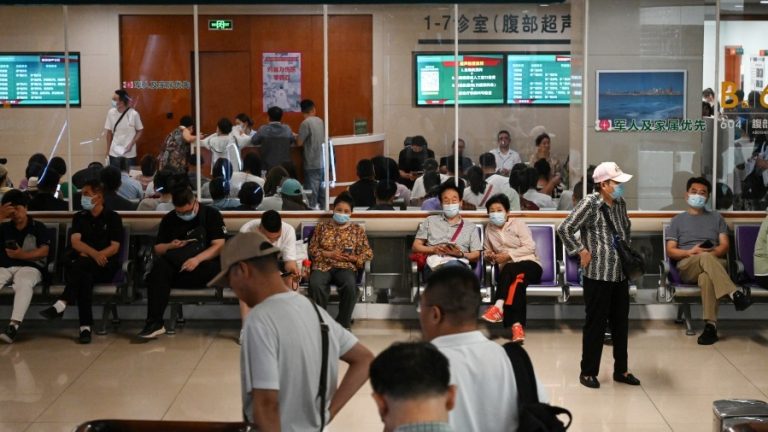
Chinese social media platforms are flooded with posts describing widespread illness and overwhelmed pediatric wards in Inner Mongolia, Shandong, and other regions.
Netizens report entire families falling ill with symptoms including severe coughs, persistent fevers lasting more than 10 days, and extreme throat pain described as “like swallowing razor blades.”
Many users express doubt over official claims that the outbreak is purely influenza, speculating that it may instead represent a new wave or variant of COVID-19 being misclassified by authorities:
“COVID just got a new name.”
“It’s the same virus, just rebranded.”
“Wuhan déjà vu — same taste, same formula.”
Others blame weakened immune systems following repeated vaccinations. “After three shots,” one user wrote, “our immunity collapsed long ago.”
Concurrent outbreaks compound the crisis
The flu surge coincides with several other large-scale infectious disease outbreaks across the mainland.
Shanghai hospitals are reporting a respiratory syncytial virus (RSV) infection rate approaching 40 percent among children, with some admitted to intensive care. Similar outbreaks are reported in Zhejiang, Shaanxi, Jiangsu, and Ningxia. RSV is estimated to be 2.5 times more contagious than influenza and typically peaks in winter.
Since July, China has faced its largest-ever outbreak of the mosquito-borne Chikungunya virus. Originating in Foshan, Guangdong Province, it has spread to Guangxi, Fujian, Hunan, and Shaanxi. Despite three months of state-led fumigation and eradication efforts, Guangdong’s Jiangmen City remains the epicenter.
Public health experts warn that the simultaneous spread of multiple pathogens — combined with underreporting and public distrust — could overwhelm hospitals in southern China as winter approaches.
By Li Muqi