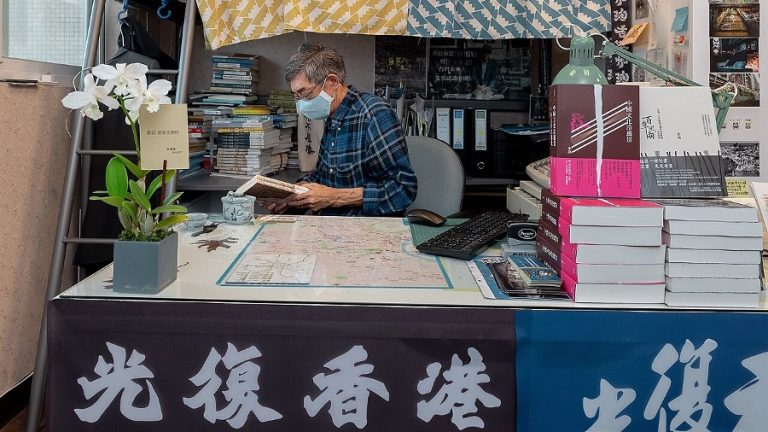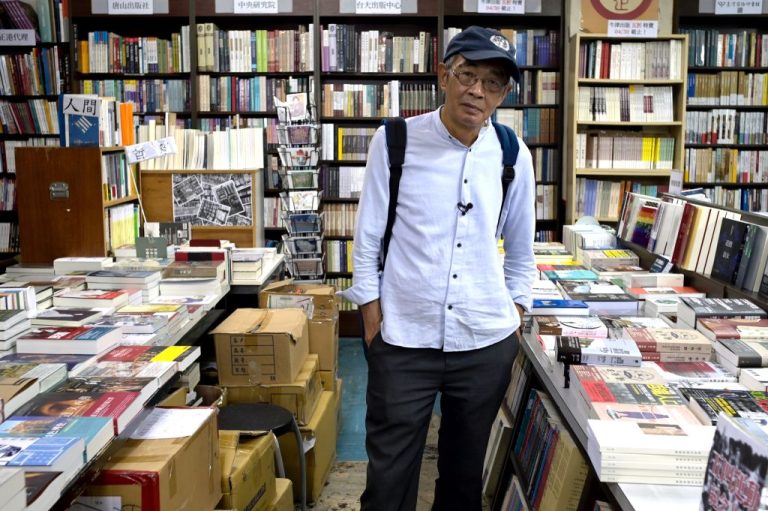
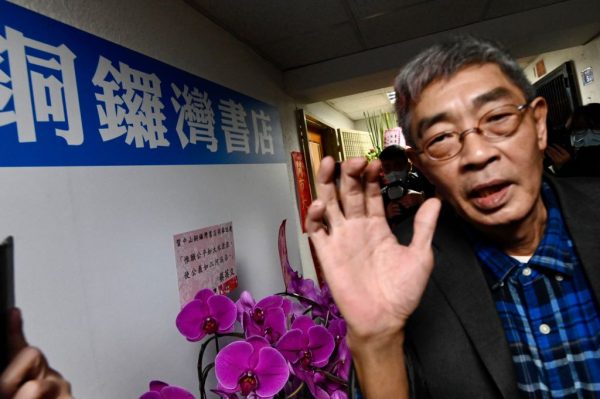
Lam Wing-kee, founder of Hong Kong’s Causeway Bay Books, recently passed away in Taiwan. The sequence of events that led him to settle in Taiwan is roughly as follows:
In 2015, Causeway Bay Books planned to publish books about Xi Jinping’s romantic relationships and private life. Around the same time, the bookstore’s shareholders and management were successively detained by Chinese authorities.
Lam himself was arrested in Shenzhen, while Gui Minhai, a Swedish citizen and one of the bookstore’s shareholders, was forcibly abducted from Thailand. The series of disappearances involving the bookstore’s owners drew international attention and sparked widespread debate over China’s transnational repression and extraterritorial reach, often described as its “long-arm jurisdiction.”
In 2016, Lam was held under residential surveillance by public security authorities in Shenzhen for more than six months. He was later released on bail and allowed to return to Hong Kong while awaiting further legal proceedings.
In 2019, Hong Kong proposed amendments to its Fugitive Offenders Ordinance, which would have allowed authorities to extradite suspects from Hong Kong to mainland China on a case-by-case basis for trial. Because Lam Wing-kee was still facing legal jeopardy stemming from his earlier case, he feared being extradited back to China and decided to settle in Taiwan.
Success
You are now signed up for our newsletter
Success
Check your email to complete sign up
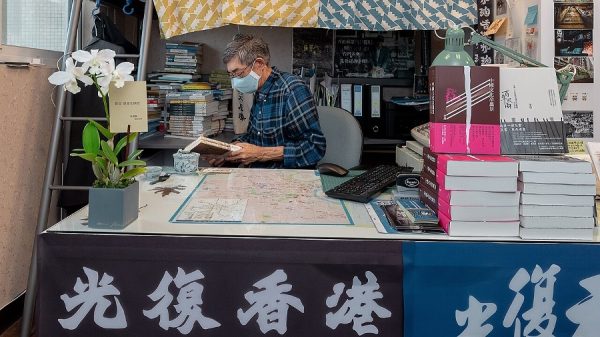
In 2020, Lam reopened Causeway Bay Books in Taiwan, declaring his determination that everything the bookstore could no longer do—or was prohibited from doing—in Hong Kong would continue in free Taiwan.
Thus, what had originally been an independent Hong Kong bookstore was transformed, under the combined pressure of the Hong Kong and Chinese authorities, into an independent bookstore in Taiwan. If one understands the significance that a bookstore can hold for a city, it may also be said that, through the twists of his personal fate, Lam brought the soul of his bookstore with him to Taiwan.
Cultural and intellectual centers
Bookstores—particularly independent bookstores—have long been regarded as cultural and intellectual centers deeply rooted in their local communities, standing alongside temples and churches as places of shared belief and values. They are often seen as havens of the spirit amid the bustle of urban life. Through the books carefully selected by their owners—stories and ideas that resonate with readers—they also reflect, to a considerable extent, the values of the society in which they exist.
From one perspective, although such bookstores often appear quiet and sparsely occupied, the books lining their shelves are filled with vigorous debate and competing ideas. Even when the atmosphere seems silent, these spaces foster a form of public dialogue that is no less meaningful than spoken conversation.
British author Neil Gaiman once described the importance of independent bookstores this way: “What I say is, a town isn’t a town without a bookstore. It may call itself a town, but unless it’s got a bookstore, it knows it’s not fooling a soul.”
For many independent booksellers, those words have served as a profound source of encouragement.
Given the role that bookstores play, it becomes easier to understand why the Chinese and Hong Kong governments were so sensitive about Causeway Bay Books and the titles it published. How could the romantic relationships and private lives of the Chinese Communist Party’s top leader be openly discussed by ordinary citizens in a bookstore?
For an authoritarian government, one of the greatest fears is that people reading and conversing in bookstores may eventually experience what American poet Walt Whitman once described: “Some consciousness will emerge from the depths of the soul.” If we also recall the famous words of American journalist Margaret Fuller—”Today a reader, tomorrow a leader.”—it is not difficult to see why those who rule under the Chinese Communist Party’s system might view even a small independent bookstore as a potential incubator of social change.
Leaving Hong Kong for Taiwan
When Lam Wing-kee decided to leave Hong Kong for Taiwan rather than risk being extradited to mainland China, what exactly was he afraid of?
Was he afraid of ending up in a facility such as the so-called Xinjiang re-education camps? Was he concerned about forced labor, torture, physical and psychological abuse, pervasive surveillance, separation from family, or the suppression of cultural and religious expression? Or perhaps what he feared most was losing his freedom of thought and spirit—prompting him to choose Taiwan as his new home.
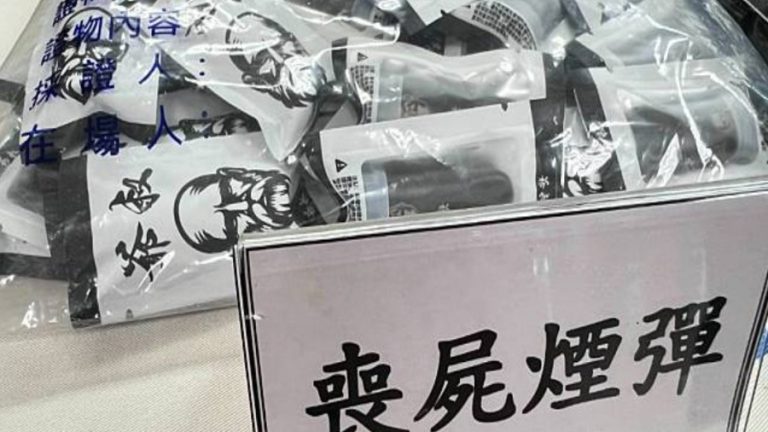
Not long ago, the owners of Hong Kong’s Hunter Bookstore were searched and arrested by the National Security Department. Police accused them of displaying and selling allegedly seditious publications, including The Biography of Jimmy Lai. Jimmy Lai was sentenced to 20 years in prison in February, with one of the convictions being conspiracy to publish seditious publications.
Likewise, the owner and staff of Hong Kong’s One Punch Bookstore were questioned by national security police for selling similar books. Had Lam remained in Hong Kong, one cannot help but wonder what his circumstances would be today.
The novel Christmas by the Book tells the story of a struggling bookstore in a small English village. The owner spends his days selling books while trying to repay mounting debts, facing the prospect of closing the shop before Christmas. Yet despite these hardships, he keeps his promise and delivers books to villagers on Christmas Eve as gifts. That simple act of generosity brings the community together and rekindles a shared sense of belonging.
Political repression
In real life, Hong Kong’s Causeway Bay Books did not succumb to financial hardship. Instead, it was ultimately forced to bow to political repression. The dignity and resilience of its founder, however, endured because Causeway Bay Books found a new beginning in Taiwan, where it was able to reopen and continue the mission that could no longer be carried out in Hong Kong.
American Pulitzer Prize-winning poet and novelist John Updike once described bookstores this way:
“Bookstores are lonely forts, spilling light onto the sidewalk. They lend an air of civilization to the neighborhoods around them.”
China, through the authorities in Hong Kong, shut down Causeway Bay Books. Taiwan, by contrast, gave Causeway Bay Books the opportunity to reopen. To the author, this illustrates the contrast between civilization and barbarism.
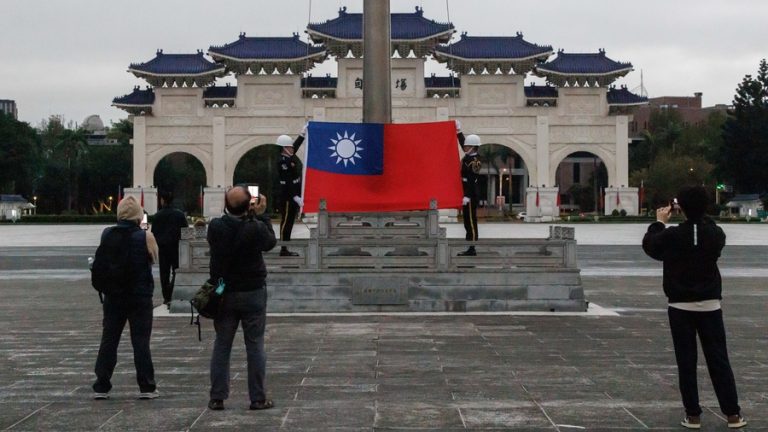
Lam Wing-kee’s story demonstrates that Taiwan is not only a place with freedom of speech—it is also a place with a soul.