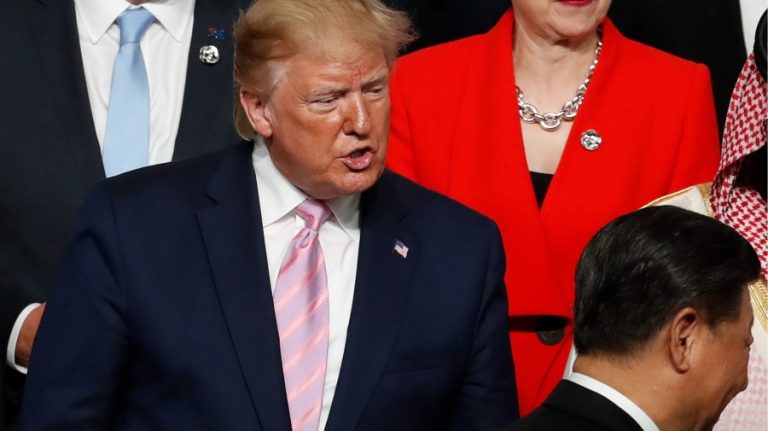
The forthcoming high-level summit between U.S. President Donald Trump and Chinese President Xi Jinping is widely seen as a gauge of global political dynamics. Since Trump’s return to the White House, news of his first face-to-face meeting with the communist leader has drawn widespread global attention.
The White House has confirmed that Trump will hold the much-anticipated “Trump-Xi Summit” in South Korea later this month. The meeting, scheduled during the Asia-Pacific Economic Cooperation (APEC) summit, will primarily focus on the escalating fentanyl crisis and tense U.S.-China trade relations.
President Trump has made it clear that the primary topic of discussion with Xi will be fentanyl. This not only highlights the severe domestic crisis fentanyl abuse has caused in the U.S., but also elevates it as a key diplomatic leverage point in U.S.-China relations. Amid the ongoing U.S.-China tariff tensions, how this meeting will affect the future trajectory of bilateral relations, as well as the global economy and geopolitical landscape, has become a central focus for the international community.
The White House announced that the Trump-Xi summit will take place on October 30 and outlined Trump’s Asia itinerary: he is expected to depart the U.S. this weekend, with a first stop in Malaysia, where he will meet national leaders and attend a regional leaders’ working dinner. He will then travel to Tokyo for bilateral talks with Japan’s new prime minister.
Next, Trump plans to arrive in Busan, South Korea to meet with the Korean president, and deliver a keynote at the APEC Business Leaders’ Summit luncheon. The highlight of this Asia trip will be his face-to-face meeting with President Xi before returning to the U.S. This will mark Trump’s first in-person summit with Xi since returning to the White House.
Success
You are now signed up for our newsletter
Success
Check your email to complete sign up
It is noteworthy that China’s Foreign Ministry spokesperson has announced that Xi will attend the APEC informal leaders’ meeting in Gyeongju, South Korea, and conduct a state visit. However, China’s official statement does not explicitly mention a bilateral meeting with Trump, only noting that any announcement of a heads-of-state meeting will be made in due course. This subtle diplomatic handling suggests complex negotiations and positioning may still be underway prior to the summit. Additionally, the White House noted that Trump has not ruled out a possible meeting with Russian President Vladimir Putin, further emphasizing the deep geopolitical implications of this trip.
The fentanyl crisis: America’s deadly threat and deep impact
Fentanyl, a synthetic opioid, has become one of the most serious public health and national security challenges in the U.S., with deaths from its abuse steadily increasing with devastating social consequences.
According to the U.S. Centers for Disease Control and Prevention (CDC), tens of thousands of Americans die annually after consuming fentanyl-laced drugs. The U.S. Drug Enforcement Administration (DEA) notes that illicitly manufactured fentanyl is a primary driver of drug overdose deaths, with synthetic opioids causing a sharp rise in fatalities during the pandemic. Fentanyl is extremely potent—lethal even in minute doses—and DEA analyses show a significant portion of tested counterfeit pills contain potentially fatal levels of the drug.
The fentanyl crisis also imposes enormous socioeconomic costs. Dubbed a “silent crisis,” it results in huge annual economic losses, including losses due to medical expenses, law enforcement costs, and lost workforce productivity. Countless families are shattered by addiction or death, with tens of thousands of children entering foster care, creating generational trauma.
The fentanyl supply chain is highly complex. While most illegal fentanyl enters the U.S. via the U.S.-Mexico border, its precursor chemicals have long been traced to China. Mexican criminal groups procure these chemicals from China, process them in Mexican labs, and smuggle them into the U.S. using various covert methods—hiding them in legitimate goods, using false labels, creating shell companies, or shipping via third-party countries. Canada also plays a role, with organized crime manufacturing fentanyl domestically while importing required chemicals and lab equipment from China.
In response to the crisis, the U.S. government has taken multiple measures. During his first term, President Trump reached an agreement with Xi to list fentanyl as a controlled substance, and China subsequently banned all similar substances. Despite these efforts, other chemicals used to produce fentanyl remain unregulated, as illicit actors continuously find ways to circumvent the law. The U.S. House of Representatives has passed legislation targeting Chinese officials involved in fentanyl smuggling into the United States.
Fentanyl: A core issue in U.S.-China relations
Fentanyl is not only a domestic crisis for the U.S., but also a central sticking point in U.S.-China relations. During both Trump administrations, fentanyl has been closely linked with trade disputes, leading the U.S. to impose tariffs on Chinese goods.
Trump has openly tied fentanyl to trade tariffs, asserting that China should face punitive tariffs for allowing fentanyl to flow into the U.S., and that tariffs could be increased further if the flow is not curbed. He argues that while China may profit from fentanyl, the economic losses from punitive tariffs would outweigh any gains. He has also accused China of circumventing regulations by smuggling fentanyl through other countries. This direct linkage of fentanyl to economic sanctions underscores the U.S. government’s focus on the issue and its diplomatic leverage strategy.
For years, the U.S. has accused Chinese companies of supplying chemical precursors to groups producing fentanyl, knowing they will be used illegally.
History of cooperation and conflict
Despite serious differences, there have been attempts at cooperation. A Trump-Xi agreement and China’s past listing of fentanyl as a controlled substance were seen as positive signals of bilateral cooperation in drug control between the two super powers. However, these efforts have not had a lasting effect, and fentanyl continues to flow into the U.S., showing that even common-interest cooperation faces challenges amid distrust and geopolitical tensions.
Other key topics at the Trump-Xi summit
Beyond fentanyl and trade tariffs, the summit is expected to cover a broad range of complex issues shaping U.S.-China strategic relations:
- Trade and Economics: Trade remains a core focus. Trump has indicated discussions on issues like agricultural products, and the U.S. Trade Representative is reviewing China’s compliance with past trade agreements. There is potential for escalation, with Trump previously threatening high tariffs and export restrictions on critical software.
- Geopolitical Challenges:
- Taiwan: Taiwan remains one of the most sensitive red lines in U.S.-China relations. Analysts warn that high-profile actions by Taiwan’s leadership could heighten tensions.
- Critical Resources: Rare earth elements, crucial for high-tech industries, are dominated by China. Cooperation on these resources may be discussed.
- Russia-Ukraine War: The U.S. may seek Chinese influence on Russia to help de-escalate the conflict.
- North Korea and Nuclear Issues: North Korea’s nuclear program poses regional threats, which may be part of the discussions.
- Chinese Investment in the U.S.: Investment issues intersect economic and national security concerns.
- Taiwan: Taiwan remains one of the most sensitive red lines in U.S.-China relations. Analysts warn that high-profile actions by Taiwan’s leadership could heighten tensions.
A brief but significant meeting
Although highly anticipated, former White House officials suggest the summit will be brief, with limited room for consensus. They liken U.S.-China relations to a heavyweight boxing match—both sides capable of inflicting trade damage, but neither able to deliver a knockout.
The “match” may end in a stalemate, but tactical compromises may emerge. The Chinese Commerce Minister has emphasized that mutual respect and equal consultation can resolve issues, signaling Beijing’s willingness to ease tensions through dialogue.
However, whether the summit achieves tangible breakthroughs, particularly on fentanyl, will be a key measure of success. Trump’s hardline stance and tariff threats could prompt more proactive Chinese actions, though China’s framing of fentanyl as a domestic U.S. problem highlights deep disagreements over responsibility.
Outcomes of the summit will directly affect negotiations between the U.S. Treasury Secretary and China’s Vice Premier and influence whether Trump visits Beijing. U.S.-China relations will thus develop incrementally, with short-term comprehensive solutions unlikely.
The upcoming Trump-Xi summit is not only a dialogue between two world leaders but also a critical moment in global geopolitics and economics. Fentanyl, as Trump’s top priority, links domestic public health challenges to complex U.S.-China relations and reflects deep U.S. anxiety.
While a full agreement may be difficult in the short term, the meeting itself demonstrates both sides’ willingness to communicate and manage differences. Its outcomes—whether tactical compromise or a further stalemate—will profoundly impact U.S.-China relations, global trade, and the international order.
By Yang Tianzi