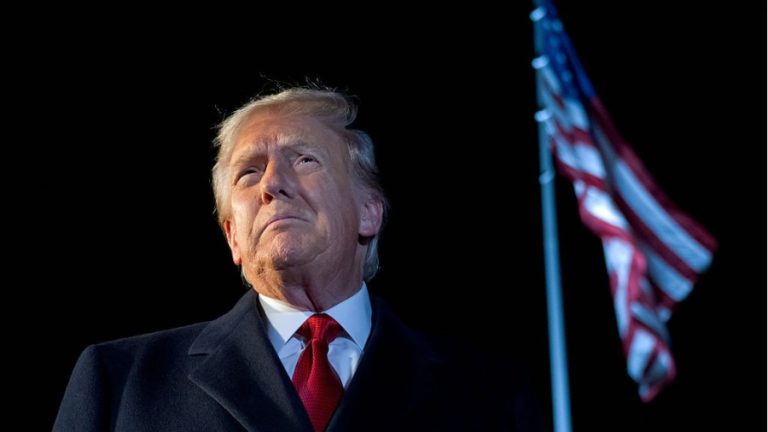
U.S. President Donald Trump has embarked on a five-day diplomatic tour across Asia—his most ambitious and strategically charged trip since returning to the White House.
The journey, which includes stops in Malaysia, Japan, and South Korea, is a carefully timed maneuver to strengthen Washington’s negotiating leverage ahead of the highly anticipated Trump–Xi Summit, scheduled for Oct. 30 during the APEC forum in Seoul.
Amid rising global trade protectionism and an intensifying U.S.–China rivalry, Trump’s tour is a calculated effort to reinforce alliances and secure critical supply chains before facing Chinese leader Xi Jinping at the negotiating table.
Relations between Washington and Beijing are at their lowest point in decades. Both sides have imposed steep tariffs on each other’s exports and threatened to sever trade in key minerals and high-tech goods. What began as a tariff dispute has evolved into a broader strategic confrontation encompassing national security, technological dominance, and global supply-chain control.
At the heart of this contest lies rare earths—minerals indispensable to advanced manufacturing, defense systems, and clean-energy technologies. China currently dominates every stage of production, from extraction to processing.
Success
You are now signed up for our newsletter
Success
Check your email to complete sign up
In recent months, Beijing has tightened export restrictions, a move widely seen as retaliation for U.S. technology sanctions and as a core bargaining chip in Xi’s trade strategy.
Trump has responded in kind. He warned that unless Beijing lifts those curbs, the United States will impose punitive tariffs of up to 100 percent on Chinese goods starting Nov. 1. At the same time, his administration is pursuing alternative supply sources—most notably through a landmark critical-minerals agreement with Australia, signed earlier this week with Prime Minister Anthony Albanese. The pact aims to reduce U.S. dependence on Chinese raw materials and diversify strategic resource access across the Indo-Pacific.
A multi-layered diplomatic offensive
Trump’s Asia tour reflects a complex diplomatic strategy built on pressure, negotiation, and recalibration.
From the ASEAN Summit in Malaysia to bilateral talks in Tokyo and the upcoming APEC meetings in Seoul, each stop serves a specific role within a larger geopolitical framework.
In Malaysia, Trump is engaging Southeast Asian leaders on economic cooperation, infrastructure investment, and regional security—key steps to counter China’s growing influence. The region is not only central to global supply chains but also an emerging hub for rare-earth processing and downstream industries.
In Japan, discussions center on expanding collaboration in high-tech manufacturing, semiconductors, and advanced materials. As America’s closest ally in Asia, Japan brings world-class production capacity and supply-chain expertise. Analysts expect new agreements in semiconductor equipment, precision instruments, and clean-energy technology.
In South Korea, talks are expected to focus on trade incentives and industrial partnerships. Seoul seeks tariff concessions in exchange for large-scale investments in the United States—particularly in semiconductors, electric-vehicle batteries, and shipbuilding.
Such partnerships, U.S. officials say, are vital to reinforcing resilience throughout global value chains.
According to senior administration officials, the Trump government plans to sign several economic and critical-minerals agreements during the trip. These deals aim to develop regional resource bases, secure reliable supply chains, and attract global investment back to the United States—all while increasing strategic pressure on Beijing ahead of the Xi meeting.
The White House has confirmed Trump’s intent to meet Xi on Oct. 30 at the APEC forum, though Beijing has yet to issue a formal response. If held, it would mark the leaders’ first face-to-face encounter since 2019 in Japan.
Realistic expectations for the Trump–Xi summit
Experts and insiders are urging caution. Neither Washington nor Beijing expects dramatic breakthroughs or a return to the relatively cooperative tone of Trump’s first term.
After years of confrontation, structural tensions in U.S.–China relations have become deeply entrenched.
Instead, the summit’s practical goal is to “manage differences, take small steps, and build mechanisms.”
Possible limited agreements could include conditional tariff extensions, modest increases in Chinese purchases of U.S. soybeans and Boeing aircraft, partial relaxation of chip-export restrictions, and incremental easing of China’s controls on rare-earth magnets.
Beyond trade, both sides may seek cooperation on shared concerns—especially fentanyl precursor enforcement, an area where Trump hopes to secure measurable progress. Another key issue will be whether to extend the informal tariff truce expiring in November, a move that could determine short-term trade stability.
Significantly, Trump’s administration has launched a new Section 301 investigation into whether Beijing has honored the commitments of the 2020 Phase One Trade Deal—a move widely seen as laying the groundwork for additional tariffs if negotiations falter.
Risk assessment and scenario outlook
Given the complexity of today’s global economy and the strategic calculations on both sides, the upcoming Trump–Xi summit could yield three plausible outcomes—each with distinct implications for markets and geopolitics.
In the most constructive outcome, both governments announce a modest, phased agreement. Likely components include extending the current tariff truce, establishing framework commitments for Chinese purchases of U.S. soybeans and Boeing aircraft, easing restrictions on rare-earth magnet and semiconductor exports, and strengthening cooperation on fentanyl control.
Such progress would stabilize markets, reassure investors, and bring targeted benefits to agriculture, civil aviation, and upstream mineral sectors. Yet it would not fundamentally alter the long-term trajectory of technological rivalry or supply-chain restructuring.
If consensus on key issues proves elusive, the summit may produce only a political pledge to “keep talking.” Markets would experience short-term volatility, while corporations maintain a cautious stance on investment and inventory planning. Persistent uncertainty would extend the climate of strategic hesitation that has defined recent years.
The bleakest outcome would see renewed confrontation. Should either side harden its rhetoric—if Washington enforces its 100 percent-tariff threat or Beijing tightens controls on strategic minerals—the global trade war would enter a more volatile phase.
This escalation would push up production costs, stoke inflationary pressures, and disrupt both advanced manufacturing and the green-energy transition.
From a probabilistic standpoint, analysts regard limited progress as the most likely scenario, given both nations’ shared interest in risk management and economic stability. Still, domestic politics, timing sensitivities, and unforeseen events could easily shift the equation—underscoring how precarious the balance remains in this new era of strategic competition.
Strategic implications and long-term outlook
President Trump’s Indo-Pacific diplomacy is far more than a pre-summit show of force; it represents a deliberate effort to reshape America’s economic and strategic architecture across Asia.
Through coordinated outreach to Malaysia, Japan, South Korea, and a landmark minerals partnership with Australia, Washington is constructing a resilient, multi-layered alliance aimed at reducing dependence on China while enhancing long-term competitiveness.
This horizontal expansion of resource partnerships and vertical integration of processing capacity demonstrates a sophisticated grasp of global interdependence. Even if talks with Beijing stall, such diversification provides the United States with greater economic resilience and strategic flexibility.
For China, the challenge lies in balancing control over critical resources against the risk of accelerating global “de-Sinicization” of supply chains. Overplaying this leverage could ultimately weaken Beijing’s influence.
For Asia and the broader industrial world, the message is clear: diversification, regulatory adaptability, and strategic flexibility are now essential for survival. Whatever the outcome of the Trump–Xi meeting, the era of single-source dependence is over—and the regional realignment of supply chains is irreversible.
In essence, Trump’s Asia tour marks a decisive shift in U.S. foreign policy—from a past reliance on bilateral bargaining to a renewed emphasis on multilateral coordination and strategic coalitions. This evolution reflects the growing complexity of global economic competition and suggests that future U.S.–China relations will unfold within a more diversified and institutionalized framework. Even if the summit yields no major breakthroughs, both sides’ ability to achieve limited yet durable progress—through risk management, incremental engagement, and mechanism-building—will shape global stability and the balance of power for years to come.