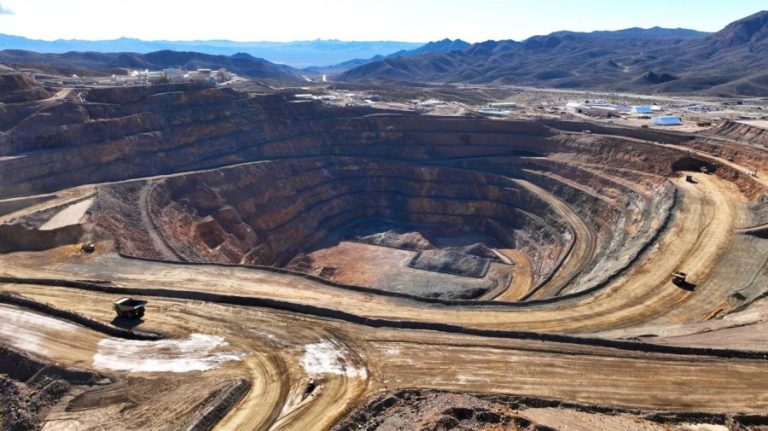
The United States is rapidly rebuilding its rare earth supply chain, moving to end decades of dependence on China as tensions between the two powers persist despite a temporary trade truce.
On Oct. 27, U.S. and Chinese negotiators reached a provisional agreement in Kuala Lumpur: Beijing will delay its new export controls on rare earth elements for one year and commit to purchasing $15 billion worth of American soybeans, while Washington will suspend 100 percent retaliatory tariffs that were set to begin on Nov. 1. The deal, expected to be signed by President Donald Trump and Chinese leader Xi Jinping on Oct. 30, offers only a brief pause in an intensifying competition for control over critical minerals.
According to internal U.S. trade documents, the Office of the U.S. Trade Representative demanded that China refrain from using rare earths as a weapon in global supply chains, while reserving Washington’s right to reinstate sanctions after 2026. Beijing countered with a “force majeure” clause—seen by analysts as an attempt to preserve flexibility for future restrictions.
“This buys America two critical years,” said Derek Scissors, a senior fellow at the American Enterprise Institute. “It turns China’s rare earth leverage from a strategic weapon into a tactical delay.”
America’s mine-to-magnet comeback
Washington’s plan centers on building a complete domestic supply chain—from mining to magnet manufacturing—driven by three industrial clusters and billions in federal investment.
Success
You are now signed up for our newsletter
Success
Check your email to complete sign up
MP Materials leads the U.S. resurgence. Its Mountain Pass mine in California will produce 45,000 metric tons of light rare earths this year, representing 40 percent of non-Chinese global output. The company’s new magnet plant in Fort Worth, Texas, will begin production in early 2025, targeting 5,000 to 7,000 tons by 2027. Apple has invested $500 million in recycling partnerships, while the Department of Defense added $400 million in funding. General Motors has already agreed to purchase up to 3,000 tons of magnets annually starting in 2026, even at a premium.
Lynas Corporation, the world’s largest non-Chinese rare earth producer, is building a separation plant in Seadrift, Texas, to refine heavy rare earths such as dysprosium and terbium—essential for fighter jet engines and missiles. The plant, fully funded by the Pentagon, is expected to open in 2026 and supply roughly 15 percent of global non-Chinese output.
U.S. Rare Earths is converting a decommissioned Hitachi facility in Stillwater, Oklahoma, into a magnet production hub. The first 600 tons are scheduled for early 2026, with output expected to reach 5,000 tons by the end of the decade. The Washington Post described the plant’s reopening as “a symbol of America’s industrial revival.”
To diversify sources, Washington is deepening cooperation with allies. The U.S.–Australia Critical Minerals Agreement—an $8.5 billion initiative—aims to supply up to 30 percent of U.S. military-grade heavy rare earth demand by 2026. A separate pact with Malaysia will contribute an additional five to 10 percent beginning in 2027.
The U.S. Export-Import Bank has approved $2.2 billion in low-interest loans for critical mineral projects, with environmental reviews shortened to six months.
Tax credits and price-floor guarantees ensure profitability for suppliers. As a result, MP Materials and U.S. Rare Earths have seen their market valuations rise by more than 100 percent over the past year.
By 2026, U.S. self-sufficiency in light rare earths is expected to exceed 35 percent, with imports from non-Chinese partners covering another 25 percent. Dependence on Chinese sources could drop below 30 percent by the end of the decade.
The truth behind China’s rare earth monopoly: Pollution, human cost, and a ‘bad business’
Independent commentator “Toronto Fang Lian” has analyzed what he calls the truth behind the Chinese Communist Party’s (CCP) monopoly on rare earth elements.
Rare earths comprise 17 elements, with neodymium (Nd), praseodymium (Pr), dysprosium (Dy), and terbium (Tb) being the most widely used. Neodymium-iron-boron (NdFeB) permanent magnets account for about 30 percent of global rare earth consumption. Each electric vehicle requires 2 to 3 kilograms of these magnets, while a 3-megawatt wind turbine needs between 650 and 1,000 kilograms. Fang explained that light rare earths such as neodymium and praseodymium form the main components of magnets, while heavy rare earths like dysprosium and terbium enhance their heat resistance—making them indispensable in military applications.
Fang argued that China’s rare earth advantage does not come from technological superiority, but from low labor standards and tolerance for pollution. China holds 50 percent of the world’s proven reserves, mines 65 percent, refines 85 percent, and produces 90 percent of the world’s magnets.
“Behind these numbers lies a ‘human-mining economy,’” Fang said. He noted that profit margins in the sector are razor thin: neodymium oxide sells for just $7.50 per kilogram. In 2024, China’s two largest separation firms reported a net profit of 1.004 billion yuan and a loss of 287 million yuan, while four downstream magnet manufacturers each earned less than 300 million yuan.
“When environmental remediation costs are included,” he said, “Western firms can’t make a profit at all. Rare earths are, quite literally, a bad business.
According to Fang, refining rare earths is not technologically difficult—by 2010, Chinese workshops could start production with as little as one million yuan. The true barrier is pollution. Pool leaching and underground injection produce massive toxic waste. A 2021 Harvard University report found that each ton of refined rare earths generates 13 kilograms of toxic dust, 75 cubic meters of acidic wastewater, and one ton of radioactive residue.
In Baotou’s Baiyunebo mining zone, entire “cancer villages” have emerged, and children suffer skeletal deformities. In Longnan, Jiangxi Province, river pH levels have dropped to 3.8, ruining more than 20,000 acres of farmland. The small county of Xunwu, with only 230,000 residents, has spent over one billion yuan on pollution control.
Fang stressed that Western companies’ reluctance to refine locally stems not from technical limits but from ethics and environmental cost. Firms such as MP Materials and Lynas ship their ore to China or Malaysia for processing for this reason.
He added that while China dominates magnet manufacturing, most of its products are low-cost and low-quality, with Japan still controlling the high-end market. China only began mass-producing N55-grade NdFeB magnets in 2024, and even that output remains unstable. China can achieve 6N (99.9999%) oxide purity, compared with the West’s 4N, but 4N purity already meets 80 percent of military and civilian needs.
Fang believes that a rare earth export cutoff would not collapse the U.S. economy or defense sector. The biggest impact would be on renewable energy and wind power, while semiconductors use only small amounts of cerium and yttrium. Taiwan Semiconductor Manufacturing Co. (TSMC) reportedly maintains one to two years of reserves, meaning that a supply disruption would merely reduce production rather than halt it.
The F-35 fighter jet requires rare earths for its motors, sensors, and radar, but U.S. stockpiles could sustain operations for six to twelve months. Rare earths, Fang emphasized, are actually more abundant in the Earth’s crust than copper, and global reserves are sufficient for long-term use.
Looking ahead, Fang predicted that future competition in rare earths will center on technology and environmental sustainability—not cost. He urged the international community to monitor China’s pollution more closely and promote sustainable development across the global supply chain.
From General Motors’ sale of NdFeB magnet technology to China in the 1980s, to Magnequench’s relocation in 1995, and Beijing’s 2010 export ban on Japan that shocked the world, the U.S. rare earth industry has endured a “lost three decades.”
Now, the Mountain Pass mine glows with light again, machinery hums at the Stillwater plant, and Texas-made dysprosium magnets are ready to power F-35 fighter jets.
As America completes its mine-to-magnet closed loop, the CCP’s once-powerful “rare earth ace” may finally lose its edge.