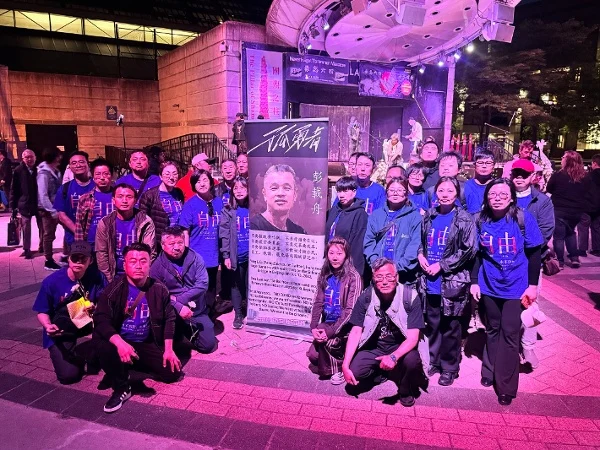
Over 40 days after Chinese actor Yu Menglong’s death, online discussions have only intensified. What began as mourning has evolved into a nationwide hunt for truth — and the latest revelations point to an even darker picture.
Rumors long circulated that Yu Menglong’s body was hidden in Beijing’s Qihao Art Museum, a claim that immediately attracted scrutiny. Recently, the museum released an AI-generated promotional video featuring a lifelike male sculpture — a move that triggered widespread outrage online.
Some netizens compared the figure’s height, body shape, and bone proportions to Yu’s, calling the resemblance “chillingly perfect.” The video was quickly deleted, but not before going viral.
A second promotional clip — showing a male figure with a fish’s head — appeared soon after, fueling speculation that the museum was taunting Yu’s supporters.
“Xiao Yu’er is at Qihao,” one commenter wrote, followed by three crying emojis. “This is pure evil — a provocation to the entire world,” another said.
Success
You are now signed up for our newsletter
Success
Check your email to complete sign up
The backlash has been swift and fierce, with many demanding an independent investigation into the museum’s activities.
Echoes of the past: ‘Chasing Fish’ and the Fan Xiaohua connection
Critics revisited the museum’s earlier exhibition “Chasing Fish” (May–June 2025), noting striking visual parallels to Yu’s life and career.
- “The exhibit’s title, Chasing Fish, aligns perfectly with his story.”
- “There’s a scene of Yu leaning against a glass bathtub, watching fish — exactly like the figure in the display.”
Others remarked that the sculpted man resembled Fan Xiaohua (actor Fan Shiqi): “The more I look, the more it looks like him.”
“Even the facial expression — that mix of excitement and dread — is identical.”
Observers believe the museum’s continued release of such imagery reflects a defiant attitude: “We can do this — and no one can stop us.”
British psychic Ty William, who has repeatedly spoken about the case on YouTube, alleged that the museum may be destroying evidence, including Yu Menglong’s remains.
Taiwan netizens flood CCP’s Facebook page with demands for truth
On Oct. 21, the Taiwan Affairs Office of China’s State Council launched its first Facebook page, posting updates a day later. Within hours, it was flooded with comments — many demanding justice for Yu Menglong.
- “When will there be an official investigation?”
- “Why silence instead of answers? Taiwan values freedom of speech — we can ask what we want.”
- “Open Qihao’s basement! Let the world see your ‘art’.”
The deluge of questions — and the page’s selective deletion of comments — has only deepened suspicion that Beijing is suppressing evidence.
Online investigators reviewing Yu’s videos noticed a disturbing detail — missing molars visible in multiple close-ups.
- In a 2025 CCTV program, shots clearly show gaps on Yu’s lower right side.
- In a 2024 livestream filmed at Mount Tai, Yu intentionally opened his mouth toward the camera, possibly signaling distress.
Fans suggest that the missing teeth could indicate long-term abuse or even a ritualistic procedure. Others claim the detail supports the theory that Yu was selected for an occult sacrifice tied to the CCP’s elite.
Medical professionals, however, note that stem cells in teeth can be used in organ transplants — suggesting another, equally grim, possibility: forced medical experimentation.
The discussion quickly expanded to include late actor Qiao Renliang, whose final videos also appeared to show missing molars, leading some to suspect a pattern of abuse across multiple celebrity deaths.
A resurfaced livestream dated Feb. 14, 2023 — initially believed to be from 2025 — shows Yu Menglong making a “5-4-0” hand signal, widely interpreted as a coded plea for help.
In the video, he taps his keyboard three times — possibly a Morse code distress signal — while complaining about poor internet connection. Investigators now believe Yu may have been imprisoned in the Qihao Art Museum’s basement as early as 2023.
Reports indicate that staff allegedly restricted his food intake, leaving him visibly gaunt. Online sleuths argue that Yu was under tight surveillance and control, likely by his agency, EE-Media (Tianyu), or other high-level handlers.
The ‘dinner party’ and Ty William’s new prophecy
One of the most puzzling elements of Yu’s case involves a mysterious dinner on the night of his death. Initial reports mentioned six attendees; later rumors expanded the number to seventeen.
According to a self-described North American witness, footage on the dark web shows Yu being carried toward a basement parking area around 3 a.m. on September 11 — three hours before his body was allegedly “found.”
British psychic Ty William recently claimed that Yu’s spirit has appeared to him, implicating actress Song Yiren and others present at the dinner.
“The London Bridge collapses, my beautiful lady,” William said cryptically, predicting that Song’s career would “fall apart” under the weight of karma.
William also alleged that senior officials from both the Qihao Art Museum and the Bulgari Hotel have fled China with incriminating evidence — and that international agencies, including the FBI and CIA, are now monitoring related financial and digital records.
Throughout his 12-year career, Yu Menglong was widely regarded as talented yet soft-spoken. Behind the scenes, he was reportedly mistreated by his agency, often appearing with visible bruises and suffering long periods of forced starvation.
In public fan meetings, witnesses recalled how his manager Du Qiang shoved him during photo ops.
“Even then, he didn’t lose his composure,” one fan said. “He still smiled — you could see tears in his eyes.”
Rumors persist that Yu’s refusal to comply with industry “rules” led to his blacklisting, leaving him isolated and powerless. His skeletal figure in later appearances, observers note, reflected a life of control and coercion.
Analysts say Yu Menglong’s fate exposes systemic rot within China’s entertainment sector — where art, money, and politics intertwine under a single-party regime.
As one commentary put it: “When truth itself is forbidden, even beauty becomes a crime.”
Until genuine accountability emerges, Yu’s story remains both a personal tragedy and a symbol of the CCP’s moral decay — a haunting reminder that under tyranny, no one, not even the stars, are safe.
By Li Muzi, Wendy Xue