By Cai Siyun, Vision Times
Nearly two months after Chinese actor Yu Menglong’s mysterious death on Sept. 11, outrage and scrutiny over the case continues to grow. Despite mounting questions, authorities have refused to open a criminal investigation — choosing instead to delete posts, suspend accounts, and silence any discussion related to Yu.
But the heavy-handed strategy has backfired. Online, both inside and outside China, anger has only intensified. Among those leading the calls for justice is a figure known as Ren Beichuan, who identifies himself as a “retired soldier” and a “descendant of a revolutionary family.” But his activism has placed him in grave danger. According to sources, police are now preparing to detain him.
RELATED: How Yu Menglong’s Death Exposes Beijing’s Fragile Grip on Power
A whistleblower with nothing to lose
Following Yu Menglong’s death, Ren Beichuan quickly emerged as one of the most outspoken voices demanding accountability. He said he was detained in Beijing for two weeks after publicly questioning the official narrative.
Success
You are now signed up for our newsletter
Success
Check your email to complete sign up
On Oct. 25, Ren revealed he had formally filed a complaint against a key figure connected to the case. “The person I reported,” he wrote, “is the only one who has ever been directly and specifically named. I practically reported him face-to-face.”
Later, posting from a backup account, he added: “He’s the central figure — the artery. Anyone who mentions him gets targeted. Everyone else is just cover, supporting actors, and scapegoats.” The post’s images were quickly censored, but users in the comments named the official directly: Minister of Public Security Wang Xiaohong.
‘If I disappear, I’ve been taken’
The next day, on Oct. 26, Ren warned that if he suddenly went silent or posted messages “contrary to my will,” it would mean he had been detained. “If that happens,” he wrote, “this account will never post again.” He also emphasized that he wouldn’t back down despite receiving threats to his life: “I will not say anything against my conscience. No one can help me — just wait patiently for me to come back.”
Two days later, on Oct. 28, his backup account was shut down, and his main account was also suspended. Based on his last known location in Beijing, many netizens believe he was detained again.
According to an informed insider, Ren’s accusations “alarmed senior officials,” leading to urgent meetings within the National People’s Congress system. “Even my uncle, who works for the NPC, was called in,” the source said. “Everyone who knows the truth has been questioned.”
The same source claimed that Ren’s allegations implicated “the highest administrator of a certain department.” He added, “The authorities’ greatest fear is that the truth spreads. And with this case already so explosive, the investigation has become unprecedentedly severe.”
“Ren Beichuan has gone head-to-head with the system this time,” he said. “I just hope someone protects him. Otherwise, it’s going to come down to background and survival.”
Names at the center of the storm
Well-known independent commentator Li Muyang discussed the case on his program, citing emails from viewers claiming Ren had directly accused Wang Xiaohong, China’s Minister of Public Security and State Councilor. “Wang has both the power and motive to act as the umbrella shielding the suspects,” Li said, “which suggests the perpetrators’ backgrounds are far more powerful than the public realizes.”
Li noted that the prime suspect, Li Ming (known online as Jiguang Guang), is allegedly the grandson of former premier Li Peng — the son of Li Xiaoyong and Ye Xiaoyan, granddaughter of revolutionary hero Ye Ting. “The Li family remains a pillar of the Party’s red aristocracy,” he added.
Another suspect, Cai Yijia, is rumored to be the illegitimate son of Politburo Standing Committee member Cai Qi. If true, the case’s political implications extend well beyond the entertainment world — into the Party’s inner circle. “It’s not unreasonable to believe there’s a power transaction between Cai Qi and Wang Xiaohong,” he added.
Growing public support
Online, messages of solidarity poured in:
- “Ren Beichuan lives up to his name — upright and unyielding. May heaven protect him.”
- “He and those speaking out for Yu Menglong are true messengers of justice.”
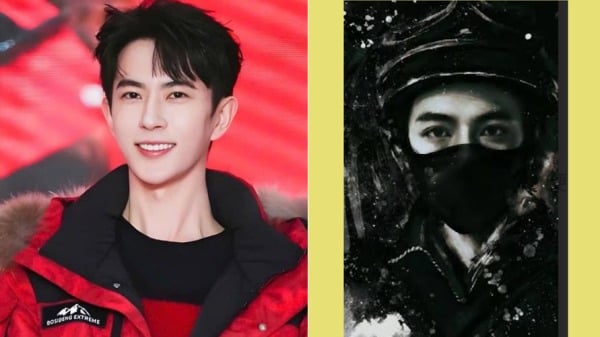
Many also noted the resemblance between Ren and Yu: “Both upright, brave, and kind-hearted men,” one wrote. Others launched calls for economic boycotts:
- “If the wicked silence us, we’ll silence their industry. Stop watching dramas, stop spending a dime on domestic entertainment.”
‘Only the army can balance the state’
On Oct. 30, after days of silence, Ren reappeared on Weibo (a popular blogging and social media site akin to Twitter in China). He posted a photo of his veteran’s military ID, declaring himself a retired border special-operations officer — and warned it might be the last time he spoke under that identity.
He wrote: “The only force that can restrain the government is the army. The military and the state must balance each other.” He also appealed to fellow veterans to use their identities to file reports and exert pressure for transparency. “If enough soldiers stand up,” he said, “I can submit all evidence in our name.” His call for “military oversight of government” went viral, drawing widespread response from other veterans online.
Soon after, Ren’s verified account was deleted. He was reportedly told he could “no longer speak publicly as a veteran.” His final message read: “I can’t say when I will be able to get online again.”
On Nov. 2, Ren suddenly posted his GPS location from the Andersen Garden complex in Beijing’s Sunshine Shangdong residential district (the site of Yu Menglong’s fall) with this cryptic message “Meeting some people I should meet. Not here on my own. Can’t say more. I’ve checked; it’s safe to post this.”
But he then vanished again for hours. During this time, writer Lu Ban posted on his : “I’m waiting for a message from one person,” a remark many interpreted as referring to Ren. “We’re all waiting,” another user wrote. “He must be safe.”
A coerced testimony?
A netizen named Beixing Qiye, known to have been in frequent contact with Ren, later posted on social media: “They came for me again — because I messaged Ren too much. They came at midnight and pressured my family. We can’t sleep; they force us to sign statements. They want us to blame everything on him.”
According to Beixing Qiye, police had made their intent clear: “As long as we push Ren Beichuan out as the scapegoat, we’ll be fine. But we refused.”
He added that Ren’s situation “looks grim,” warning that authorities intended to label him as a “counterrevolutionary” and make an example out of him. Beixing Qiye said his Weibo accounts had been suspended 31 times for speaking out. “The one I’m using now,” he said, “is account number 32.”
False ‘family statements’
On Nov. 4, Beixing Qiye reposted a QQ message from Ren: “All suspects have now filed police reports against me for ‘spreading rumors.’ Don’t DM me — whatever happens, remember this message.” He also cautioned others not to trust any “official news” released about Ren.
Meanwhile, rumors spread on Threads claiming that three celebrities — Song Yiren, Li Ming (Jiguang Guang), and Jiao Maiqi — were present at the scene of Yu’s death. The post, purportedly from a “friend of the family,” quickly went viral.
Ren said that after the message circulated domestically, netizens began questioning Yu’s cousin about the source. “He told people not to ask about things ‘outside our village,’” Ren noted. Within a day, new accounts began appearing on Bilibili, attacking both the cousin and Ren as “unreliable.” Comment sections filled with posts urging people to “trust the family, not outsiders.”
Observers believe this was part of a coordinated disinformation campaign — meant to fracture public unity, confuse audiences, and discredit whistleblowers. “The strategy is simple,” one analyst wrote. “Force the family to issue statements confirming the police version — then declare the case closed.”
Many drew parallels to the 2016 death of actor Qiao Renliang, whose parents were reportedly pressured to sign statements blaming “depression.” To this day, public suspicion remains.
Despite intimidation and arrests, Yu Menglong’s supporters continue to call for an independent investigation. An online petition titled “Justice for Yu Menglong” has surpassed 640,000 signatures, as users vow to “keep writing, keep reporting, and keep the truth alive.”