Following the conclusion of the Chinese Communist Party’s (CCP) 20th Fourth Plenary Session, internal power struggles within Beijing continue to surface.
New reports highlight the alleged involvement of Chinese leader Xi Jinping’s wife, Peng Liyuan, in military personnel evaluations. According to online discussions citing former Political Work Department chief Miao Hua, many senior officers who engaged in bribery within the military did so through channels connected to Zhong Shaojun and Peng Liyuan, who were believed to hold decisive influence.
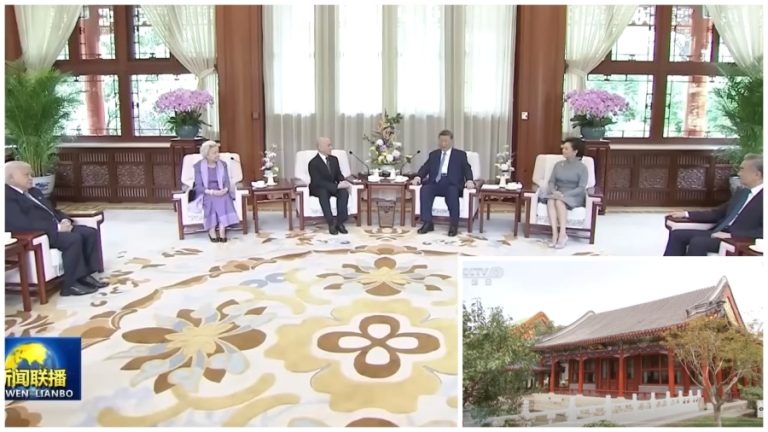
South Korean and Chinese sources earlier reported that Peng had been scheduled to accompany Xi Jinping on his late-October visit to South Korea for the APEC summit in Gyeongju. However, her name was later removed from the delegation list without explanation.
Between Oct. 20 and 23, the CCP held its Fourth Plenary Session. A week later, Xi traveled to South Korea to attend the APEC meetings. Observers noted that Xi stayed at the four-star Kolon Hotel instead of a higher-grade state facility, a decision that prompted speculation about internal changes in protocol.
As early as Oct. 8, South Korea’s Maeil Business Newspaper cited government insiders saying that Beijing had notified Seoul of Peng Liyuan’s participation. The report added that the Chinese side had switched from a more secure hotel to the Kolon to accommodate Peng’s presence — suggesting her travel plans influenced the arrangements.
Success
You are now signed up for our newsletter
Success
Check your email to complete sign up
The same paper recalled Peng’s 2014 visit to Seoul alongside Xi, during which she toured Changdeokgung Palace and Dongdaemun markets. For this year’s APEC event, South Korea’s First Lady Kim Hye-kyung reportedly prepared a joint cultural schedule, which was ultimately canceled after Peng’s withdrawal.
Such reversals have occurred before. In May 2024, Peng accompanied Xi on a visit to France, Serbia, and Hungary. Yet after the CCP’s Third Plenary Session in July, reports began to suggest that Xi’s control over the military was weakening. Peng’s absence from Xi’s March visit to Southeast Asia and his May trip to Russia appeared to reflect that change.
Commentators have argued that the cancellation of Peng’s trip, despite prior confirmation from both sides, could be another sign of Xi’s diminished authority. Meanwhile, details about Peng’s activities within China’s military structure have continued to surface.
Peng Liyuan’s position inside the Central Military Commission
On June 5, 2024, Hong Kong’s Sing Tao Daily published a widely circulated photograph showing Peng Liyuan in military uniform during an apparent inspection.
The accompanying caption identified her as a “Full-time Commissioner of the CMC Cadre Evaluation Committee.” The image implied that Peng retained a position within the military system even after stepping down as president of the PLA Art Academy in 2017.
Veteran Chinese editor Mr. Gao told Radio Free Asia that Peng, who holds the rank of major general, is part of a directly affiliated organ of the Central Military Commission (CMC).
He explained that the CMC Cadre Evaluation Committee is tasked with assessing senior officers—those at the rank of major general and above—based on political reliability, competence, and ethics.
According to Gao, this structure grants Peng considerable influence within the military promotion system.
According to independent commentator Lao Deng, Miao Hua stated during court proceedings that since 2016, Peng Liyuan had served as director of the CMC Cadre Evaluation Committee, reporting directly to Xi Jinping.
U.S.-based analyst Tang Jingyuan interpreted this to mean that Peng was not merely a committee member, but the actual head of the organization.
In Miao’s account, his role as head of the Political Work Department was limited, since the CMC’s decision-making process was tightly centralized.
He said his department followed directives from superiors—specifically Xi Jinping, Xi’s aide Zhong Shaojun, and Peng Liyuan in her role as evaluation director.
Miao described his function as largely administrative, carrying out directives rather than setting policy.
Most initiatives, he said, were coordinated through the CMC General Office, which Zhong Shaojun led as Xi’s personal secretary.
Within that framework, Peng Liyuan was said to have supervised the vetting of senior officers, with her committee’s assessments affecting promotions and disciplinary actions.
Because of this, senior officers reportedly sought to build personal connections with both Peng and Zhong.
The ‘Digital Loyalty System’
Tang Jingyuan noted that the CMC Cadre Evaluation Committee was created during Xi Jinping’s military reforms of 2016, reporting directly to the CMC chairman.
According to Miao’s statement, the Political Work Department supplied data and implemented decisions, while the authority for key judgments rested with Peng’s committee.
Miao recounted a 2022 CMC expanded meeting in Beijing focused on ideological control within the armed forces.
Xi reportedly called for “digital supervision” to ensure political purity. Following an encrypted directive passed through Zhong Shaojun, Miao’s team introduced a “Digital Loyalty System”—a network that monitored internal communications and computers.
According to Miao, the system was jointly approved by the CMC General Office and Peng’s Evaluation Committee.
In meetings, Peng reportedly described it as a tool to measure reliability and detect disloyalty.
After its launch, several officers were detained for private remarks in chat groups, and families later petitioned for their release.
Reports indicated that Vice Chairman Zhang Youxia eventually ordered the system suspended, easing tension across the ranks.
In his defense statement, Miao Hua described how both Zhong Shaojun and Peng Liyuan allegedly became the focal points of influence—and of bribery—within the CMC.
He said that during the 2023 personnel reshuffle, which took place amid a larger anti-corruption campaign, Zhong conveyed encrypted directives said to have originated from Xi Jinping, instructing closer political vetting of top officers. Miao’s department collected the necessary materials and sent them to Peng’s committee for review.
Miao claimed that Peng personally chaired evaluation sessions, examined financial records, and emphasized that loyalty should remain the top criterion. The results were forwarded to the CMC Discipline Inspection Commission, which later announced the arrests of several generals, including former defense minister Li Shangfu, on corruption charges.
He added that promotions, resource distribution, and procurement decisions were handled above his level. Zhong, as head of the CMC General Office, vetted all documents and passed Xi’s orders downward, while Peng oversaw high-level personnel assessments.
According to Miao, “a single remark from her could determine a general’s career.”
Examples of alleged bribery
Miao’s statement included examples of alleged misconduct.
Former Eastern Theater Command chief Lin Xiangyang was reportedly investigated after repeated complaints. Lin was said to have sought protection through intermediaries, eventually offering valuable watches and antiques via Zhong Shaojun’s secretary.
Miao later found a “thank-you note” from Lin in his personnel file, suggesting a link between the favor and the evaluation.
Another case concerned Wang Houbin, the former commander of the Rocket Force, who was accused of providing gifts and property through Peng Liyuan’s aide in an effort to retain his position.
During a later meeting, Peng allegedly remarked that Wang “remained a trustworthy comrade,” which, Miao implied, confirmed his suspicions of preferential treatment.
The testimonies depict Peng Liyuan not merely as a ceremonial figure but as a participant in the military’s personnel system. By mid-2024, online reports already suggested that she exercised substantial authority within the CMC.
Analysts have linked the abrupt cancellation of her South Korea trip, and the renewed focus on her alleged military role, to the broader political turbulence surrounding Xi Jinping’s leadership.
Although none of these accounts have been independently verified, they align with ongoing reports of unease inside China’s ruling elite. Some analysts interpret the unexplained changes in Peng Liyuan’s public appearances as signs of volatility at the highest levels of power.