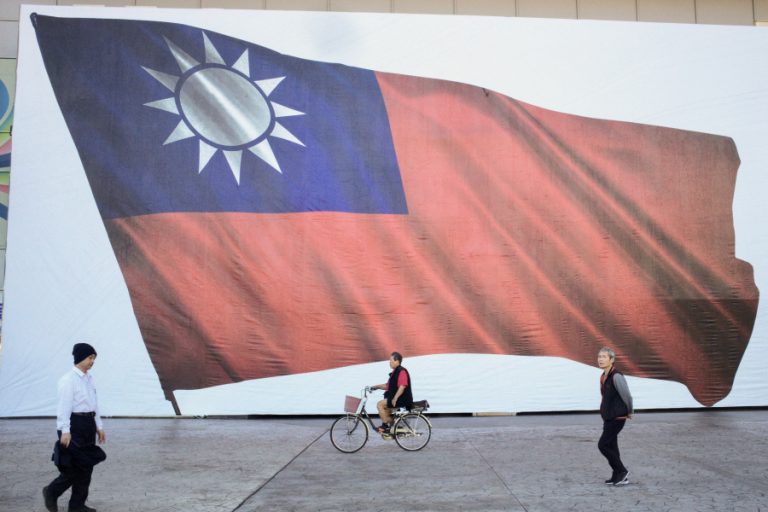
A recent policy change in Taiwan requiring mainland Chinese applicants to renounce their People’s Republic of China (PRC) passports to settle on the island has sparked widespread discussion across Chinese-speaking communities. The measure, effective Oct. 31, underscores escalating tensions between Taipei and Beijing.
According to Taiwan’s Central News Agency, the Ministry of the Interior announced amendments in July mandating that applicants from the mainland provide notarized proof of relinquishing their household registration and canceling their PRC passports. Dual nationality will no longer be permitted. The policy formalizes President Lai Ching-te’s March declaration of “five major national security and united front threats and 17 countermeasures,” aimed at strengthening Taiwan’s democratic resilience and national security against intensifying efforts from the PRC.
The announcement drew immediate support from Taiwanese netizens.
Comments flooded social media with sentiments like:
“It’s about time!”
Success
You are now signed up for our newsletter
Success
Check your email to complete sign up
“Well done, William (Lai Ching-te)! Sync this with national health insurance right away—I work hard and pay taxes, not to support communists!”
“Back the government’s policy for strict enforcement! Crack down on sham marriages—divorce means revoking Taiwanese citizenship and immediate deportation.”
Surprisingly, the rule has also captured the attention of mainland Chinese users, though their reactions reveal a different angle. Online chatter includes queries such as:
“Quick, tell me how to get Taiwanese citizenship?”
“Does ditching my mainland passport get me a Taiwanese one? What a deal.”
“Renouncing Chinese nationality is no big deal—no hesitation needed. The real question is how to get my body and money over there.”
These responses highlight the magnetic pull of Taiwan for many on the mainland, suggesting a reservoir of goodwill that could play a strategic role in cross-strait dynamics. For Beijing, such enthusiasm is a nightmare scenario, exposing cracks in its narrative of inevitability.
Clash in Hainan cancels Xi Jinping’s APEC speech
On Nov.1, Commentator Du Wen (former legal advisor in Inner Mongolia) posted on X that Xi Jinping canceled his planned APEC speech while visiting South Korea, after reports of mass unrest erupted in China’s Hainan Province. The incident left Xi furious, leading to the dismissal and investigation of implicated state-owned enterprise executives. Xi allegedly ordered an unprecedented and comprehensive media blackout: “Contain the fallout—don’t let Hainan blow up.”
Leaked footage shows local officials fleeing under police protection amid a chaotic scrum, with crowds chanting defiantly. For many under mounting pressures, the footage captures a rare moment of unbridled release.
Facing rows of police shields, the people of Hainan shouted as they threw bottled water and other objects at the officers, who were completely unable to withstand the assault and retreated step by step. The officials beside them also bent over, dodging embarrassingly like prawns in front of the crowd.
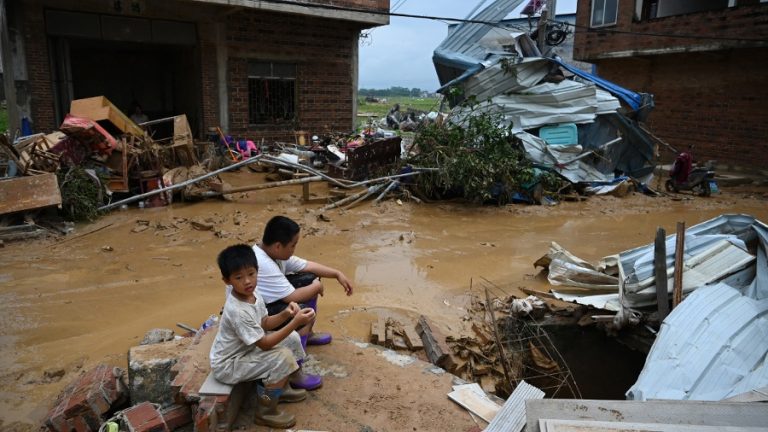
The unrest was reportedly sparked in the early hours of Oct. 31, when personnel from the Jiachai Haijiao Branch of the Hainan Natural Rubber Industry allegedly trespassed onto villagers’ farmland and cut down all their betel nut trees — a crop that takes 7-8 years to mature and was in the midst of a harvest season. The betel nut is a critical cash crop in the region. The affected farmers would suffer incalculable losses. Some villagers also reported that the intruders slaughtered their dairy cows, pushing residents to the brink.
The twin blows of tree and livestock losses ignited the anger of the community. By morning, villagers gathered and carried the felled betel-nut trees to the gate of the local rubber company branch to protest and demand accountability. As Beijing resident Yang Jia – a symbolic figure of resistance against state overreach and perceived injustice – once said “If you don’t give me justice, I’ll give you mine”.
The crowd at the scene grew larger — both protesters and onlookers. Because of the various injustices suffered under the Chinese Communist Party, the protesting villagers gained widespread support from ordinary people.
The reason Hainan Rubber dared to act so boldly was likely because it is a state-owned enterprise, backed by CCP and police. But they underestimated the anger of the people: now the villagers blocked the company gates, how could they let them go? No one would escape accountability.
As the day progressed and the confrontation intensified, the company called in reinforcements, expecting to disperse the crowd. Once villagers realized what had happened — “Good grief, the CCP really bullies folks; they cut down our trees and sent the police to beat us” — the anger only grew.
As none of the villagers’ grievances were resolved, tensions peaked that evening with thousands surrounding the building. Hearing villagers shouting “Down with the bandit den!” Officials inside panicked, scrambling for exits as the mob threatened to storm in.
“If villagers charged in, it wouldn’t just be the strong young men who would do the damage; even the old grandmothers and young wives on site — if each grabbed one person, that gang wouldn’t be able to hold up; they’d be left bleeding all over.”
Just like the Communist Party, they’re used to bullying ordinary people. But when the people’s anger ignites, the Party’s officials truly become terrified. So there they were, video footage shows police holding up their shields outside, while the company’s officials and staff — evacuated in disarray.
“They cut down our trees, they slaughtered our cows — you expect us to just let you run away? It’s not that easy!”
The villagers retaliated by throwing water bottles, plastic bags and stones — turning the area into a shield-and-stone battleground. Police were struggling to hold their ground as protesters threw objects at them, forcing them to retreat.
Those police officers were probably cursing in their hearts at the time:
“This job really isn’t worth it. Of all the people you could have provoked, why did you pick these villagers?”
It wasn’t just the company that suffered — even the police cars were flipped over in an instant, and officers were chased off by locals hurling cow dung at them.
‘Then of course we’d flip their police cars’
This is not an exaggeration. A few years ago, there was also a mass uprising here. An insider from Hainan once revealed that because the province is coastal, residents there have access to more overseas information. If the police bullied the people too much, “Then of course we’d flip their police cars!”
So in this latest collective resistance in Hainan, that’s exactly what happened. After the police escorted the Hainan Rubber personnel away, the villagers looked around, “You may have run off, but your company can’t run.” The crowd surged forward, some were flipping vehicles, some cheering, some filming — men and women, young and old, all joined in. Someone shouted again, “Down with the bandit den!”
According to commentator Du Wen, this Hainan uprising frightened Xi Jinping so much that he even cancelled his speech in Korea. Why? Probably because Xi knows better than anyone that the CCP’s rule is already tottering, and that even the smallest tremor could trigger the collapse of the entire regime.
Some people might say, “Sure, Hainan Rubber did wrong — that was outrageous. But was it necessary to go that far? Didn’t it go overboard?”
While the tree-cutting and cow-slaughter incidents were the spark, observers say the outburst was fueled by long-standing frustrations: economic pressures, employment insecurity, land rights disputes and a sense of systemic injustice.
This wasn’t just a single incident in Hainan—it is depicted as a microcosm of the broader unrest among Chinese citizens under the CCP’s rule.
Doesn’t Xi Jinping often say, “The Chinese people are not easy to provoke; if you provoke them, it will be hard to handle”?
That saying fits the Communist Party perfectly. The Party’s rule is getting close to being overturned. The Party is fast approaching the point of enraging the entire Chinese populace — and maybe one day a single spark will set off this powder keg called “China under the CCP.” When that happens, people will, just like today, rise and overturn it.
In fact, a similar scene once took place when the Soviet Communist Party collapsed. During his so-called Southern Tourin 1992, Deng Xiaoping personally spoke of the reason he decided to make that trip — a reason that had haunted him the most: the fall of the Soviet Union.
He said to those around him, “Two days before I left Beijing, Rui Lin told me about a scene that made me lose sleep. When the Soviet Union collapsed, Yeltsin announced that the Communist Party of the Soviet Union was to cease operations in Russia. As soon as Yeltsin made the announcement, tens of thousands of ordinary citizens spontaneously gathered in front of the CPSU Central Committee building. When the staff members inside the committee walked out, the crowd automatically parted to let them pass. But what accompanied them? The people’s spit and garbage! A gigantic party that had ruled for seventy years and claimed tens of millions of members collapsed overnight!”
That image deeply shocked Deng Xiaoping — and it also haunts Xi Jinping today.
The spark in Hainan could be the flash that lights a much larger flame across China. Then same scene from the fall of the Soviet Union will surely be replayed — this time at the gates of Zhongnanhai.
Countless people can already hear the footsteps of that day approaching.